

Key Takeaways
- Coat type — not species alone — determines which brushes and combs you need.
- Nail clippers come in two main styles; the right choice depends on your pet's nail thickness and your comfort level.
- Ear cleaning is only necessary when recommended by a veterinarian — over-cleaning can cause harm.
- Most cats and many short-haired dogs rarely need bathing; when they do, species-appropriate shampoo is essential.
- Grooming sessions double as health checks — a calm, routine approach catches early signs of skin or coat problems.
Why Grooming Knowledge Matters Before You Buy
Walking into a pet store before doing any research usually means leaving with more than you need — or the wrong things entirely. Grooming aisles are packed with tools designed for specific coat types, nail thicknesses, and species, yet they're often displayed without that context. For a first-time owner, the result is confusion and wasted money.
The better approach is to understand what grooming actually accomplishes, then match the tools to your specific pet. Regular grooming isn't just cosmetic. It removes loose fur, distributes natural skin oils, prevents painful matting, and gives you an opportunity to notice early changes in your pet's skin, coat, ears, and nails. See our home pet-wellness guide for how grooming fits into a broader care routine.
Before you bring a new animal home, it also helps to review the new pet owner checklist so grooming supplies are just one part of a well-prepared setup.
Start With a Short Supply List
New owners often overbuy. For most pets, you need one appropriate brush, a nail clipper, and a species-safe shampoo to start. Add specialized tools only when a clear need is established — ideally after a vet visit has confirmed your pet's coat and skin health.
Brushes and Combs: Matching the Tool to the Coat
Coat type is the primary factor when choosing a brush — not the animal's size or even its species. The main categories to know:
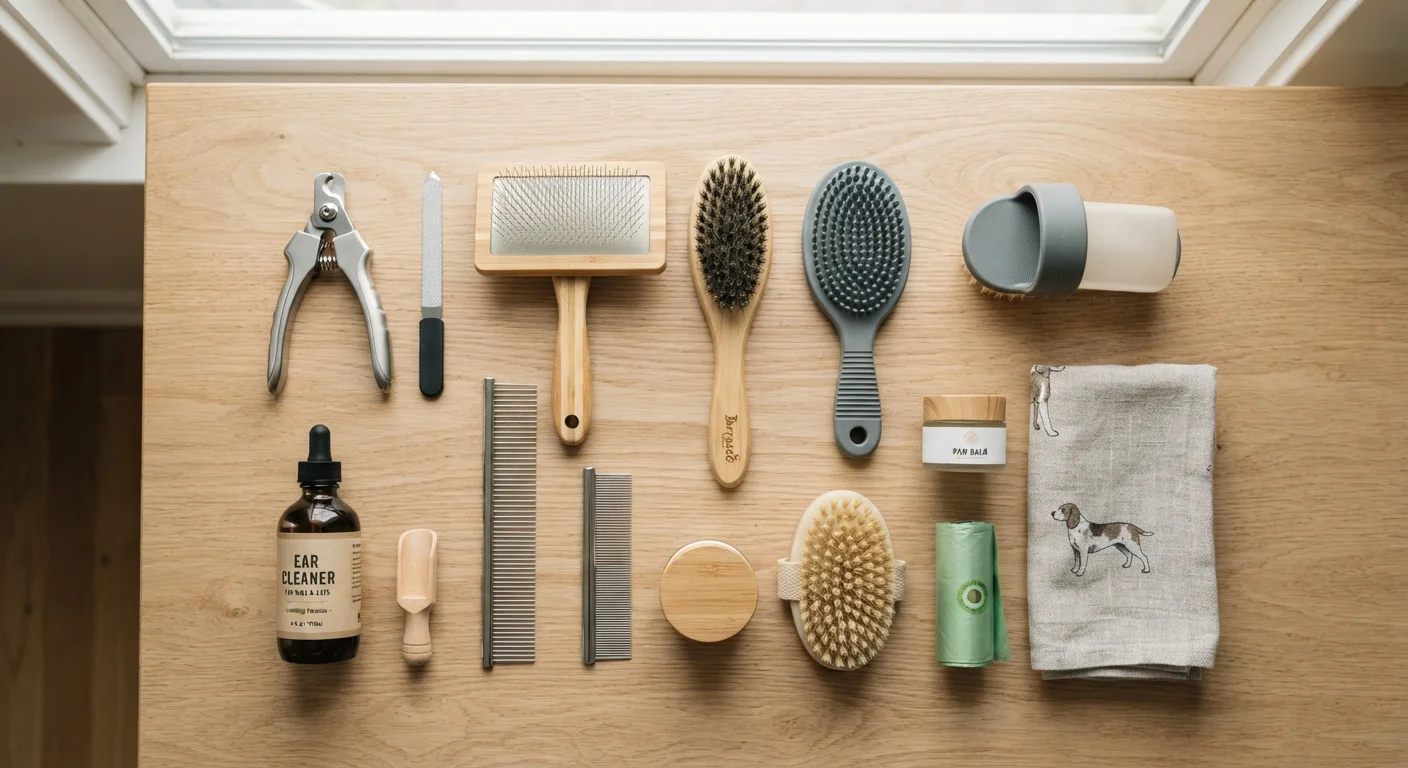
- Slicker brushes — Flat heads with fine wire pins set at an angle. Effective for removing tangles and loose fur from medium to long coats on dogs and some cats. Not ideal for very short, single-layer coats.
- Bristle brushes — Soft natural or synthetic bristles. Best suited for short, smooth coats where the goal is distributing oils and adding shine rather than detangling.
- Deshedding combs and undercoat rakes — Designed for double-coated breeds (many retrievers, huskies, and similar dogs). These reach beneath the top coat to pull loose undercoat fur before it ends up on furniture.
- Wide-tooth combs — Used after brushing to check for remaining mats, particularly in long-haired cats and dogs.
If your dog has a longer or denser coat, understanding these tools first will save frustration. The dog supplies guide covers how breed and coat type shape your full supply list.
~67%
U.S. households that own a pet
According to the American Pet Products Association's industry estimates, pet ownership has remained consistently high across U.S. households.
1 in 3
Pet owners who report buying unused grooming tools
Consumer surveys on pet spending consistently find that impulse purchases of grooming supplies are among the most common forms of pet-related waste.
Nail Care Tools Explained
Overgrown nails can cause discomfort and affect how a pet walks, so nail trimming is a genuine health task — not optional grooming. Two main tool types exist:
- Scissor-style clippers — Work like small scissors with curved blades. Generally preferred for cats and small animals with thinner nails.
- Guillotine-style clippers — A stationary ring holds the nail while a blade slides across to cut. Some owners find these easier to control on medium-sized dogs.
Whichever style you use, the key concern is avoiding the quick — the blood vessel inside the nail. Cutting into it causes pain and bleeding. On light-colored nails the quick is visible as a pink area. On dark nails, trim small amounts at a time and stop when you see a gray or black dot at the center of the cut surface.
Introduce nail trimming gradually — handle your pet's paws regularly before ever bringing out the clippers, so the tool itself isn't the first unfamiliar thing.
Desensitization to paw handling reduces stress during actual trimming and lowers the risk of the pet pulling away suddenly, which is a common cause of accidentally cutting the quick.
Keep a styptic powder or styptic pencil on hand whenever trimming nails — if you catch the quick, it stops minor bleeding quickly without a vet visit.
Accidental quick nicks happen even with experienced groomers. Having the right product immediately available prevents a small mistake from becoming a stressful event.
Nail grinders (rotary filing tools) are an alternative that some pets tolerate better than the snapping sensation of clippers. They work more slowly but reduce the risk of cutting too deep.
Ear and Eye Cleaning Basics
Ear cleaning is one of the most misunderstood grooming tasks. Healthy ears generally clean themselves, and routine cleaning without a clinical reason can disrupt the ear's natural environment and cause irritation. A veterinarian should guide you on whether and how often your specific pet needs ear cleaning — it varies significantly by breed and individual health history.
Don't Clean Ears Without Veterinary Guidance
Cleaning a healthy ear unnecessarily can disrupt its natural microbiome and lead to infections. If you notice discharge, odor, or your pet shaking its head frequently, consult a veterinarian before attempting any home cleaning. These can be signs of an underlying condition that cleaning alone will not resolve.
When ear cleaning is appropriate, you'll need a veterinarian-recommended ear cleaning solution and cotton balls or gauze pads. Cotton swabs are generally not recommended for use inside the ear canal.
Eye cleaning — gently wiping discharge from the corners of the eyes with a damp cloth — is sometimes needed for breeds prone to tearing, such as certain flat-faced dogs and cats. Use plain water or a vet-approved eye rinse; never use human eye drops on pets without veterinary guidance.
Bathing Supplies and When You Actually Need Them
Cats rarely need baths — their self-grooming is highly effective, and bathing can cause significant stress. Most short-haired dogs also need infrequent bathing, typically only when visibly dirty or as directed by a vet for a skin condition. Over-bathing strips the coat of natural oils and can lead to dry, irritated skin.
When bathing is appropriate, the essentials are:
- Species-appropriate shampoo — Human shampoos have a different pH balance and should not be used on pets. Dog shampoo should not be used on cats, rabbits, or other small animals without checking with a vet first.
- A non-slip mat — Reduces stress and prevents injury during bathing.
- Absorbent towels — Microfiber towels dry pets more efficiently than standard cotton.
For small pets like rabbits and guinea pigs, bathing requirements differ considerably — spot cleaning is often preferred over full baths. See the small pet setup guide for species-specific detail.
Species-Specific Grooming Differences
Grooming needs are not uniform across pets. A few important distinctions for new owners:
- Dogs
- Vary more than any other species. Coat type, length, and shedding pattern are breed-dependent. Some dogs (poodles, certain terriers) have continuously growing coats that require clipping; others shed seasonally and need deshedding tools. The dog owner supplies guide explains how breed and size shape the list.
- Cats
- Most short-haired cats need minimal brushing — a few times per week manages shedding. Long-haired breeds (Maine Coons, Persians) require daily combing to prevent matting. The cat supplies guide covers what cats genuinely need from their environment.
- Small animals
- Rabbits, guinea pigs, and hamsters have specific grooming needs — some groom themselves extensively, while others benefit from gentle brushing. Bathing rules differ sharply by species.
Grooming is also a handling opportunity. Pets that are regularly and gently handled from a young age tend to tolerate grooming sessions more calmly as adults — making the experience easier for both of you. For a comprehensive foundation, the Pet Care Basics hub is a useful starting point.
This article provides general informational guidance only and is not a substitute for advice from a licensed veterinarian. Consult a veterinary professional for guidance specific to your pet's health and grooming needs.