

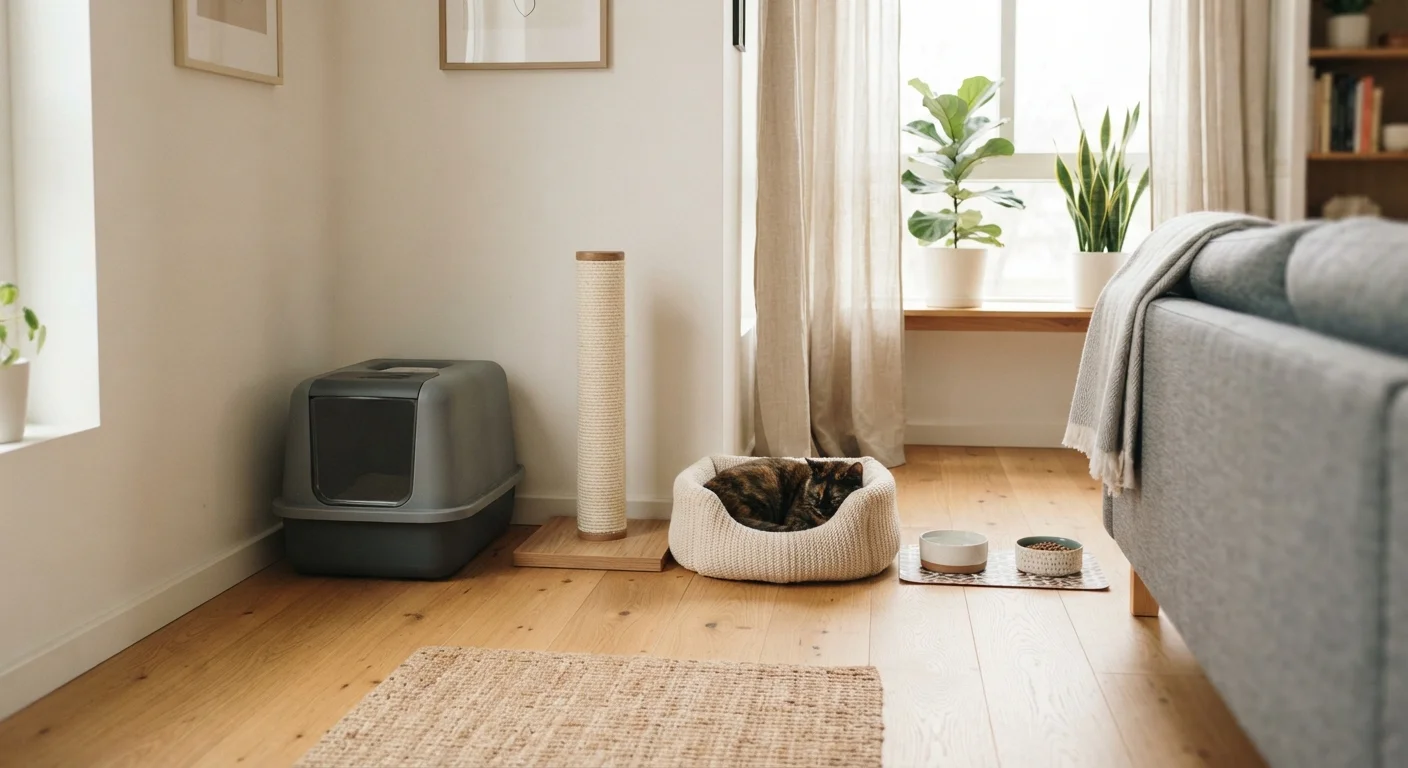
Key Takeaways
- Cats need far fewer supplies than most pet stores suggest — focus on function, not novelty.
- Litter box placement and litter type significantly affect whether a cat will actually use it.
- Hydration matters: many cats prefer running water, making fountain-style bowls worth considering.
- Scratching is a biological need, not a behavioral problem — provide appropriate surfaces from day one.
- Most specialty cat gadgets can wait until you understand your individual cat's preferences.
Start here
Start With What Cats Actually Need
Next
Litter Box Basics: Getting It Right From Day One
Then
Food, Water, and the Bowls That Hold Them
Keep going
Scratching, Climbing, and Environmental Enrichment
Finish with
Supplies That Can Wait
Start With What Cats Actually Need
Walking into a pet supply store as a new cat owner can feel overwhelming. The sheer volume of products — from automatic feeders to elaborate cat trees — makes it hard to distinguish what's genuinely useful from what's clever marketing. The truth is, cats have a relatively short list of true essentials, and getting those right matters far more than buying more.
Before anything else, understand that cats are territorial, sensory-driven animals. They need consistent resources — food, water, elimination space, and scratch surfaces — placed in ways that make them feel safe. The most common new-owner mistake is purchasing volume instead of thinking through function. This guide cuts through that noise.
Obligate carnivore
An animal that must eat meat to survive. Cats cannot produce certain essential nutrients on their own and must get them from animal-based food sources.
Litter box avoidance
When a cat stops using its designated litter box, often due to cleanliness, placement, litter type, or box size issues. It's one of the most common behavioral complaints among cat owners.
Environmental enrichment
Changes to a cat's living space — like climbing structures, toys, or hiding spots — designed to meet their physical and mental stimulation needs, particularly important for indoor cats.
Territorial marking
Behaviors cats use to claim and communicate ownership of a space, including scratching surfaces and rubbing their face on objects. Providing scratch-appropriate surfaces supports this natural behavior safely.
Life stage nutrition
The idea that a cat's nutritional needs differ at kitten, adult, and senior stages. Food labels that say 'complete and balanced for all life stages' or for a specific stage tell you whether a food meets those requirements.
Litter Box Basics: Getting It Right From Day One
The litter box is one of the most consequential purchases you'll make. Cats that dislike their box will find alternatives — and fixing litter box avoidance after the fact is much harder than setting things up correctly from the start.
- Size: The box should be at least 1.5 times the length of your cat. Many commercially available boxes are too small for adult cats.
- Location: Place the box in a quiet, low-traffic area your cat can access at all times. Avoid areas near loud appliances or where the cat eats.
- Litter depth: Most cats prefer around 2–3 inches of litter. Experiment with depth if your cat seems reluctant to dig.
- Covered vs. uncovered: Some cats prefer open boxes; others like the privacy of a hood. When in doubt, start uncovered — it's easier to add a cover later if needed.
Scoop daily and do a full litter change regularly. A clean box is the single most effective way to prevent avoidance issues.
Start With an Unscented Litter
Cats have a highly sensitive sense of smell, and strongly scented litters are often added for the human's benefit, not the cat's. Many cats find heavy fragrance off-putting and may avoid a scented box. Begin with an unscented clumping litter and only consider alternatives if your cat shows a preference.
Food, Water, and the Bowls That Hold Them
Cats have unique nutritional needs — they are obligate carnivores, meaning animal protein isn't optional. Choose a food labeled complete and balanced for your cat's life stage (kitten, adult, or senior). Your veterinarian is the best resource for narrowing down food options based on your cat's health.
Bowl material matters more than many owners realize. Plastic bowls can harbor bacteria in micro-scratches and may contribute to feline acne around the chin. Stainless steel or ceramic bowls are easier to clean thoroughly.
Water is equally important. Cats have a naturally low thirst drive, which is why wet food can be a meaningful source of hydration. Many cats drink more readily from a moving water source, so a simple pet fountain is one of the few gadgets that has a functional basis. That said, a clean, regularly refreshed bowl is a fine starting point.
Dish Depth Can Matter Too
Some cats are sensitive to their whiskers touching the sides of a bowl during eating or drinking — a phenomenon sometimes called whisker fatigue. If your cat seems hesitant at the bowl or paws food out before eating it, trying a wider, shallower dish is a simple adjustment worth making.
Scratching, Climbing, and Environmental Enrichment
Scratching is not a behavior problem — it's a biological necessity. Cats scratch to maintain their claws, stretch their muscles, and mark territory. If you don't provide an appropriate surface, your furniture becomes the default.
A scratching post should be tall enough for your cat to fully stretch upright (typically at least 28–32 inches), stable enough not to wobble, and placed somewhere your cat already spends time. Sisal rope and corrugated cardboard are widely accepted materials. Flat scratching pads on the floor work well for cats that prefer a horizontal angle.
For indoor cats especially, vertical space — shelving, a cat tree, or even cleared-off bookshelf space — gives your cat places to observe their territory from above, which reduces stress. See our guide on indoor cat enrichment trade-offs to understand why environment design matters so much for cats kept inside.
Simple wand toys used in short daily play sessions provide exercise and mental stimulation. Rotation matters — cats habituate to the same toy quickly, so having a few options and cycling through them keeps engagement higher.
Supplies That Can Wait
Many supplies are genuinely useful eventually, but buying them before you know your cat's personality is a gamble. Automatic feeders, GPS trackers, elaborate tunnel systems, and self-cleaning litter boxes all have their place — but only once you understand what your individual cat actually uses and enjoys.
Grooming supplies depend heavily on coat type. A short-haired cat needs far less brushing than a long-haired one. Before investing in a full grooming kit, read up on what your cat's coat actually requires. Our grooming supplies guide explains how to match tools to coat type.
For a practical day-one checklist, the first 48 hours guide outlines exactly what needs to be in place before your cat arrives home — and what can be bought later without any disruption to your cat's transition.
This article is for informational purposes only. Always consult a licensed veterinarian for advice specific to your cat's health, diet, and individual needs.