

Key Takeaways
- Most new pets need only a handful of core supplies in the first 48 hours — not a fully stocked store.
- Containment, food, water, and a safe resting space are non-negotiable from day one.
- Many popular pet products are comfort upgrades, not immediate necessities.
- Overloading a new pet's space with stimulation can increase stress rather than reduce it.
- A vet appointment should be scheduled before or immediately after your pet arrives home.
Summary
18 items · 30–60 minutes to gather and arrange
Why the First 48 Hours Are Different
Bringing a new pet home is genuinely exciting — and that excitement can lead to overbuying. Retail pet aisles and online carts fill up fast with toys, gadgets, and accessories that seem essential but can actually overwhelm an animal still adjusting to a completely new environment.
The first 48 hours are about one thing: helping your pet feel safe. That means fewer stimuli, not more. A structured, calm setup with the right basics outperforms a cluttered, overstimulating space every time. Before you start shopping, it helps to understand which supplies serve immediate welfare needs and which ones can wait until your pet has settled in.
This checklist is designed for first-time owners of dogs, cats, or small animals — though you should always check species-specific needs before your pet arrives. For a broader overview of what to have ready, see our new pet owner checklist before your animal comes home.
Schedule a Vet Visit Before or Right After Arrival
A wellness exam in the first week is one of the most important steps you can take as a new pet owner. It establishes a health baseline, catches any issues that weren't disclosed at adoption, and gets your pet started on any needed preventive care. Do not wait until something seems wrong — early professional guidance sets the foundation for long-term health.
What to Have Ready Before They Walk Through the Door
The supplies below fall into two categories: things you genuinely need on day one, and things that are helpful but not urgent. Work through the checklist before pickup day, not after. Running out to a store while a stressed animal waits at home rarely goes smoothly.
Species-appropriate enclosure or crate
Provides a safe, defined space where your pet can rest and feel secure during the transition period.
Food and water bowls
Ceramic or stainless steel bowls are easiest to clean and hold up to daily use without harboring bacteria.
Pet's current food
Maintaining the same diet for at least the first week prevents digestive disruption during an already stressful transition.
Enzymatic cleaner
Neutralizes the odor compounds in pet waste more effectively than standard household cleaners, discouraging repeat accidents.
Collar, ID tag, and leash (dogs) or carrier (cats and small animals)
Essential for safe transport and identification in case your pet escapes during the adjustment period.
Litter box and unscented litter (cats)
Cats need an immediately accessible, quiet litter location from the moment they arrive home.
Baby gates or room dividers
Limits unsupervised access to areas of the home that haven't been pet-proofed yet.
If you're bringing home a dog specifically, our guide on what new dog owners need to know before buying supplies can help you narrow your list by size and age before you spend anything.
Containment & Safety
Food & Water
Rest & Comfort
Hygiene & Waste
Veterinary Preparation
What Can Wait
Small pets like rabbits, guinea pigs, or hamsters have distinct housing and dietary needs that differ significantly from cats and dogs. If that applies to you, our article on small pet setup supplies covers what each species genuinely requires.
Setting Up the Space Right
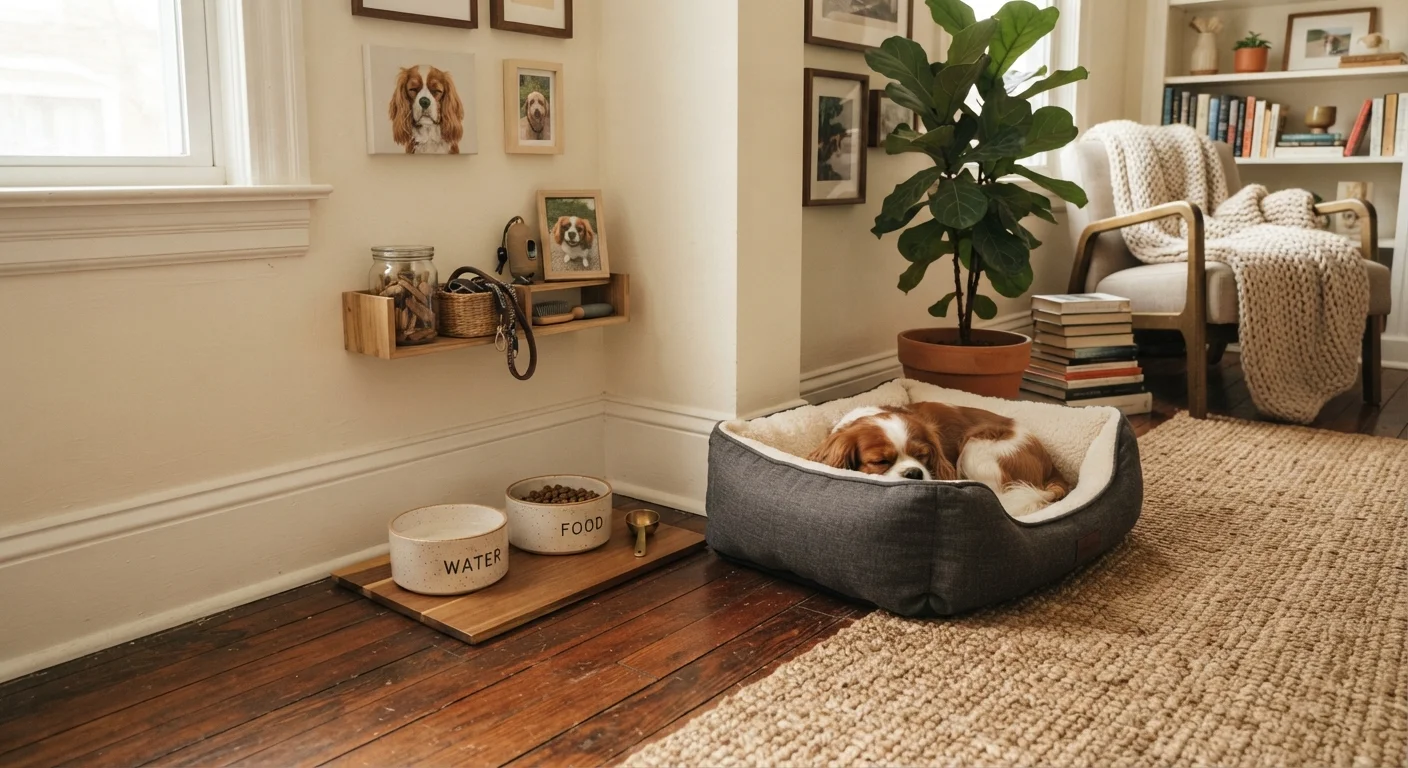
Where your pet sleeps, eats, and retreats matters as much as what you put in that space. A defined, quiet area — away from high foot traffic and loud appliances — gives a new animal the ability to decompress. Resist the urge to invite friends over or introduce other pets during the first day or two.
For detailed guidance on choosing and equipping that initial area, our article on setting up a safe space for a new pet at home walks through the process without overcomplicating it. Once your pet has settled — usually after the first week — you can begin layering in enrichment, additional toys, and socialization in a measured way.
For ongoing health and wellness guidance as your pet grows into their new home, the Pet Health & Wellness hub is a useful next stop.
This article is for general informational purposes only and does not constitute veterinary advice. Always consult a licensed veterinarian for guidance specific to your pet's health, species, age, and individual needs.