

| Minimum enclosure — rabbit | 8 sq ft (living space), plus exercise area (Rabbit Welfare Association & Fund guidelines) |
| Minimum enclosure — guinea pig pair | 7.5 sq ft (Humane Society of the United States guidance) |
| Minimum enclosure — hamster | 450 sq in floor space, 6–10 in bedding depth (European veterinary and ethology research consensus) |
| Primary diet — rabbits & guinea pigs | Unlimited timothy hay (80%+ of diet) (General small animal veterinary nutrition guidance) |
| Unique nutritional need — guinea pigs | Daily dietary vitamin C (cannot self-produce) (Veterinary nutritional reference) |
| Social housing — hamsters | Solitary only; fights between adults are common |
Why Small Animal Supplies Aren't Interchangeable
Rabbits, guinea pigs, and hamsters are often grouped together in the pet supply aisle — but their needs are genuinely different. A wheel that's enriching for a hamster can actually injure a rabbit. Bedding that's safe for guinea pigs can be harmful to smaller animals. Getting species-specific from day one protects your pet and saves you from replacing the wrong items later.
Before diving into what each animal needs, it helps to understand a few core principles. All three species require adequate space, appropriate food, safe bedding, and environmental enrichment — but the scale, materials, and frequency of care differ. See our new pet owner checklist for a broader preparation guide before bringing any animal home.
| Minimum enclosure — rabbit | 8 sq ft (living space), plus exercise area (Rabbit Welfare Association & Fund guidelines) |
| Minimum enclosure — guinea pig pair | 7.5 sq ft (Humane Society of the United States guidance) |
| Minimum enclosure — hamster | 450 sq in floor space, 6–10 in bedding depth (European veterinary and ethology research consensus) |
| Primary diet — rabbits & guinea pigs | Unlimited timothy hay (80%+ of diet) (General small animal veterinary nutrition guidance) |
| Unique nutritional need — guinea pigs | Daily dietary vitamin C (cannot self-produce) (Veterinary nutritional reference) |
| Social housing — hamsters | Solitary only; fights between adults are common |
Rabbit Essentials: Space and Hay Above Everything
Rabbits are frequently underestimated in terms of space and cost. They are social, active animals that need room to move, explore, and express natural behaviors like digging and foraging.
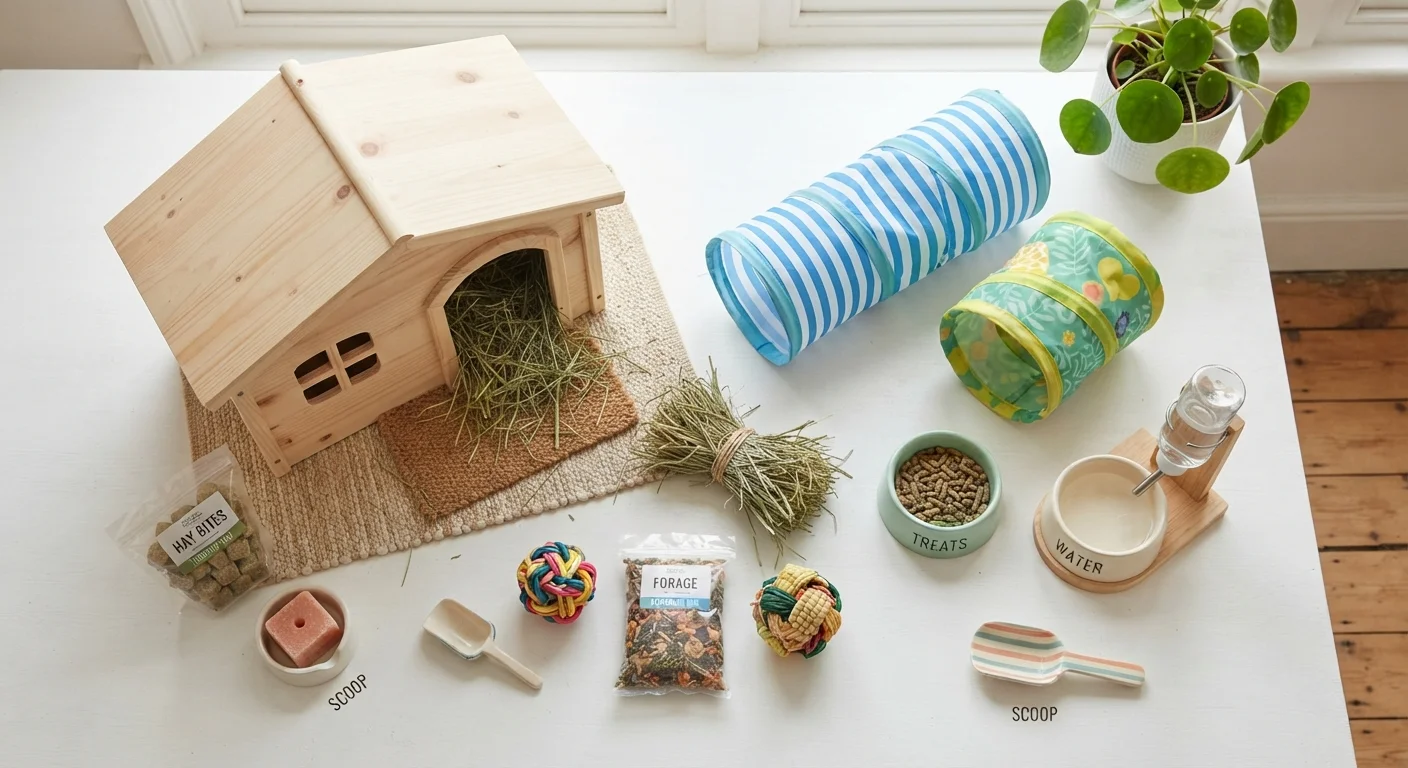
- Enclosure: A minimum of 8 square feet of living space, ideally more. Many rabbit welfare organizations advise against small wire cages as primary housing. A puppy playpen or a rabbit-proofed room section often works better.
- Hay: Unlimited timothy or orchard grass hay is the foundation of a rabbit's diet — it should make up roughly 80% of what they eat daily. This is non-negotiable for digestive and dental health.
- Litter box: Rabbits can be litter trained. Use paper-based litter (not clay or clumping cat litter) topped with hay to encourage proper eating habits alongside toileting.
- Pellets and fresh greens: A small measured amount of high-fiber pellets and daily fresh leafy greens round out their diet.
- Water: A heavy ceramic bowl is generally easier for rabbits to drink from than a bottle.
- Enrichment: Tunnels, cardboard boxes, and safe wooden chew toys satisfy their need to explore and gnaw.
Setting up a defined space for your rabbit before they arrive reduces stress during the adjustment period.
Guinea Pig Essentials: Social Animals With Specific Needs
Guinea pigs are highly social and, in many countries, keeping a solitary guinea pig is considered a welfare concern. If you're getting one, plan for two. Their supplies reflect their size and social nature.
- Enclosure: At least 7.5 square feet for a pair, with more recommended. C&C (cube and coroplast) cages are a popular, cost-effective option that allows flexible sizing.
- Bedding: Fleece liners or paper-based bedding work well. Avoid cedar or pine shavings, which can cause respiratory irritation.
- Hay: Like rabbits, guinea pigs need unlimited timothy hay for gut motility and continuous tooth wear.
- Vitamin C: Guinea pigs cannot produce their own vitamin C and require it through fresh vegetables (like bell peppers and leafy greens) daily. This is a critical nutritional distinction from other small pets.
- Hidey houses: Each guinea pig needs at least one enclosed hiding space to feel secure.
- Water: Both a bottle and a bowl can work; some guinea pigs prefer one over the other.
Substrate
The bedding material that lines the bottom of an animal's enclosure. It absorbs waste, supports burrowing behavior, and contributes to humidity regulation. Safe substrate choices vary by species.
Gut motility
The movement of food through an animal's digestive system. In rabbits and guinea pigs, adequate hay fiber is essential to keep the gut moving consistently and prevent life-threatening slowdowns.
C&C cage
A modular cage system made from wire cube grids and coroplast (corrugated plastic) sheets. Popular for guinea pigs because it is customizable, spacious, and easy to clean.
Enrichment
Objects, activities, or environmental features that allow animals to express natural behaviors. For small pets, this includes tunnels, chew items, foraging opportunities, and hiding structures.
For grooming needs specific to long-haired breeds like Peruvian or Silkie guinea pigs, see our grooming supplies guide.
Hamster Essentials: More Space Than You Might Expect
Hamsters are solitary by nature and should be housed alone, but their enclosure needs are larger than most starter kits suggest. Animal welfare research — including studies from European veterinary and ethology institutions — consistently indicates that hamsters require significantly more space and burrowing depth than traditional pet store cages provide.
- Enclosure: A minimum of 450 square inches of unbroken floor space is widely recommended, with deeper tanks or bin cages often preferred over wire cages with bars.
- Bedding depth: At least 6–10 inches of substrate for burrowing. Paper-based bedding is safest; avoid scented varieties.
- Wheel: A solid-surface wheel (no wire rungs) sized appropriately for the species — Syrian hamsters need a larger diameter than dwarf varieties to avoid back arching during use.
- Food: A seed-based mix formulated for hamsters, supplemented with small amounts of fresh vegetables and occasional protein sources like mealworms.
- Hides and enrichment: Wooden hides, tunnels, and items to chew support natural foraging and nesting behaviors.
- Water: A bottle attached to the enclosure works well; check the nozzle daily to confirm flow.
Starter Kits Are Often Undersized
Many commercially sold 'starter kits' for hamsters, rabbits, and guinea pigs do not meet current animal welfare recommendations for space or bedding depth. These kits are often designed for retail convenience rather than species-appropriate care. Before purchasing a bundled set, verify that the enclosure dimensions meet the guidelines above — and plan to supplement or replace components as needed.
If you're still weighing which small pet fits your lifestyle, our guide on avoiding common supply overspending can help you plan realistically before you shop.
This article provides general educational information about small pet care and is not a substitute for guidance from a qualified veterinarian familiar with your specific animal.