

Key Takeaways
- A single, quiet, low-traffic area is the best starting point for any new pet's space.
- You need far fewer supplies than most checklists suggest — start with the essentials only.
- Consistency in location and routine helps pets feel secure faster.
- Avoid scented items and loud electronics near the pet's designated area.
- The space should be accessible to your pet but off-limits to heavy foot traffic initially.
What you will need
Why a Defined Space Matters More Than Supplies
When a pet arrives in a new home, its primary need isn't stimulation — it's predictability. A defined safe space answers the animal's most fundamental questions: where do I sleep, where do I eat, and where is it quiet? Getting this right from the start matters more than having an elaborate collection of toys or accessories.
Research in animal behavior consistently shows that novel environments trigger stress responses in companion animals. A contained, consistent zone reduces that stress by giving the pet a reliable anchor point. As the animal becomes comfortable with that space, it gradually extends its confidence to the rest of the home — on its own schedule.
Before you set anything up, check the supplies that genuinely matter on day one so you're not overcomplicating things before the animal even arrives.
What you will need
Setting Up the Space: Step-by-Step
The following steps apply broadly to dogs, cats, and most small animals. Specific enclosure requirements for rabbits, guinea pigs, or hamsters differ and are covered separately. Gather your tools before starting — you'll need far fewer items than most first-time owners expect.
Pet bed or crate
Provides a defined resting area where the pet can retreat and feel secure.
Food and water bowls
Non-tip, appropriately sized bowls keep feeding and hydration consistent and mess-free.
Baby gate or exercise pen
Limits the pet's initial access to the home, reducing overstimulation during the adjustment period.
Pheromone diffuser
Species-specific calming diffusers (such as those designed for cats or dogs) may help reduce anxiety in a new environment.
Litter box or training pads
Essential for cats and some small animals; training pads useful for young dogs still learning housetraining.
Choose the right location
Pick a quiet corner or room that sees low foot traffic — avoid hallways, front entryways, and rooms with loud appliances. The space should be accessible enough that your pet can find it easily, but sheltered enough to feel distinct from the busiest parts of your home.
For dogs, a corner of a bedroom or quiet living area often works well. Cats tend to prefer elevated options or enclosed spaces. Small animals such as rabbits or guinea pigs do best away from direct sunlight and drafts. See specific setup guidance for small animals if your new pet falls into that category.
Set up bedding and shelter
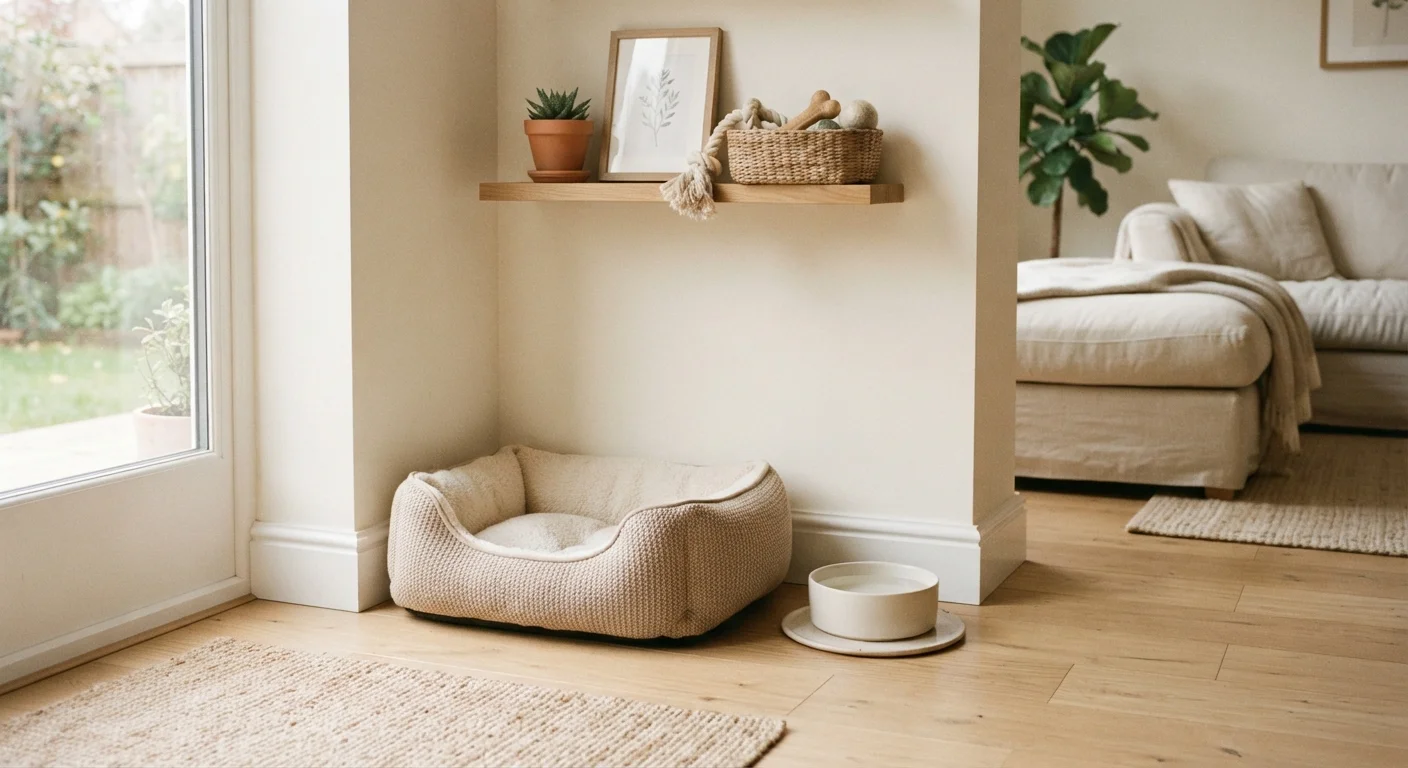
Place a bed, crate, or enclosure in the chosen spot before your pet arrives. For dogs and cats, a soft, washable bed placed inside a crate (with the door left open initially) gives both comfort and a sense of enclosure. Avoid placing it near heating vents, air conditioners, or loud speakers.
If you're unsure which bed style suits your pet, understanding different pet bed designs can help you match form to function without overspending.
Position food, water, and a bathroom option
Place food and water bowls near — but not inside — the resting area. Animals generally prefer not to eat where they sleep. Keep these in a consistent spot from day one; moving them frequently can disorient a pet still learning the layout of a new home.
For cats, position the litter box in a separate, accessible corner — not adjacent to food. For young dogs, a training pad placed near the exit you'll use for outdoor bathroom trips can reduce accidents while housetraining is established.
Limit the initial territory
Giving a new pet access to your entire home immediately is one of the most common mistakes first-time owners make. A larger space can be overwhelming, especially for animals that have recently experienced shelter life or transit stress. Use a baby gate or exercise pen to keep the pet confined to one or two rooms for the first few days.
Expand access gradually as the pet shows signs of comfort — relaxed posture, eating willingly, and approaching you voluntarily are all positive indicators.
Remove hazards from the zone
Before your pet settles in, scan the designated area at their eye level. Common hazards include electrical cords, toxic houseplants, small objects that can be swallowed, and gaps behind furniture where a small animal could become trapped. Secure loose wires with cord covers and move any plants you cannot confirm are pet-safe to another room.
The full pre-arrival checklist covers hazard-proofing in more detail if you want a room-by-room breakdown.
Keep the First Day Low-Stimulus
Resist the urge to introduce family members, guests, or other pets immediately. Let your new animal explore the safe space on its own terms for the first several hours. Calm, quiet environments allow the nervous system to settle far more effectively than active engagement. This patience pays off in trust built over the following days.
Don't Skip the Hazard Check
Even a seemingly tidy room can contain risks for a curious or anxious animal. Chewed electrical cords, ingested foreign objects, and toxic plant exposure are among the most common preventable emergencies in new pet households. Take ten minutes to scan the space at the animal's level before bringing them in.
Signs of Distress Require Veterinary Attention
Some withdrawal, hiding, or reduced appetite in the first 24–48 hours is normal for new pets. However, if your pet refuses food and water beyond 48 hours, shows labored breathing, extreme lethargy, or repeated vomiting, contact a veterinarian promptly. This article provides general setup guidance and is not a substitute for professional veterinary advice.
Once the space is set up and your pet has had time to decompress, you can begin thinking about what the first week will actually look like. What to realistically expect in the first seven days walks through normal adjustment behaviors and early routines. You may also find the 90-day wellness checklist useful for planning your first vet visit and tracking your pet's health baseline.
This article is for general informational purposes only and does not constitute veterinary advice. Always consult a licensed veterinarian for guidance specific to your pet's health and needs.