

Key Takeaways
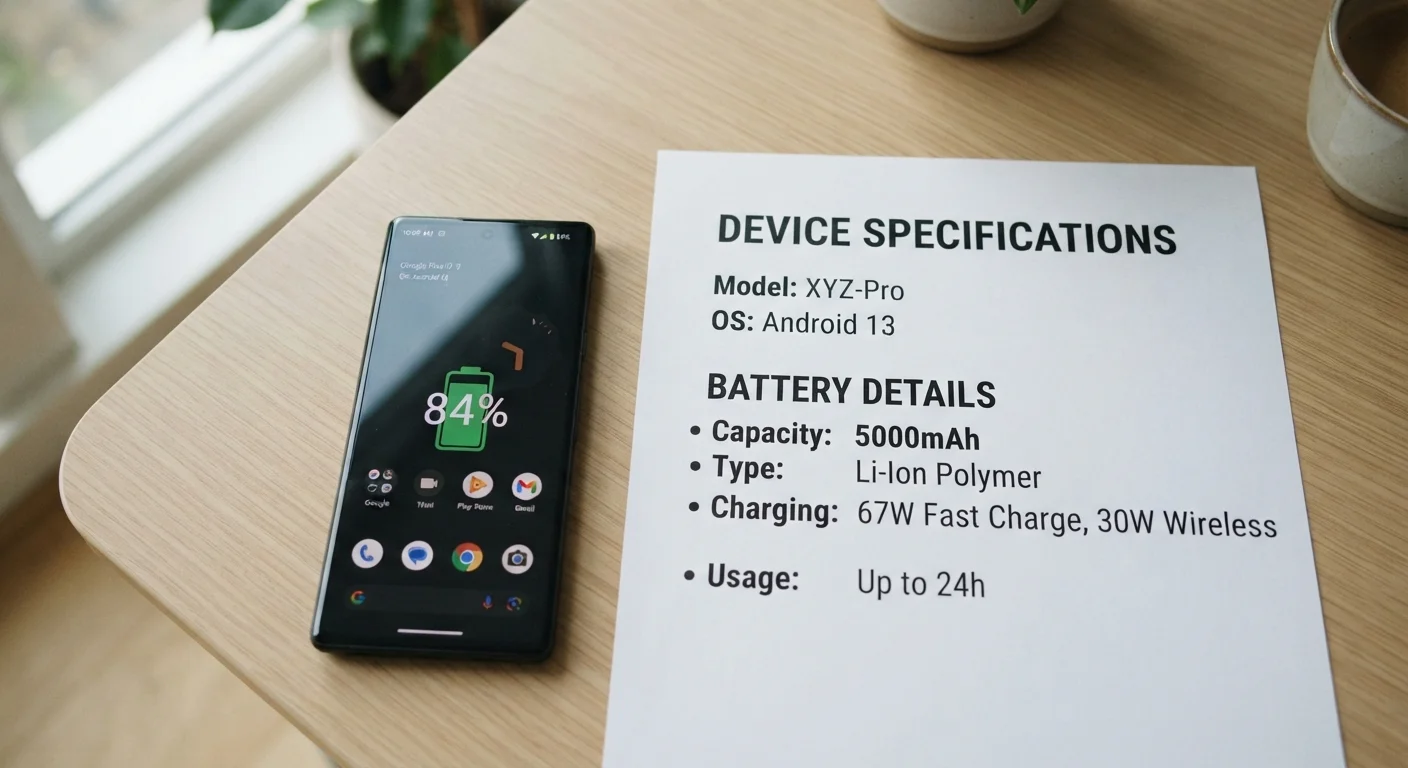
- mAh capacity tells you how much energy a battery holds, not how long your phone will actually last.
- The processor, display technology, and screen brightness are often bigger drain factors than raw battery size.
- Manufacturer battery estimates are measured under controlled, light-use conditions that rarely match everyday behavior.
- Software optimization and background app activity can swing real-world endurance by hours.
- A smaller battery in an efficient phone can outlast a larger battery in an inefficient one.
Battery Life (Rated vs. Real)
Rated battery life is the capacity figure — measured in milliampere-hours (mAh) — that manufacturers print on the box. Real-world battery life is how long a phone actually lasts during a typical day of use. These two numbers routinely differ because capacity is only one of many variables that determine how quickly a battery drains.
mAh measures how much charge a battery can store, not how efficiently the phone's processor, display, and software consume that charge. Efficiency differences between chipsets can cause two phones with identical mAh ratings to deliver very different screen-on times.
What mAh Actually Measures
When you see a battery spec like 4,500 mAh, you're looking at a measure of stored energy capacity — roughly, how big the fuel tank is. A larger number means more charge can be stored before the battery is full. What the number does not tell you is how efficiently the phone burns through that charge.
Think of two cars with identical fuel tanks. If one gets 40 miles per gallon and the other gets 20, they'll travel very different distances before refueling. Phones work the same way. The chipset (the main processor), the display, the radios, and the software all determine how quickly stored energy gets used.
For a broader look at how specs like mAh fit into the bigger picture, see our plain-English breakdown of smartphone specs.
Why Manufacturer Estimates Don't Match Real Life
Battery life figures published by manufacturers are measured under controlled test conditions — commonly continuous video playback at a fixed, moderate brightness level with cellular data and background activity minimized. These conditions are consistent and repeatable, which makes them useful for comparison between devices. They are not, however, a description of how you'll actually use the phone.
Real use involves a mix of streaming, social media, camera, calls, and constant small screen-on moments throughout the day. Cellular signal quality plays a role too — when your phone struggles to find a strong signal, it works harder and drains faster. The same phone can last two hours longer in a city with strong coverage than in a rural area with a weak signal.
20–40%
Typical gap between rated and real-world battery life
Independent testing by consumer technology publications consistently finds real-world screen-on times fall meaningfully below manufacturer-quoted figures under typical mixed-use conditions.
Up to 2×
Battery drain difference from screen brightness alone
Display power consumption studies have shown that running a screen at maximum versus minimum brightness can more than double the energy the display uses per minute.
~30%
Share of battery often used by the display
Device power profiling research commonly identifies the screen as consuming roughly a quarter to a third of total battery energy under typical usage patterns.
Background activity is another hidden drain. Apps that refresh content, track location, or send notifications in the background consume power even when the screen is off. Limiting which apps can run in the background is one of the most effective ways to close the gap between rated and real-world endurance.
The Components That Drain the Most Power
Understanding where battery power actually goes helps you make smarter decisions — both when buying a phone and when using one.
- Display: The screen is typically the single largest power consumer. Brightness level matters enormously — running a screen at maximum brightness can use several times the energy of a dimmed display. Screen technology also matters; as explained in our guide to phone display types, OLED panels can switch off individual pixels when showing black content, which saves measurable energy.
- Processor (chipset): Newer chipset generations are generally more power-efficient than older ones, even when performing the same tasks. A well-optimized chipset can deliver longer endurance from a smaller battery than an older, less efficient one.
- Connectivity: 5G, Wi-Fi, Bluetooth, and GPS all draw power. 5G in particular can be notably power-hungry compared to 4G LTE when actively in use.
- Refresh rate: Screens that update at 120Hz (times per second) are smoother but consume more energy than 60Hz displays. Many phones now use adaptive refresh rates that drop to 60Hz or lower when high motion isn't needed.
Adjust These Settings First
Before concluding a phone has poor battery life, check its screen brightness, refresh rate setting, and background app permissions. Lowering brightness to an adaptive or medium setting, enabling battery saver mode during low-activity periods, and restricting background refresh for apps you don't need real-time updates from can add meaningful hours to a typical day.
Putting It Together When Comparing Phones
When evaluating how long a phone will actually last, treat the mAh number as a starting point rather than a conclusion. Look for independent endurance tests from technology reviewers who measure screen-on time under standardized, real-world-style conditions — these give a much more reliable picture than the manufacturer's figure.
Also consider how the phone fits your habits. A phone with a modest battery but strong software optimization may serve a light user well, while a heavy user who streams video and games throughout the day will benefit more from both a larger battery and an efficient chipset working together.
Once you own a phone, the habits you build matter as much as the hardware. Our article on keeping a smartphone running well for years covers practical settings and routines that protect both daily endurance and long-term battery health.