

Key Takeaways
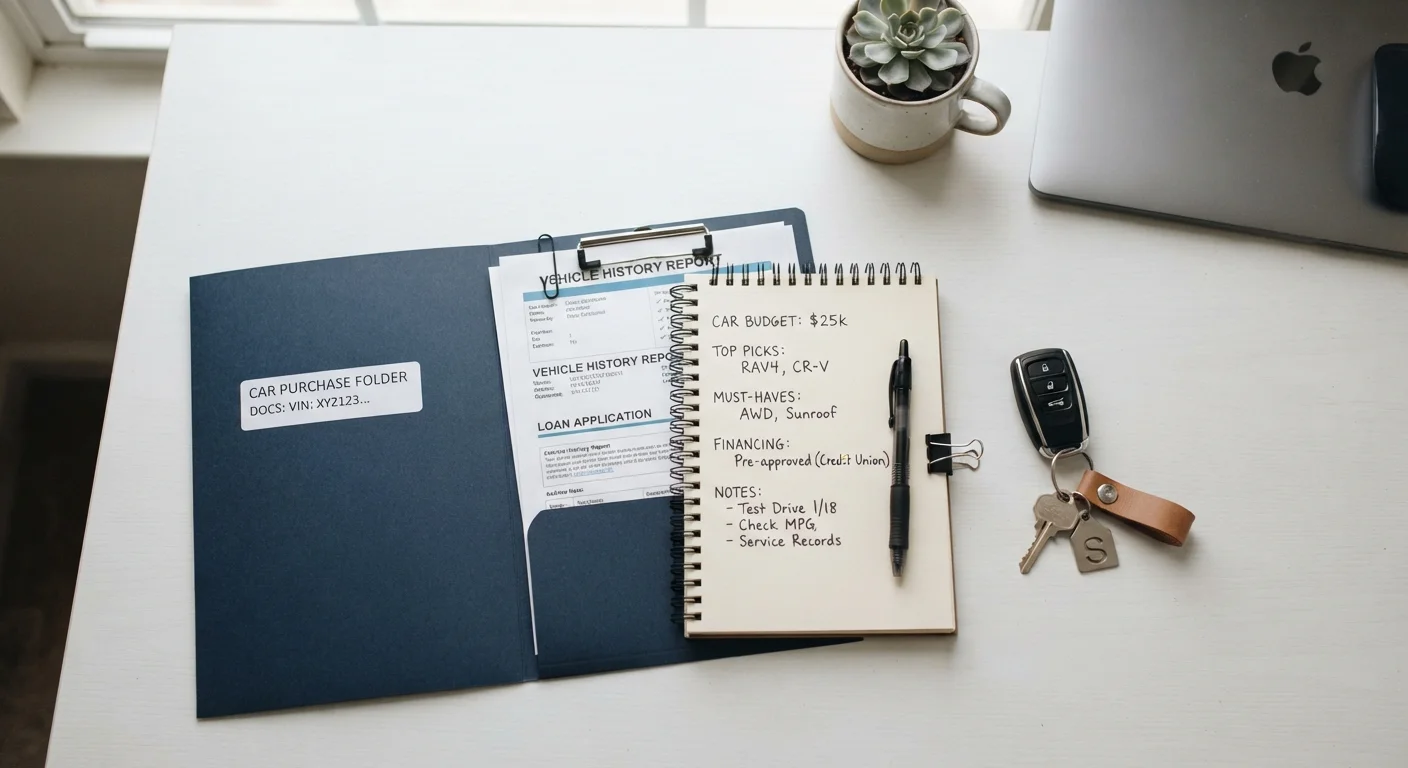
- Gathering key documents before you arrive prevents delays and keeps negotiations on your terms.
- Knowing your budget ceiling and credit score before the visit reduces the chance of overspending.
- Having a short list of prepared questions helps you avoid common post-sale surprises.
- Understanding your trade-in's value independently gives you a stronger negotiating position.
- Walking in prepared signals seriousness and typically leads to a more efficient conversation.
Summary
18 items · 30–60 minutes
Why Preparation Makes the Difference
For first-time car buyers, a dealership visit can feel like stepping into unfamiliar territory. The environment is designed to move quickly, and an unprepared buyer is more likely to make rushed decisions they regret later. The good news: most of what puts you in control is simply gathering information ahead of time.
This checklist covers the documents, numbers, and questions you should have ready before you walk through the door. Think of it as your pre-visit homework — the kind that pays off in a calmer, more focused buying experience. Before committing to anything on the lot, it also helps to run through a general pre-purchase checklist so you're confident in your decision across the board.
Identity & Financial Documents
Budget & Credit Numbers
Trade-In Preparation
Research & Questions
Tools You'll Want Before You Go
You don't need specialized software to prepare well, but a few practical resources will make the process significantly smoother. Gather these before you start pulling documents together.
Credit Score App or Bank Dashboard
Check your current credit score for free before your visit so you know what financing tier you're likely to fall into.
Vehicle Valuation Tool
Get an independent market value estimate for both your trade-in and the vehicles you plan to consider.
NHTSA Recall Lookup
Verify whether any vehicle you're considering has open safety recalls using the government's official database at nhtsa.gov.
Budget Spreadsheet or Notes App
Map out your total monthly expenses alongside the new vehicle payment to confirm the numbers work before committing.
Printed or Digital Checklist
Bring this checklist to the dealership so you can verify each item on the spot rather than relying on memory.
What to Know About Financing Before You Arrive
One of the biggest mistakes first-time buyers make is letting the dealership be the first place they think about financing. By that point, you're already deep in the process and less likely to pause and compare options objectively.
Check your credit score through a free service or your bank's app before your visit. Know your monthly budget ceiling — not just what sounds manageable, but what fits after accounting for insurance, fuel, and maintenance. If you have a trade-in, get an independent estimate from at least one third-party valuation tool before the visit, so you have a reference point when the dealership makes an offer.
It's also worth understanding the difference between financing at the dealership and arranging a loan elsewhere. Financing through a dealership vs. a bank or credit union breaks down how each route works so you can walk in knowing your options rather than discovering them under pressure.
Don't Let the Monthly Payment Anchor You
Dealerships sometimes focus the conversation on the monthly payment rather than the total vehicle price. A lower monthly payment stretched over a longer loan term can cost you significantly more overall. Always evaluate the full purchase price, total interest paid, and loan term together — not just the monthly figure.
Once you've done the visit and are approaching the signature stage, have your questions ready. Our guide to questions worth asking before signing a purchase agreement gives you a practical list covering fees, warranties, and financing terms.
This article is for general informational purposes only and does not constitute financial, legal, or professional advice. Consult a licensed financial professional for guidance specific to your situation.