

Key Takeaways
- The purchase agreement locks in terms that are difficult or impossible to reverse once signed.
- Add-on products like extended warranties and paint protection are optional and often negotiable.
- Financing terms, fees, and out-the-door price should all be confirmed in writing before signing.
- Dealer-installed accessories or preparation fees may inflate the final price without adding value.
- Understanding what the factory warranty covers helps you evaluate whether add-ons are necessary.
Why the Purchase Agreement Deserves More Than a Quick Skim
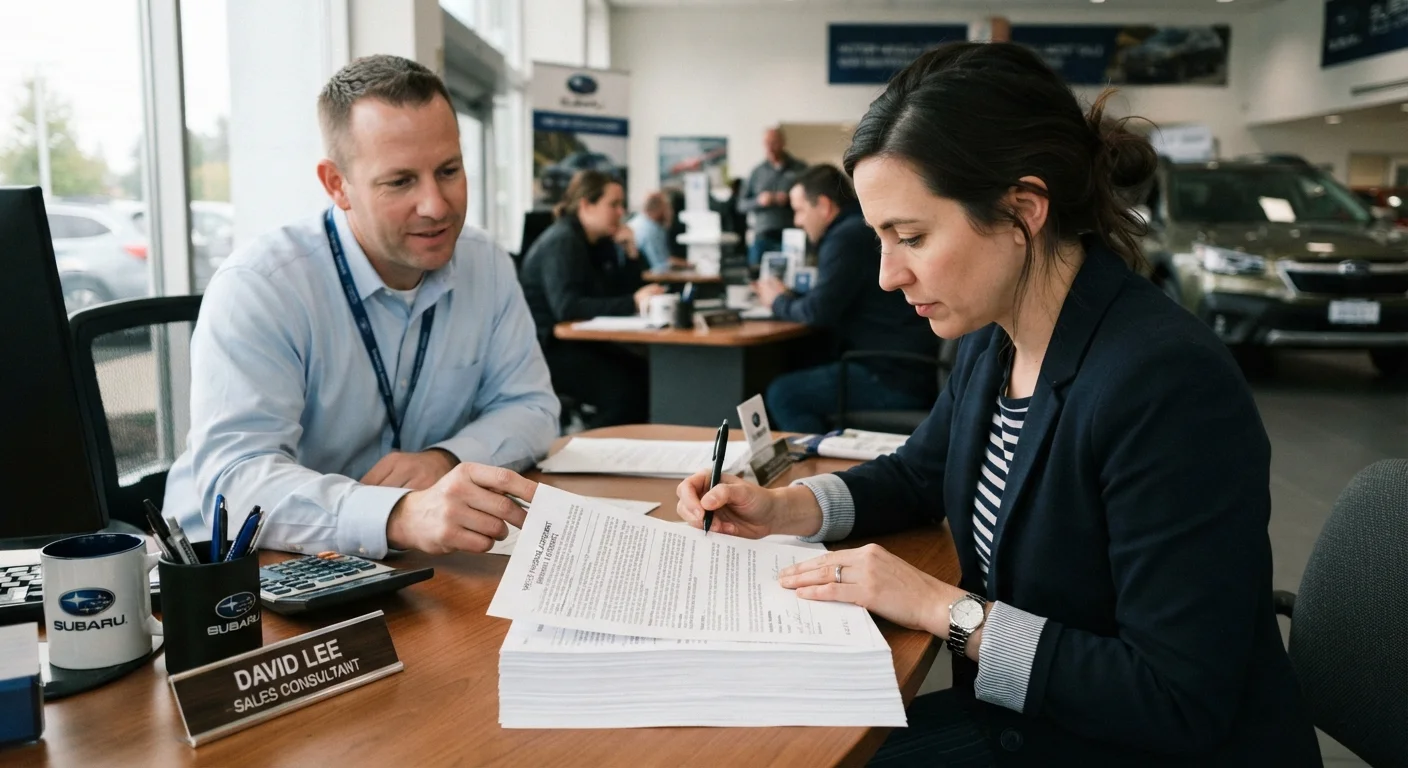
The purchase agreement is the legal document that finalizes your vehicle transaction. Everything discussed verbally — the price, the trade-in value, the financing rate — only matters if it appears correctly in writing here. First-time buyers often feel pressure to sign quickly, especially after a long day at the dealership. That pressure is exactly when errors and unexpected line items tend to slip through.
Walking in with a prepared list of questions shifts the dynamic. You slow down the process on your terms, verify each component, and avoid committing to costs or products you didn't intend to include. Think of these questions as a final quality check — not a confrontation, just due diligence. For a broader framework on pre-purchase decision-making, this pre-purchase confirmation checklist applies across many buying situations.
Does this price match what we agreed on?
Before reviewing any other line, confirm the vehicle selling price matches what was negotiated. It's not uncommon for the number in the finance office to differ slightly from what was discussed on the floor. Verify the vehicle identification number (VIN) on the contract also matches the car you're buying — especially on a lot with multiple similar trims.
The price in writing is the only price that legally matters once you sign.
What is the complete out-the-door price?
The out-the-door price is the total you'll actually pay, including taxes, registration, title fees, and any dealer documentation fee. Ask for this figure to be broken down line by line. Some fees are set by the state and non-negotiable; others — like documentation fees — vary by dealer and may be reduced. Knowing the difference helps you understand where flexibility exists.
Taxes and title fees are fixed by the state; dealer doc fees are often negotiable.
What are the exact financing terms?
If you're financing through the dealership, confirm the annual percentage rate (APR), loan term in months, monthly payment amount, and total amount financed. A lower monthly payment achieved by extending the loan term can mean paying significantly more interest overall. Make sure the rate in the contract reflects any rate you were quoted — not a higher one added without discussion.
A longer loan term lowers monthly payments but increases total interest paid.
What add-on products are included — and are they required?
Finance offices routinely offer products such as extended service contracts, gap insurance, paint and fabric protection, tire-and-wheel coverage, and credit life insurance. Each appears as a separate line item and adds to your financed amount. Ask which of these were included without your explicit agreement, and understand that most are optional. Review what each covers before deciding whether it provides genuine value for your situation.
Most dealership add-on products are optional — you can decline any you don't need.
What does the factory warranty cover and for how long?
New vehicles typically come with a bumper-to-bumper warranty and a separate powertrain warranty, each covering different components for different durations. Understanding the scope of the factory warranty — what's covered, what's excluded, and the mileage and time limits — helps you assess whether an extended service contract offers coverage that isn't already included. Ask for the warranty terms in writing rather than relying on a verbal summary.
Knowing your factory warranty coverage helps you avoid paying twice for overlapping protection.
Are there any dealer-installed accessories on the vehicle?
Some dealers add accessories — window tinting, cargo liners, wheel locks, or appearance packages — to vehicles before they reach the lot, then list them as line items on the contract. Ask for an itemized list of any installed accessories and their individual costs. If an accessory wasn't part of your original negotiation and doesn't add value to you, it's reasonable to ask whether it can be removed from the price.
Dealer-installed extras can add hundreds to the final price without adding agreed-upon value.
What happens if the financing falls through after delivery?
In some cases, buyers take delivery of a vehicle before financing is fully secured — a practice sometimes called spot delivery. If the financing isn't finalized and the initial terms can't be met, the dealer may ask you to return the vehicle or accept revised loan terms. Ask directly whether your financing is fully approved or contingent, and consider waiting for confirmed approval before taking delivery if this is a concern.
Confirmed financing approval before delivery protects you from unexpected loan term changes later.
Leaving the Dealership with Confidence
No question is too basic to ask before putting your signature on a legally binding document. If a line item is unclear, ask for it to be explained and itemized. If a product is listed that you didn't agree to, ask for it to be removed. Dealership staff handle these documents daily — you may not. That knowledge gap is normal, and asking questions bridges it.
Bring a printed checklist to the finance office
Writing down your questions in advance — vehicle price, financing APR, each add-on product, and the out-the-door total — gives you a reference to check off in the moment. It also signals to the finance manager that you are an attentive buyer, which can reduce the likelihood of errors going unaddressed. You don't need to be adversarial; just methodical.
Once you have signed and driven off the lot, most terms are locked in. It's worth the extra 20 minutes at the table to get clarity. And if you're also reviewing auto insurance before finalizing your purchase, this coverage review checklist can help you confirm your policy is solid before you take ownership.
This article is for general informational and educational purposes only. It does not constitute legal, financial, or professional advice. Consult a licensed professional for guidance specific to your situation.