

Key Takeaways
- Nutritional variety works best when built gradually across a full week, not changed all at once.
- Rotating protein sources, vegetables, and whole grains covers a wider range of essential nutrients.
- Small swaps within familiar meals are often more sustainable than entirely new recipes.
- Eating patterns matter more than individual meals — one less-nutritious day does not define the week.
- Consulting a registered dietitian is recommended before making significant dietary changes.
Why Weekly Variety Matters More Than Daily Perfection
Many beginners approach nutrition with an all-or-nothing mindset — trying to eat "perfectly" every single day. But nutritional science generally looks at dietary patterns over time rather than isolated meals. If you're new to thinking about this, start with foundational concepts before diving into weekly planning.
The body draws different nutrients from different foods. No single food — however nutritious — provides everything the body needs. A week-long lens gives you room to vary protein sources one day, emphasize leafy greens the next, and add legumes later, without feeling pressure to pack everything into one plate.
This approach also aligns with how most people actually cook and eat. Weekly grocery shopping, batch cooking, and household routines naturally fit a seven-day rhythm. Working with that rhythm, rather than against it, makes variety far easier to sustain.
“Dietary patterns — the combination and frequency of foods consumed over time — are more predictive of health outcomes than the nutritional content of any single food or meal.”
— Dietary Guidelines Advisory Committee, Federal nutrition advisory body, Dietary Guidelines for Americans
Core Practices for Building Variety Into Your Week
The following practices help you introduce meaningful nutritional variety without overhauling your routine from scratch. Think of them as adjustable levers rather than rigid rules.
Rotate your protein source at least three times across the week.
Different protein sources carry distinct micronutrient profiles. Legumes provide fiber and folate; fish offers omega-3 fatty acids; eggs supply choline; poultry and lean meats contribute zinc and B vitamins. Rotating them reduces the risk of over-relying on any single source while broadening your nutritional intake.
Add one new vegetable or color to your plate each week.
Different pigments in vegetables often signal different phytonutrients and antioxidants. A plate that only features one color range — say, always orange and yellow — may miss nutrients associated with dark leafy greens or purple vegetables like red cabbage. One new addition per week is a low-effort, sustainable pace of change.
Swap refined grains for whole grains on at least half your grain servings.
Whole grains retain the bran and germ layers, which are rich in fiber, B vitamins, and minerals like magnesium. Fiber supports digestive health and helps you feel full longer. You don't need to eliminate white rice or pasta — gradual substitution is more realistic and still adds measurable nutritional value.
Plan one meal per week that's entirely plant-based.
Research consistently associates higher plant food consumption with a broader intake of dietary fiber, micronutrients, and beneficial plant compounds. A single plant-based meal per week is a low-barrier entry point that exposes you to ingredients — lentils, tofu, chickpeas — you might not otherwise use.
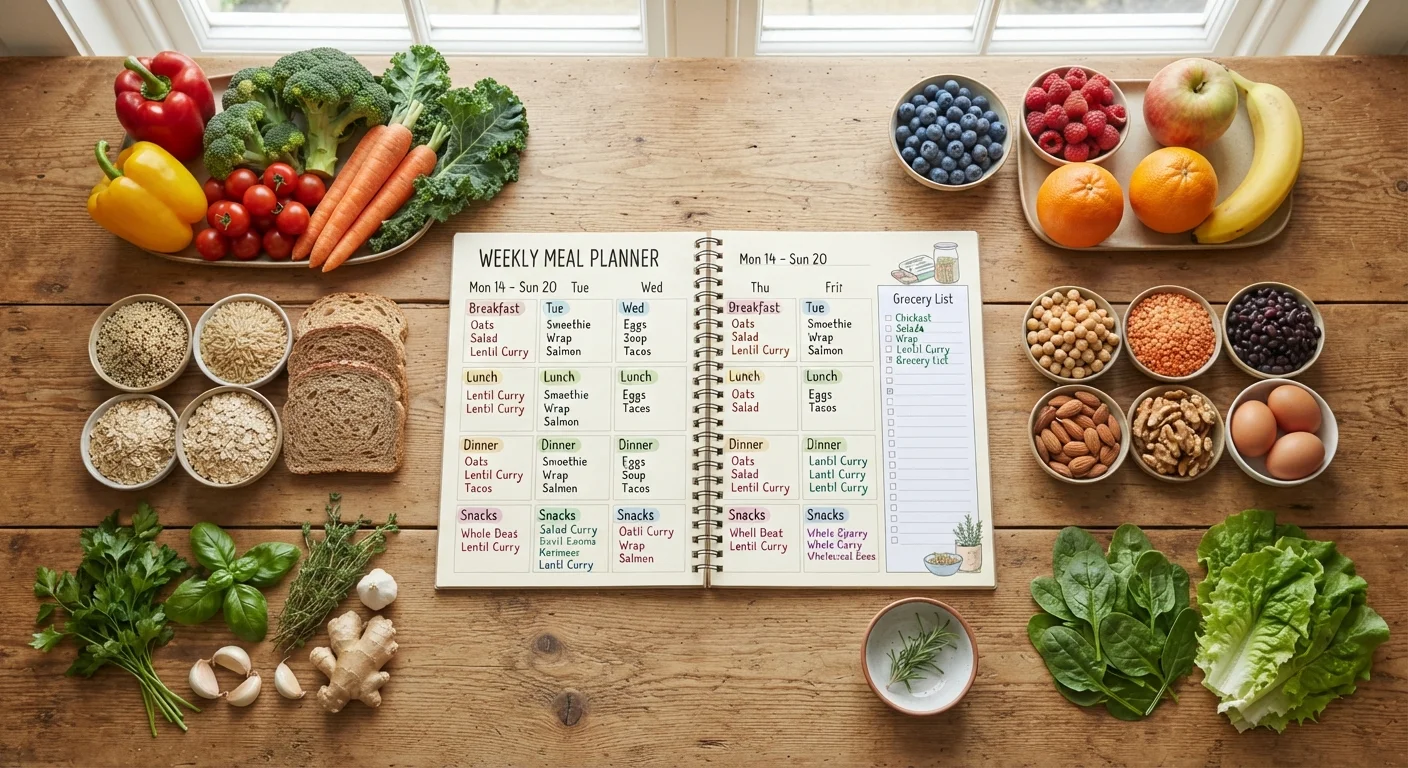
Keep a flexible weekly template rather than a rigid meal plan.
Rigid plans often collapse under the pressure of real life — busy evenings, unplanned social meals, or a lack of an ingredient. A flexible template assigns food categories to days rather than specific recipes, preserving structure without rigidity. This also reduces decision fatigue at mealtimes. For more on managing food-related thinking patterns, see common nutritional thinking traps.
Quick Ways to Start This Week
You don't need a complete pantry overhaul to begin. A few targeted changes can meaningfully shift the variety in your eating pattern right away. Pair these nutrition adjustments with movement habits — see the Fitness Essentials hub for beginner-friendly guidance on building a complementary routine.
This article provides general nutrition information for educational purposes only and is not a substitute for personalized medical or dietary advice. Please consult a qualified healthcare provider or registered dietitian before making significant changes to your diet, especially if you have an existing health condition.