

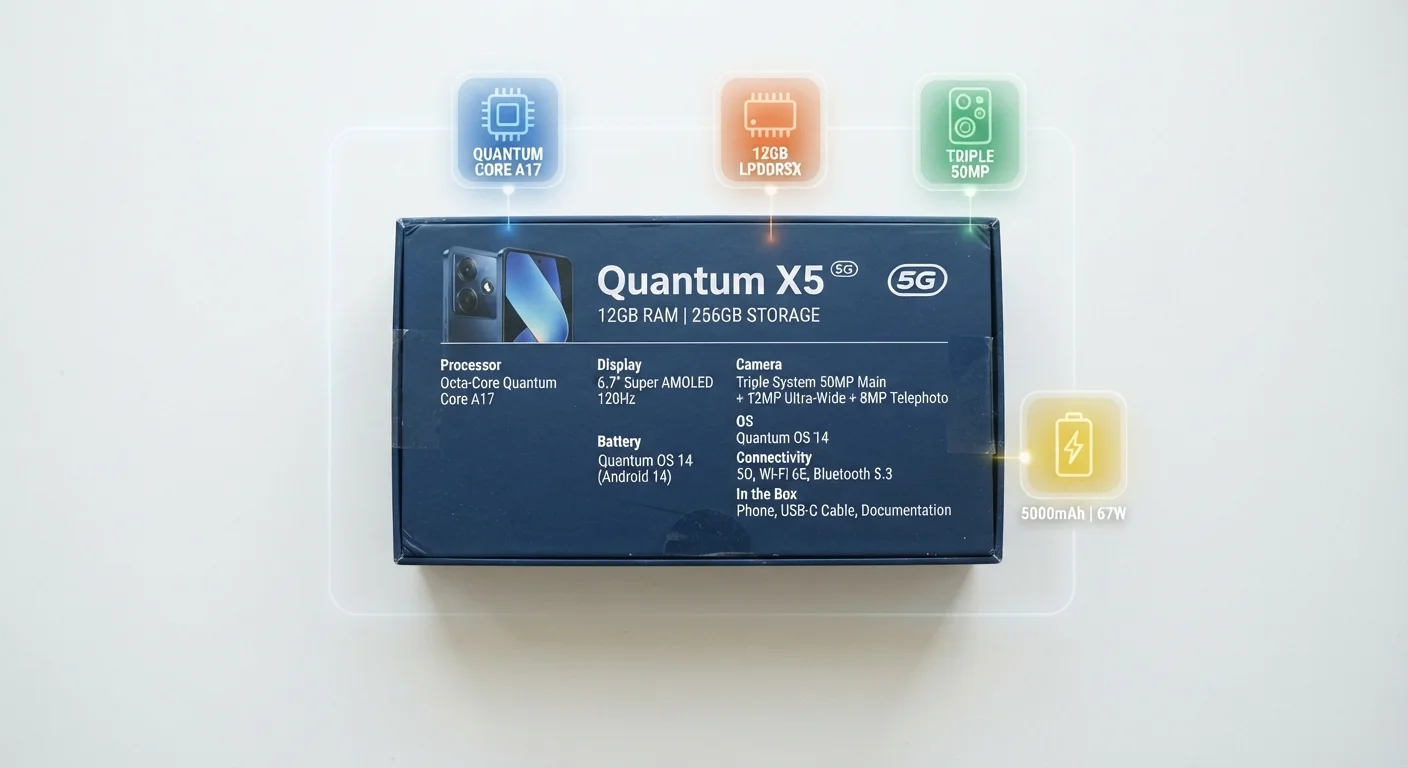
Key Takeaways
- RAM controls how many tasks a phone handles at once, not how fast it runs overall.
- GHz (processor clock speed) is one factor in performance, but chip architecture matters more.
- Storage capacity (GB) determines how much content you can keep on the device.
- Screen brightness in nits affects how well you can see the display outdoors.
- Battery capacity in mAh is only part of the battery life equation — efficiency matters too.
- Megapixel count does not directly equal camera quality on its own.
Smartphone Specifications
Smartphone specifications are the technical measurements printed on a phone's box or listed in its product description. They describe what the hardware inside the phone can do — how fast it runs, how much it can remember, how bright the screen gets, and how long the battery lasts. Understanding these numbers helps you match a phone's capabilities to your actual daily needs.
Specs are standardized measurements, but real-world performance depends heavily on software optimization, thermal management, and how manufacturers tune their hardware — meaning two phones with identical specs can behave differently in use.
RAM: The Phone's Short-Term Memory
RAM stands for Random Access Memory. Think of it as your phone's desk space — the area where it keeps everything currently in use. When you switch between a browser tab, a streaming app, and your messages, RAM is what keeps them all ready without reloading from scratch.
More RAM means more apps can stay open simultaneously. However, RAM does not make individual tasks run faster on its own. A phone with generous RAM but a weak processor can still feel sluggish. For context, most mid-range phones ship with 6–8 GB of RAM, which comfortably handles everyday multitasking for most users.
For a deeper look at how memory and processing power interact, see our guide on why more RAM doesn't always mean a faster device.
6–8 GB
Typical RAM range in mid-range smartphones
General industry observation based on specifications of phones released in the mid-2020s across major manufacturers.
128 GB
Common recommended minimum storage for new phones
Reflects the growing size of apps, operating systems, and media files in contemporary smartphone use.
1,500+ nits
Peak brightness on many current flagship screens
High-brightness modes are increasingly standard on premium smartphones to improve outdoor readability.
Processor and GHz: Speed Is More Complicated Than One Number
The processor (also called the chipset or SoC) is the phone's brain. It handles everything from loading an app to processing a photo. You'll often see it described with a GHz number — for example, "2.8 GHz octa-core."
GHz (gigahertz) is the clock speed: how many cycles the processor completes per second. Octa-core means eight processing cores, which allows the phone to divide tasks across multiple units. But neither number tells the full story. A newer chip architecture can outperform an older, higher-GHz chip because it does more work per cycle.
Processor generations make a significant difference in real-world performance. Our article on how processor generations work explains why a newer chip isn't always the obvious winner.
Compare Chips by Generation, Not Just GHz
When comparing two phones, look up the specific chipset name (such as those from Qualcomm's Snapdragon or Apple's A-series lines) rather than relying on GHz alone. Newer-generation chips typically deliver better performance and power efficiency even at similar or lower clock speeds. Many tech publications publish annual chipset benchmarks that make side-by-side comparisons straightforward.
Storage, Screen Brightness, and Battery: The Three You'll Feel Every Day
Storage (GB): This is where your photos, apps, videos, and files live permanently. Unlike RAM, storage doesn't empty when the phone restarts. Common capacities range from 64 GB to 512 GB. If you shoot a lot of video or keep large apps, aim for 128 GB or more — storage is rarely expandable on modern smartphones.
Screen brightness (nits): Nits measure how much light the display emits. Indoor use rarely demands more than 500 nits, but direct sunlight can wash out anything below 800. Flagship phones often advertise peak brightness of 1,500–2,000+ nits, which is especially useful outdoors.
Battery (mAh): Milliampere-hours measure stored energy capacity. Larger numbers suggest longer potential battery life, but a phone's actual endurance depends on processor efficiency, screen-on time, and software behavior. A 5,000 mAh phone with an efficient chip will often outlast a 4,500 mAh phone with a power-hungry processor.
Specs are only part of the purchasing picture. Our article on things first-time phone buyers overlook covers equally important factors like software support and repairability that rarely appear on the box.
Camera Megapixels: Resolution Is Not the Same as Quality
Camera specs are among the most misunderstood numbers in the smartphone market. Megapixels (MP) measure the resolution of a captured image — how many millions of individual pixels it contains. A 48 MP shot is larger in file size and can be cropped more aggressively, but resolution does not determine how good a photo looks.
What actually shapes image quality includes the physical size of the camera sensor, the aperture (how wide the lens opens to admit light), optical image stabilization, and the phone's image-processing software. A phone with a physically larger sensor gathers more light, which is the single biggest factor in low-light performance.
For a thorough breakdown of this topic, our article on why megapixels aren't the whole camera story is a useful companion read. And if you want to understand how all these specs combine to affect what you pay, everything that shapes a smartphone's price offers useful context.