

Key Takeaways
- Breed size and age are the two biggest factors shaping your dog's supply list.
- A short list of core supplies covers nearly everything a new dog needs in the first weeks.
- Many popular pet products are optional and can be added later once you know your dog's habits.
- Setting up a safe, dog-proofed space before your dog arrives is more important than accumulating gear.
- Overbuying is one of the most common mistakes new dog owners make — and it is easily avoided.
Start here
Why Breed Size and Age Change Everything
Next
The Non-Negotiable Essentials
Then
Supplies That Can Wait
Before arrival
Setting Up Your Home Before Day One
Shop smart
Smart Shopping Habits for New Dog Owners
Why Breed Size and Age Change Everything
Two variables determine almost everything on your supply list: your dog's size and their life stage. A toy breed puppy and a large-breed adult dog share basic needs — food, water, shelter, exercise — but the specific products that serve those needs differ significantly.
Size affects collar fit, bowl depth, leash strength, bed dimensions, and how much food your dog requires. A harness sized for a Chihuahua will not restrain a Labrador, and portion guidance varies dramatically between breeds. Age adds another layer: puppies are teething, developing bladder control, and growing rapidly, which changes everything from food formulation to toy durability.
Before you buy anything, note your dog's current weight, estimated adult size (your vet or breeder can help), and age. That information is your shopping filter. For older dogs with specific mobility or comfort needs, the considerations shift again — see supplies that matter most for senior pets for a focused look at that stage.
Life stage food
Dog food formulated specifically for a puppy, adult, or senior dog. Each formula has different nutrient ratios suited to the dog's age and energy needs.
Crate training
A house-training method that uses a crate as a safe, enclosed space to help dogs learn bladder control and establish a predictable daily routine.
Dog-proofing
The process of making your home safe for a dog by removing hazards — like toxic plants, loose cords, and accessible chemicals — before the dog arrives.
Collar fit
A properly fitted collar sits snugly but allows two fingers to slip underneath. Too loose and a dog can slip free; too tight and it causes discomfort.
Confinement area
A designated, dog-safe section of your home — often a room or gated area — where your dog rests or stays when unsupervised, helping prevent accidents and damage.
The Non-Negotiable Essentials
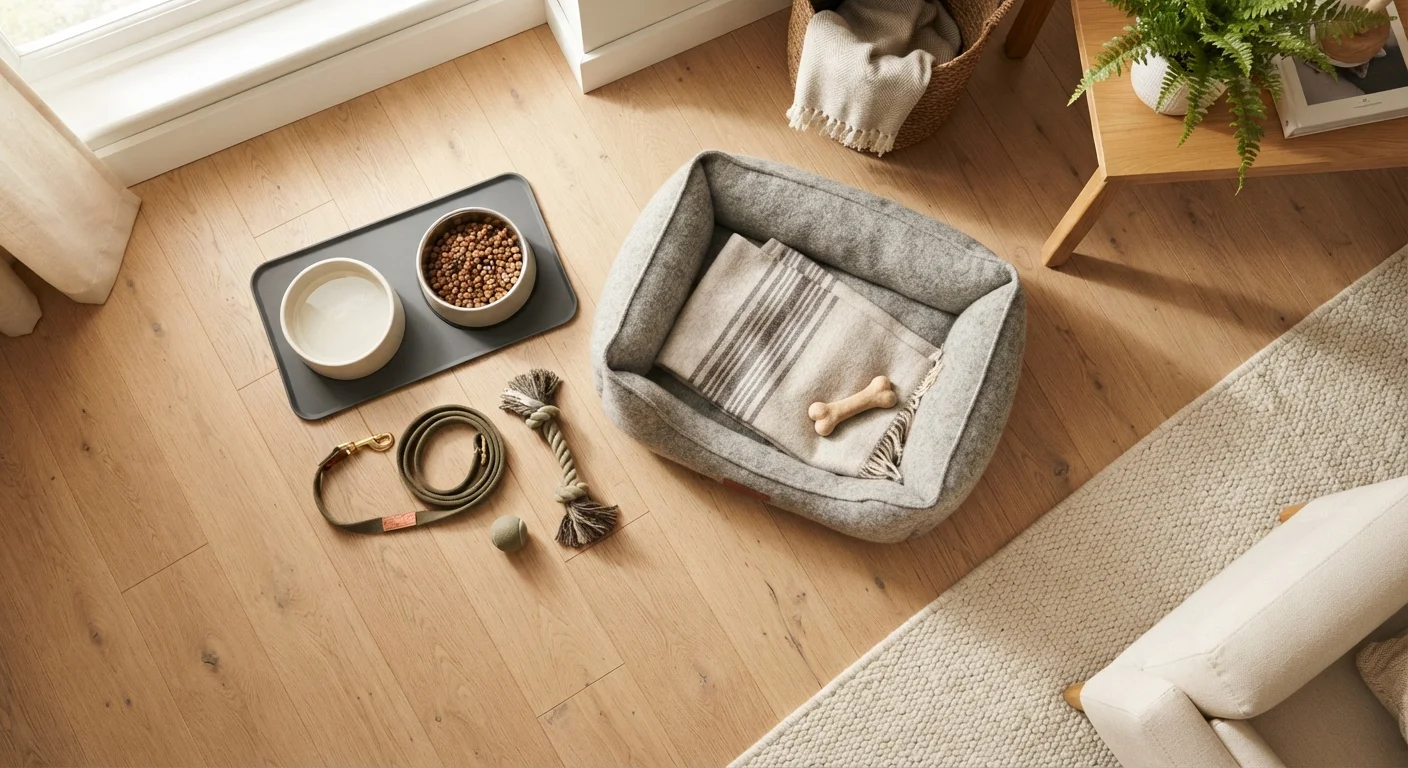
Strip away the marketing and dog ownership comes down to a manageable core list. Every new dog owner needs the following before their dog comes home:
- Food and water bowls — stainless steel or ceramic options are generally easy to clean and durable.
- Age-appropriate dog food — puppy, adult, and senior formulas differ in protein, fat, and calorie levels. Your vet is the right person to guide your choice based on your dog's breed and health.
- Collar and ID tags — a properly fitted flat collar with a current ID tag is a basic safety requirement from day one.
- Leash — a standard 4–6 foot leash gives you control during walks while your dog is learning.
- Crate or confinement area — a right-sized crate supports house training and gives your dog a safe resting space.
- Waste bags — non-negotiable for responsible ownership outdoors.
- A basic brush — even short-coated dogs benefit from regular brushing. Grooming supply guidance can help you identify the right brush type for your dog's coat.
Common nutrition mistakes — like overfeeding or misreading portion guides — catch many new owners off guard. Understanding animal nutrition basics is a useful read before you finalize your food choice.
Let Your Vet Guide Food Choices
With so many food options available, it's easy to feel overwhelmed. Your veterinarian is the most reliable resource for choosing a food appropriate to your dog's breed, age, and health status. At your first appointment, bring questions about portion size and feeding frequency — these basics make a big difference in your dog's long-term health.
Supplies That Can Wait
Pet stores and online retailers present an overwhelming array of products as must-haves. Most are not. These items are worth deferring until you understand your individual dog:
- Specialized toys — start with one or two simple toys, then observe what your dog actually engages with before investing further.
- Clothing and accessories — functional for some small or thin-coated breeds in cold climates, but not a day-one priority for most dogs.
- Elaborate feeding equipment — slow feeders, puzzle feeders, and elevated stands may eventually benefit your dog, but evaluate after you've established a baseline routine.
- Advanced training tools — focus on basic leash manners and recall first. Specialized equipment makes more sense once you've identified your dog's specific training needs.
Why new pet owners overbuy explores the retail psychology behind overspending — and how to shop with more clarity.
Avoid Buying in Bulk Too Early
Purchasing large quantities of food, treats, or supplies before you know your dog's preferences and tolerances is a common and costly mistake. Dogs can develop sensitivities to certain ingredients, and puppies grow out of sizes quickly. Start with smaller quantities and scale up only after you've confirmed what works for your specific dog.
Setting Up Your Home Before Day One
Having the right supplies matters less than having the right environment. Dog-proofing your space protects both your dog and your belongings during the adjustment period.
Secure electrical cords, remove low-level toxic plants, and block access to areas where your dog could get stuck or injured. Decide in advance where your dog will sleep, eat, and go to the bathroom — consistency during the first weeks helps dogs adjust faster.
For puppies especially, early experiences shape long-term behavior. Puppy socialisation is a key topic to explore alongside your supply planning. And if you want a full preparation checklist, the new pet owner checklist walks through everything to confirm before your dog arrives.
The first 48 hours with a new pet breaks down exactly which supplies need to be ready on arrival day — and what can wait.
Every Dog Is an Individual
General supply guides — including this one — reflect typical needs, not universal ones. A dog with a health condition, a specific coat type, or an unusual activity level may need different equipment. Your veterinarian and, where relevant, a certified trainer are the best resources for advice tailored to your individual dog.
Smart Shopping Habits for New Dog Owners
New dog owners are a prime target for impulse purchases. A focused approach saves money and avoids the clutter of items your dog never uses.
Start by buying only the core essentials listed above. After two to four weeks, you'll have a clearer picture of your dog's size, energy level, coat condition, and preferences — all of which should guide subsequent purchases. Dogs vary enormously in what they actually use, and buying based on observation rather than assumption leads to better choices.
For a broader look at how dog and cat supply needs compare — useful if you have multiple pets or are considering adding another — dog versus cat supply differences clarifies where the lists overlap and where they diverge. The Pet Care Basics hub is also a solid starting point if you want to build a fuller foundation across all aspects of new dog ownership.
This article is for general informational purposes only and does not constitute veterinary or medical advice. Consult a licensed veterinarian for guidance specific to your dog's health and nutritional needs.