

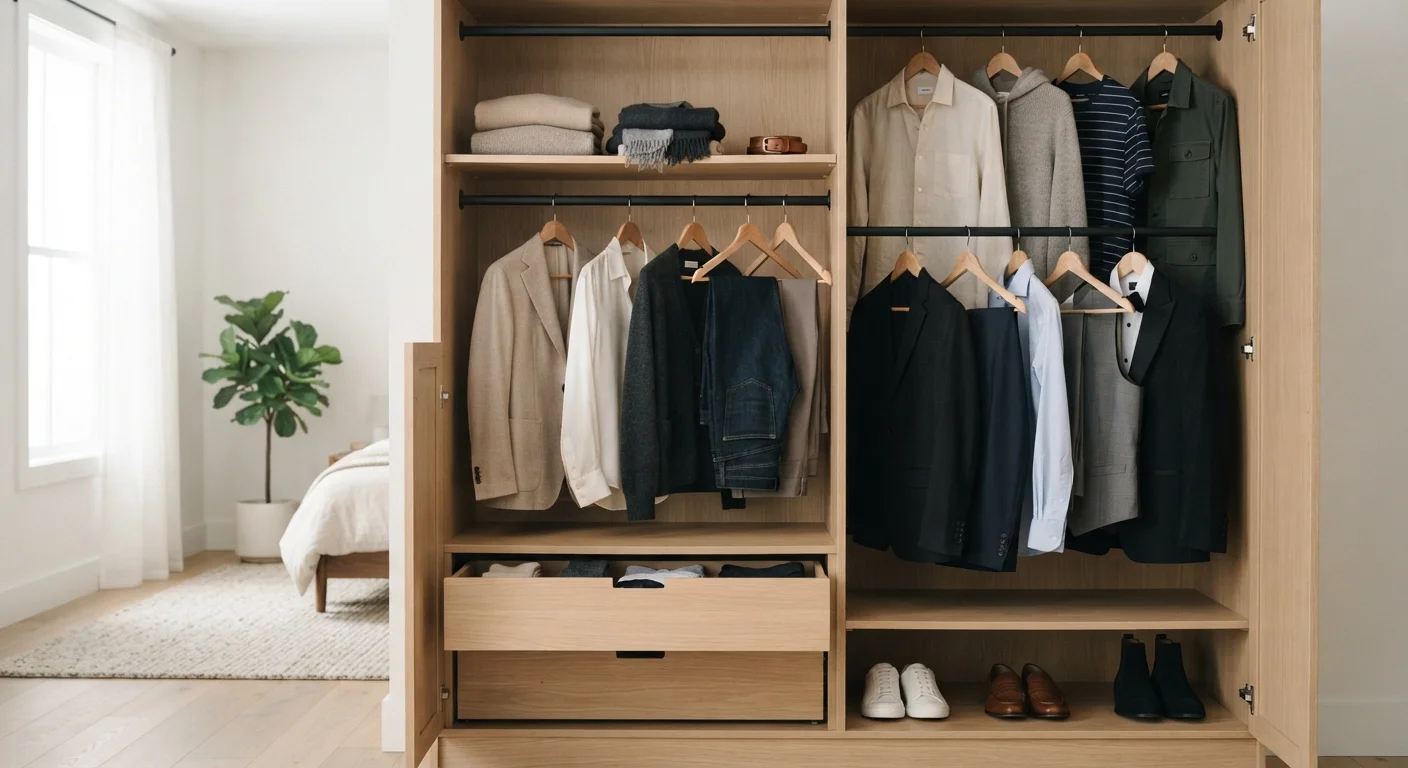
Key Takeaways
- Your personal aesthetic can — and should — translate across every dress code, not just casual settings.
- Identifying a consistent color palette and silhouette preference is the fastest route to cross-context cohesion.
- Versatile anchor pieces bridge the gap between dress codes without sacrificing personal style.
- Small signature details, like a consistent accessory or fabric preference, unify outfits across contexts.
- Building a coherent wardrobe takes deliberate editing, not more shopping.
Why Most Wardrobes Feel Fractured
Many people describe opening their closet and feeling like they're looking at three strangers' wardrobes — one for weekends, one for the office, one for weddings. That fragmentation is one of the most common frustrations for anyone building a personal style from scratch.
The culprit is almost never a lack of clothes. It's the absence of a unifying thread — a consistent set of preferences in color, silhouette, or texture that make your choices feel like yours across every setting. Understanding the building blocks of personal style is the essential first step before trying to reconcile different dress codes.
The good news: you don't need to rebuild your wardrobe from scratch. You need to identify what already feels most like you and let it carry through.
Best Practices for Cross-Context Style Consistency
The following practices are drawn from foundational style principles used by wardrobe editors and personal stylists. Apply them in sequence or pick the ones that address your specific friction points.
Define your palette before you define your dress codes
A consistent color story is the single most powerful tool for wardrobe cohesion. When your casual, work, and formal pieces share a palette — even a loose one — they visually belong together, reducing the 'three wardrobes' effect. This also makes getting dressed faster because combinations are predictable.
Identify your preferred silhouette and honor it at every formality level
People often feel most themselves in a particular silhouette — relaxed and oversized, tailored and structured, or somewhere in between. Abandoning that silhouette when you dress up (or down) is what makes formal outfits feel like costumes and casual outfits feel sloppy. Your silhouette is part of your identity.
Choose anchor pieces that genuinely cross dress codes
Certain garment categories — a well-cut blazer, quality knitwear, straight-leg trousers — adapt across contexts with minimal restyling. Building around these reduces redundancy and naturally threads your aesthetic through different settings. Revisiting fashion basics can help you identify which categories deserve investment.
Keep one signature detail consistent across all contexts
A recurring element — a specific type of accessory, a consistent fabric preference, an always-present texture — acts as a visual signature that ties outfits together even when the formality level changes. It's subtle but deeply effective at making a wardrobe feel intentional rather than assembled.
Audit your wardrobe for pieces that serve only one context
Single-context pieces aren't necessarily problems, but an accumulation of them is a sign that your wardrobe has fragmented. Periodically identifying which items can't travel across dress codes helps you make more deliberate future choices and reduces closet overwhelm. Understanding why outfits feel 'off' even when they match can surface deeper issues that auditing alone won't solve.
Quick Wins You Can Act on Today
You don't need a full wardrobe overhaul to start feeling more consistent. These immediate actions create visible momentum — and that momentum makes the bigger decisions easier.
For a deeper look at how specific garment categories earn their keep across multiple contexts, see versatile wardrobe pieces that work across multiple occasions.
The Long Game: Evolving Without Fragmenting
Style consistency isn't a fixed destination — it's a habit of self-awareness you build over time. Your preferences will shift, your lifestyle will change, and your wardrobe should reflect that. The goal isn't to freeze your aesthetic but to evolve it intentionally.
Use Dress Codes as Constraints, Not Instructions
Dress codes tell you the minimum expectation for a setting — they don't dictate your personal style within that range. 'Business casual' and 'formal' are guardrails, not blueprints. Once you know your aesthetic anchors, you can work within any dress code without abandoning them. Think of formality levels as volume knobs on the same song, not as entirely different playlists.
When shopping decisions feel overwhelming, revisiting your core palette and silhouette preferences acts as a built-in filter. If a piece doesn't fit either, it's unlikely to feel cohesive — regardless of how appealing it is on a rack or a screen. Letting your style evolve without losing yourself explores how to update your aesthetic as life shifts, without discarding what made it feel authentic. And if you're weighing how much variety you actually need, comparing capsule and full wardrobe philosophies can help clarify the right approach for your lifestyle.