

Key Takeaways
- Style is allowed to evolve as your life, body, and values shift over time.
- Identifying your style anchors prevents you from losing yourself during transitions.
- Auditing what you own before buying new items reveals patterns worth preserving.
- Introducing change gradually helps you test new directions without costly regrets.
- Mood boards and self-reflection exercises ground evolution in authenticity, not trend-chasing.
What you will need
Why Style Is Supposed to Change
A wardrobe that looked exactly right at 22 doesn't have to — and probably shouldn't — look exactly right at 35. Life changes: jobs, relationships, environments, and values all shift how we want to present ourselves to the world. Style that doesn't adapt risks becoming a costume rather than an expression.
The tension most people feel isn't about change itself — it's about change without direction. Shopping impulsively in response to a new life phase or a trend cycle often results in a wardrobe full of pieces that don't quite connect. The steps below give you a framework for evolving intentionally, so what changes feels like growth rather than loss.
For context on the foundational elements worth preserving through any transition, explore the Fashion Basics hub.
What you will need
How to Let Your Style Shift With Confidence
The process of evolving your aesthetic is less about adding new things and more about understanding your own patterns well enough to know what's worth changing. Work through these steps at your own pace — there's no deadline on becoming more yourself.
Change Is Not the Same as Starting Over
Evolving your style does not require abandoning everything you own or everything you've learned about yourself. The goal is refinement, not reinvention. Approach each change as an addition to — or clarification of — a wardrobe identity that already exists.
Identify Your Style Anchors
Before you can evolve your style thoughtfully, you need to know what you're starting from. Style anchors are the consistent elements — a color palette, a recurring silhouette, a fabric preference, or a mood — that make your wardrobe feel like yours. Pull out five to ten pieces you reach for repeatedly and look for common threads.
These anchors are non-negotiable during a transition. They're what prevents evolution from becoming erasure. For a deeper look at what shapes these foundations, see the building blocks of a coherent personal style.
Audit What You Currently Own
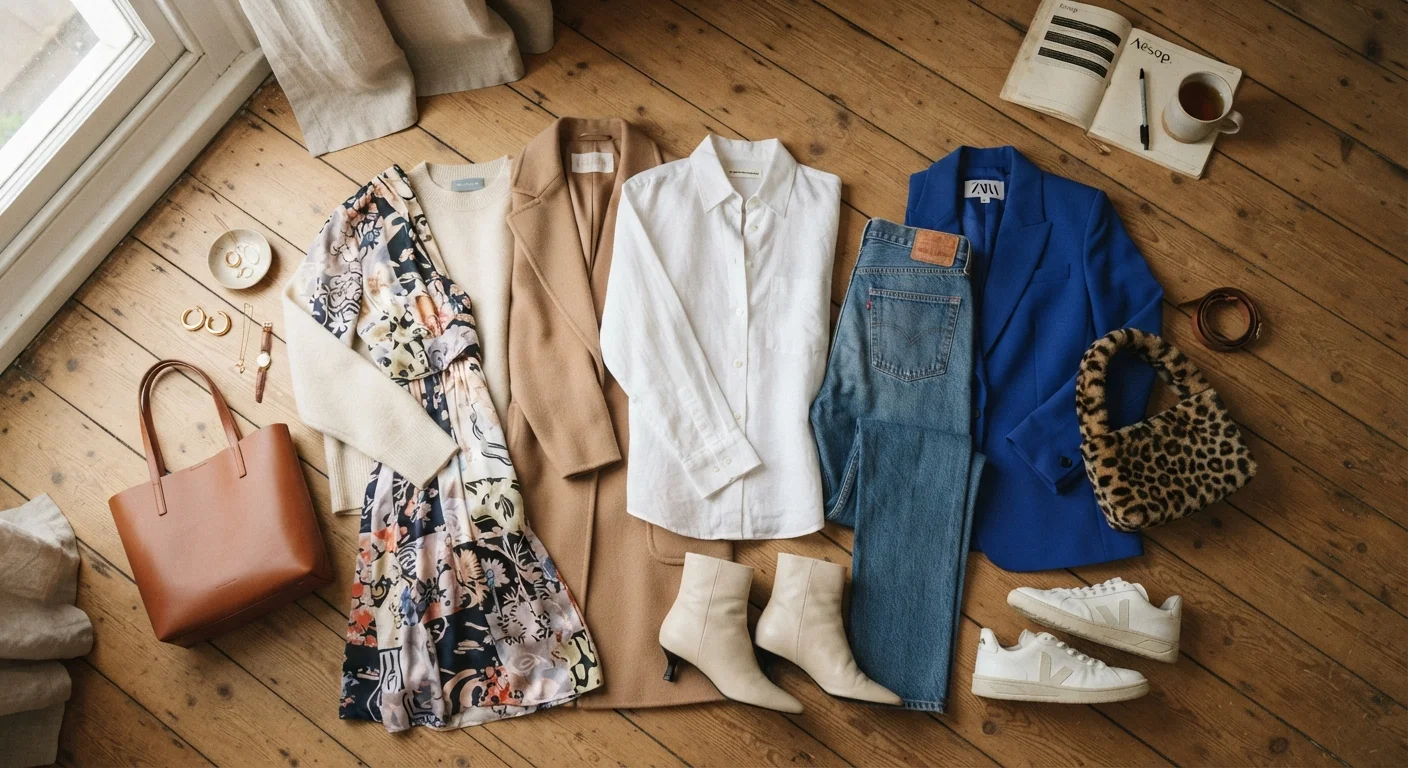
Lay out your wardrobe — or at minimum, go through it section by section — and divide pieces into three categories: things you wear consistently and love, things you keep but rarely touch, and things you're holding onto out of guilt or nostalgia.
This exercise reveals gaps worth filling and patterns worth protecting. It also often surfaces pieces you forgot you loved. A structured style audit checklist can make this process faster and more revealing.
Build a Mood Board for Your Next Chapter
Collect images — from editorial shoots, street style, art, interiors, or nature — that reflect how you want to feel when you get dressed. Don't filter by what seems realistic. You're looking for emotional signals, not shopping lists.
After gathering 20 or more images, look for patterns: recurring colors, proportions, textures, or energy levels. Those patterns point toward your evolving aesthetic. Using mood boards effectively walks through how to turn visual inspiration into actual outfit decisions.
Introduce Change One Category at a Time
Resist the urge to overhaul everything simultaneously. Choose one category — outerwear, footwear, or a single color you're curious about — and experiment there while keeping the rest of your wardrobe stable. This limits financial risk and gives you genuine data on what resonates.
If a new piece integrates easily with what you already own, it's likely aligned with your core aesthetic. If it constantly feels out of place, that's useful information too — not a failure, just a signal.
Check for Consistency Across Contexts
Style evolution should thread through your whole life, not just weekend outfits. As you introduce new elements, test whether they translate across casual, work, and more formal situations. This doesn't mean every piece must be versatile — it means your aesthetic identity should feel coherent even when the dress code changes.
Keeping your style consistent across contexts offers practical strategies for maintaining a single visual identity across different settings.
Borrow Before You Commit
When testing a new aesthetic direction, try sourcing a key piece through a clothing rental service, thrift store, or a swap with a friend before purchasing. Wearing something in real life for a week tells you far more than an online image ever can.
Trend Pressure Can Derail Authenticity
Seasonal trend cycles are designed to create urgency and dissatisfaction with what you already own. Before incorporating a new trend, ask whether it aligns with your existing anchors or whether you're responding to marketing pressure. The Avoiding Buyer Traps hub offers practical tools for recognizing these patterns.
Tools That Make the Process Easier
You don't need many resources to do this well — mostly attention and a willingness to be honest with yourself about what's working. These tools support the process without overcomplicating it.
Style Journal or Notes App
Track evolving preferences, record what you reach for instinctively, and log pieces you consistently skip.
Mood Board Platform (digital or physical)
Collect visual references that reflect where your style is heading without committing to purchases.
Full-Length Mirror
Assess fit, proportion, and overall impression of combinations during your wardrobe review.
Phone Camera
Photograph current outfits that feel right to identify recurring patterns in color, silhouette, and texture.