

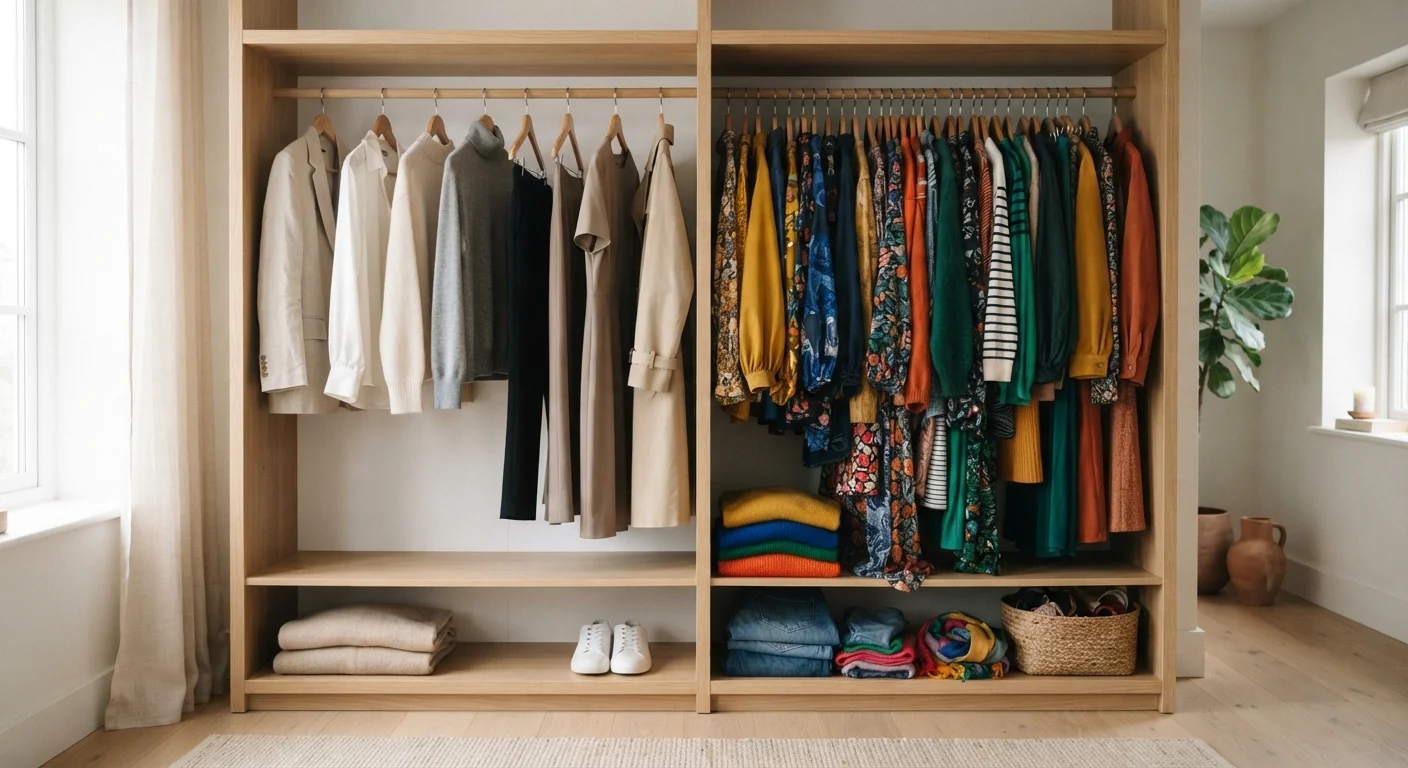
Key Takeaways
- A capsule wardrobe prioritizes versatility and cohesion, typically built around 30–50 carefully chosen pieces.
- A full wardrobe accommodates wider lifestyle variety but requires more intentional curation to avoid clutter.
- Neither approach is objectively better — the right fit depends on your lifestyle, budget, and decision-making style.
- Most people naturally land somewhere between the two extremes, blending capsule principles with room for expression.
- Starting with a strong foundation of versatile pieces benefits both approaches equally.
Option A
Capsule Wardrobe
The intentional, edit-first approach to getting dressed.
Best for: People who want fewer decisions, a cohesive look, and a wardrobe that works without much effort.
Option B
Full Wardrobe
The expressive, variety-driven approach to personal style.
Best for: People whose lives span many dress codes, moods, or social contexts and want options to match.
If you feel overwhelmed choosing an outfit every morning
Capsule Wardrobe
Fewer pieces that all work together dramatically reduce decision fatigue and make getting dressed feel effortless.
If your lifestyle spans multiple dress codes — gym, office, formal events
Full Wardrobe
A broader wardrobe gives you purpose-built options for genuinely different contexts without forcing every piece to multitask.
If you're shopping on a tighter budget and starting from scratch
Capsule Wardrobe
Investing deliberately in fewer, versatile pieces stretches your budget further and avoids costly impulse buys.
If fashion is a genuine creative outlet and you love experimenting with style
Full Wardrobe
Variety fuels self-expression — a fuller wardrobe gives you the palette to explore different aesthetics over time.
If you're building your first wardrobe and unsure where to start
Capsule Wardrobe
Starting with capsule principles builds a solid foundation you can expand intentionally rather than filling space impulsively.
What Each Approach Actually Means
The term capsule wardrobe was popularized in the 1970s by London boutique owner Susie Faux, who described it as a collection of essential, timeless pieces that never go out of style and can be supplemented with seasonal items. In practice, most capsule frameworks suggest keeping somewhere between 30 and 50 total pieces — each one chosen because it works with at least three other items you own.
A full wardrobe, by contrast, isn't defined by a specific number but by a different philosophy: build for every occasion, mood, and context. The goal is having the right outfit for any situation without compromise. The risk, of course, is accumulating pieces that rarely get worn.
If you're assembling a wardrobe from nothing, understanding the logic behind each approach will save you from filling drawers with things that don't serve you.
| Criterion | Capsule Wardrobe | Full Wardrobe |
|---|---|---|
| Typical size | 30–50 pieces | No defined limit |
| Core philosophy | Fewer, versatile essentials | Variety for every occasion |
| Decision fatigue | Low — pieces mix easily | Higher — more choices daily |
| Budget impact | Focused spend per piece | Spread across more items |
| Occasion coverage | Relies on versatile pieces | Purpose-built per context |
| Style expression | Cohesive, curated look | Broad creative range |
| Maintenance effort | Lower — easy to audit | Higher — needs regular edits |
The Real Trade-Offs
Capsule wardrobes shine when it comes to mental clarity and financial focus. When every item earns its place, you spend less time staring at your closet and more time actually living. The psychology behind owning fewer pieces is well documented — reduced choice can genuinely reduce stress.
The trade-off is range. If your life moves between a corporate office, weekend hiking trails, and black-tie dinners, a strict 33-piece capsule may leave you scrambling for specific occasions. Versatile pieces help bridge gaps — see how multi-occasion clothing earns its keep — but there are limits to how far one blazer can stretch.
Full wardrobes, on the other hand, give you genuine creative freedom and practical coverage. The catch is maintenance: without intentional curation, a full wardrobe can quietly become a chaotic one. Keeping your personal aesthetic coherent across contexts becomes harder when you're shopping reactively rather than strategically.
~20%
Clothes worn regularly from the average wardrobe
Research from various closet audit studies consistently suggests most people wear only around 20% of their wardrobe on a regular basis.
35,000
Decisions the average adult makes per day
Estimates from cognitive psychology research suggest decision fatigue is real — simplifying routine choices like outfit selection can preserve mental energy for higher-stakes decisions.
Finding Your Middle Ground
Here's the honest truth: very few people live at either extreme. Most of us naturally operate on a spectrum — perhaps a capsule-style core of neutrals and workhorses, with a layer of more expressive, occasion-specific pieces on top. That hybrid is arguably the most practical starting point for anyone new to intentional dressing.
A useful exercise: audit what you actually wear in a typical week. If you reach for the same eight pieces repeatedly, your instincts are already leaning capsule. If your outfit choices genuinely vary by day, activity, and mood, a fuller wardrobe may simply match your lifestyle.
Budget also plays a role. Setting a clear shopping budget before deciding on an approach helps you invest proportionally — quality over quantity if you're going capsule, broader but still considered if you're going full. And if you're leaning toward fewer, better pieces, it's worth reading about the practical case for quality over quantity before your next purchase.
Neither wardrobe philosophy is a permanent commitment. Try one, notice how it feels, and adjust. The goal isn't a perfect system — it's a wardrobe that actually works for the life you're living right now.