

Key Takeaways
- Fewer clothing choices can reduce daily decision fatigue and lower morning stress.
- A minimal wardrobe works best when every piece coordinates with at least two others.
- Cost-per-wear — total price divided by times worn — is a useful metric for evaluating purchases.
- Starting small doesn't mean starting boring; a neutral foundation can still reflect personal style.
- Editing your wardrobe is an ongoing habit, not a one-time event.
Minimal Wardrobe
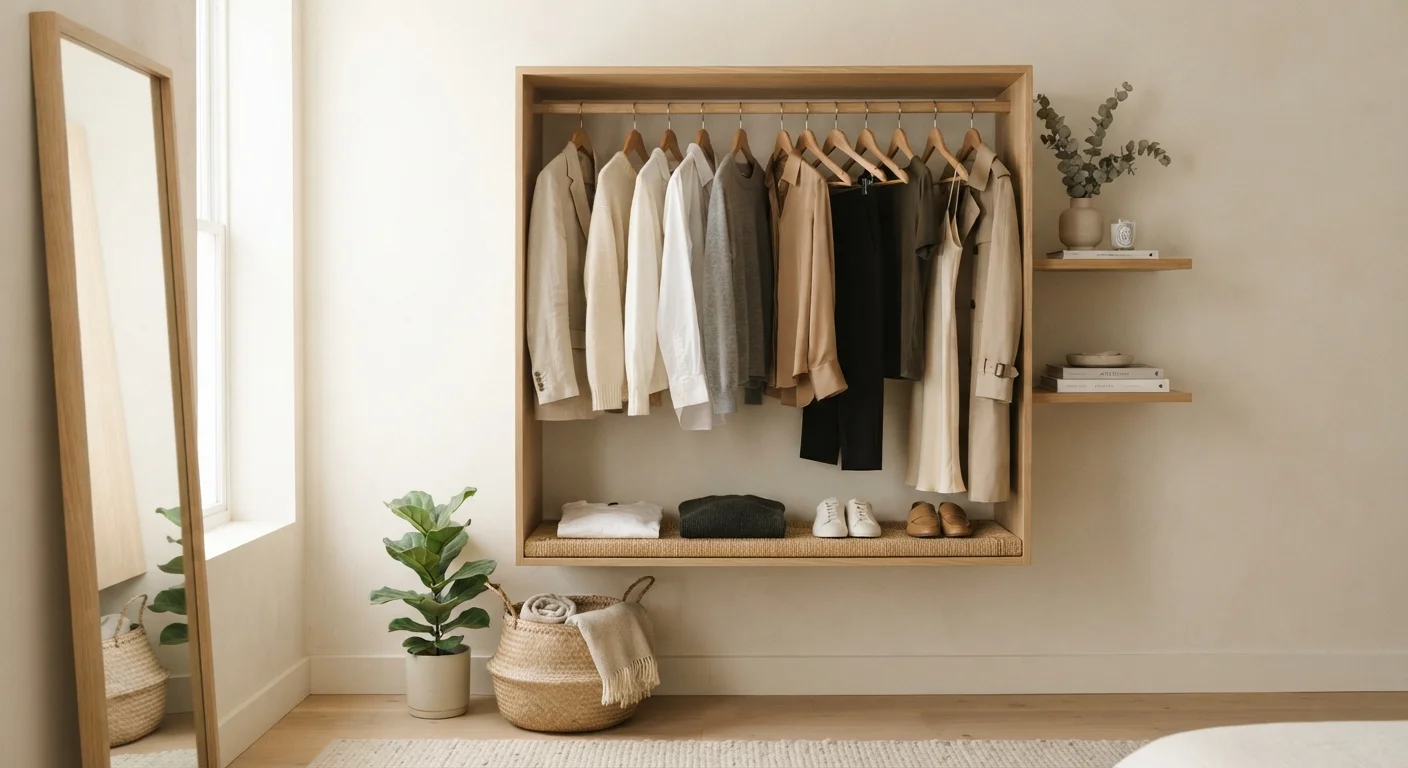
A minimal wardrobe is a deliberately small collection of clothing chosen to cover most of your daily needs without excess. The goal is to own only what you actually wear, so every item earns its place. Rather than restriction, it's about intention — selecting pieces that work together and reflect how you genuinely live.
Minimalism in fashion draws on broader concepts from behavioral economics and cognitive psychology, including 'decision fatigue' — the demonstrated decline in decision quality after a long series of choices.
Why Owning Less Can Feel Like More
Most people, at some point, have stood in front of a stuffed closet and genuinely felt they had nothing to wear. That paradox has a name: choice overload. Research in behavioral psychology suggests that beyond a certain point, more options don't make us happier — they make decisions harder and less satisfying. Applied to your wardrobe, this means a crowded closet can actually drain your energy before your day has started.
A minimal wardrobe sidesteps this by shrinking the decision space deliberately. When everything you own fits your life and works with everything else, getting dressed becomes fluid rather than frustrating. This is the core logic — not aesthetic austerity, but practical freedom.
Start With a Wardrobe Audit
Before buying anything new, spend 20 minutes pulling out everything you own and separating it into three piles: wear regularly, wore in the past year, and haven't worn in over a year. That last pile is your starting point for editing. You'll likely find you already own more than you think — and clearer gaps than you expected.
For a deeper look at how this approach compares to building a larger collection, see our guide on capsule vs. full wardrobe trade-offs.
The Financial Logic: Cost-Per-Wear
One of the clearest arguments for a minimal wardrobe is financial — but it only holds if you shift how you measure value. A common trap is equating a low price tag with a good deal. A more useful metric is cost-per-wear: the purchase price divided by the number of times you actually wear it.
A well-made coat worn 150 times over five years costs far less per use than a cheap impulse buy worn twice and forgotten. This reframe doesn't require spending more upfront — it requires buying more carefully. Our article on quality over quantity in clothing explores this principle in more detail.
~20%
Clothes worn regularly by average owner
Wardrobe audits commonly find that most people regularly wear only around 20% of what they own, leaving the majority unused.
7–10×
More wears from intentional purchases
Clothing industry analysts suggest thoughtfully chosen pieces are worn significantly more times on average than impulse purchases.
2.5 min
Average time spent choosing an outfit daily
Studies on morning routines estimate that outfit decisions consume an average of two to three minutes per day — time that compounds over a year.
Budgeting for clothing works best when it's treated as an intentional category. The budgeting basics hub offers practical frameworks for setting and sticking to a shopping plan that reflects your actual priorities.
Building Cohesion: The Interoperability Principle
A minimal wardrobe isn't just small — it's coordinated. The practical test for any potential addition is simple: does it work with at least two or three items already in your closet? If the answer is no, that piece creates a dead end — an item that can only be worn in one specific combination, leaving it idle most of the time.
This interoperability principle naturally guides you toward a coherent color range and compatible silhouettes. It doesn't mean every piece has to be beige. It means your wardrobe tells a consistent story, and every chapter connects to the next.
If you're building from zero, the guide to building your first wardrobe from scratch walks through practical starting points without the overwhelm.
Personal Style Still Matters
Minimalism in your wardrobe doesn't require conforming to a particular aesthetic. The same logic — intentionality, cohesion, and versatility — applies whether your style is maximalist-adjacent with a curated twist or strictly understated. The size of the collection matters less than how purposefully it was built.
Maintaining a Minimal Wardrobe Over Time
A minimal wardrobe isn't a one-and-done project — it's a habit. Seasons change, bodies change, and lifestyles evolve. The seasonal wardrobe transition guide covers how to rotate pieces thoughtfully without accumulating clutter. A simple rule: when something new comes in, consider whether something old should go out.
The goal is a wardrobe that stays honest — one that reflects how you actually live right now, not who you used to be or hope to become. That clarity, more than any particular number of items, is what a minimal wardrobe is really about.
Explore more strategies for expressing your personal style with intention at our personal style tips hub.