

Key Takeaways
- Audit your actual lifestyle before buying a single item — it shapes every decision that follows.
- A functional wardrobe starts with five to seven versatile categories, not a full closet.
- Neutral colors and simple silhouettes multiply your outfit options without multiplying your spending.
- Budget intentionally: spend more on high-frequency items, less on occasion-specific pieces.
- Outfits are built from combinations — knowing how pieces interact matters more than owning more.
Start here
Start With Your Real Life, Not Your Dream Life
Next
The Core Categories Every Wardrobe Needs
Then
How to Prioritize When Budget Is Limited
Build on it
Building Outfits, Not Just Buying Clothes
Avoid pitfalls
Common First-Timer Mistakes to Sidestep
Start With Your Real Life, Not Your Dream Life
The biggest wardrobe-building mistake beginners make is shopping for the life they imagine rather than the one they actually live. Before you spend anything, take an honest look at your weekly routine. How many days do you work in an office versus at home? How often do you dress for social events, exercise, or casual errands? The answers shape your entire shopping list.
Use this simple breakdown: roughly sketch out your average week in percentages — for example, 60% casual, 30% professional, 10% dressy. Your wardrobe should reflect those proportions. If you're unsure where to begin, the self-assessment checklist for first-time wardrobe builders walks you through this process step by step before you spend a single dollar.
Capsule wardrobe
A small, curated collection of interchangeable clothing pieces designed to create many outfits from few items. Every piece is chosen to work with the others.
Cost-per-wear
A way of thinking about clothing value: divide the price of an item by how many times you'll realistically wear it. A pricier piece worn constantly often costs less per wear than a cheap one worn rarely.
Foundation pieces
Basic, versatile items — usually in neutral colors and simple silhouettes — that form the backbone of a wardrobe and pair easily with almost everything else.
Layering piece
A garment worn over a base layer, such as a cardigan, denim jacket, or blazer, that adds warmth, polish, or visual interest to an outfit.
Wardrobe audit
A deliberate review of everything you own — trying items on, assessing fit and condition, and deciding what stays, gets donated, or needs replacing.
Silhouette
The overall shape or outline a garment creates on the body. Simple, clean silhouettes tend to be more versatile and easier to mix with other pieces.
The Core Categories Every Wardrobe Needs
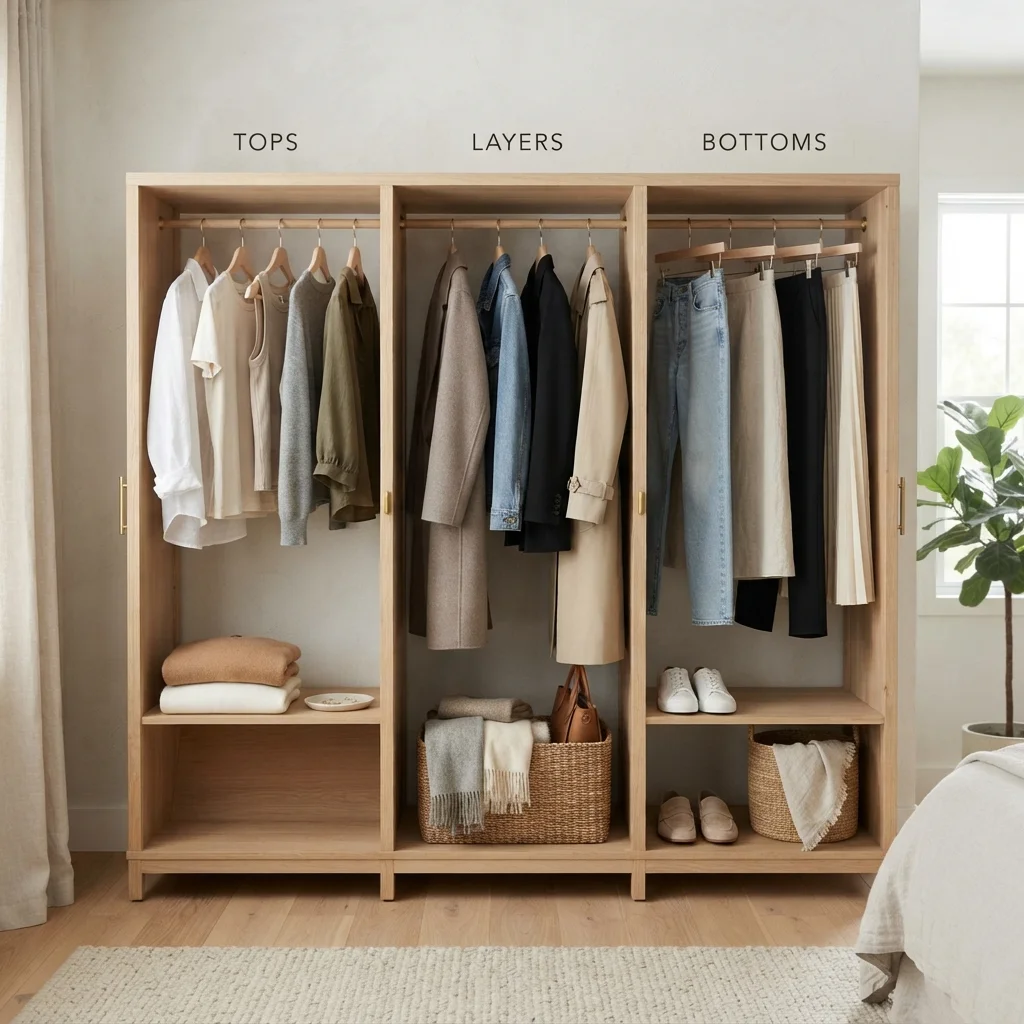
Think of your wardrobe in categories, not individual items. Every functional starting wardrobe covers the same five zones:
- Tops: Plain tees, simple blouses, or lightweight knits in neutral tones. Aim for three to five that feel effortless to wear.
- Bottoms: One pair of dark jeans, one pair of casual trousers, and — depending on your lifestyle — a simple skirt or shorts. These three cover most situations.
- Layering pieces: A cardigan or lightweight jacket bridges seasons and dresses outfits up or down instantly.
- Shoes: Start with two pairs — one for everyday wear, one slightly smarter. Add others only as genuine need arises.
- One versatile outer layer: A clean-lined coat or all-weather jacket that works across multiple contexts.
For a deeper look at which specific types of pieces earn their place by working across casual, smart-casual, and semi-formal settings, see our guide to versatile wardrobe pieces that work across multiple occasions.
The Three-Outfit Rule for New Pieces
Before adding any item to your cart, mentally style it into three distinct outfits using things you already own. If you can't picture three combinations, the piece probably isn't pulling its weight in a starter wardrobe. This simple check prevents a lot of impulse purchases from turning into closet clutter.
How to Prioritize When Budget Is Limited
Budget constraints aren't a barrier to a great wardrobe — they're actually a useful filter. When money is limited, the question isn't "what can I afford?" but "what will I actually reach for most?" Spend proportionally to frequency of use.
High-frequency items — your everyday trousers, your go-to tops, your most-worn shoes — deserve the most considered investment because their cost-per-wear drops dramatically over time. Low-frequency items like occasion-specific pieces can come from more affordable sources without meaningful sacrifice in your daily experience.
If you've never set a clothing budget before, the first-time shopping budget guide offers a practical framework for calculating what you can realistically allocate before you walk into any store or open any app. And if minimalism appeals to you, the logic behind a minimal wardrobe makes a compelling case for why fewer, well-chosen clothes often feel more freeing.
Avoid Buying Everything at Once
It can be tempting to fill an empty wardrobe in a single shopping session — but that's exactly when overwhelm leads to poor choices. Build in stages: buy your highest-priority category first, live with those pieces for a week or two, then identify your next real gap. Patience here pays off in a wardrobe you'll actually use.
Building Outfits, Not Just Buying Clothes
Individual items don't make a wardrobe — combinations do. Before adding any new piece, ask yourself: does this work with at least three things I already own? If the answer is no, it will likely sit unworn.
This is why neutral colors are such a reliable foundation. A white shirt pairs with dark jeans, tailored trousers, or a simple skirt. A grey knit layers over almost everything. When each piece speaks the same visual language, getting dressed becomes genuinely fast rather than frustrating.
A practical exercise: lay out your current pieces and physically test combinations. You may discover you already own more workable outfits than you realized — or quickly identify which single addition would unlock the most new combinations.
Common First-Timer Mistakes to Sidestep
Even with the best intentions, first-time wardrobe builders tend to fall into the same traps. Knowing them in advance saves both money and closet space:
- Buying for occasions that rarely happen
- A formal gown or a very specific theme piece feels exciting in the moment but almost never earns its space. Prioritize pieces for your real, recurring life first.
- Ignoring fit
- An ill-fitting garment in a beautiful fabric still reads as sloppy, while a well-fitted basic always looks intentional. Fit is the single most impactful variable in how clothes look on a real body.
- Chasing trends before building foundations
- Trend pieces have a short shelf life. Lock in your foundational categories first — then, once those are solid, trends can be fun, low-stakes additions rather than the backbone of your wardrobe.
- Shopping without a list
- Browsing without knowing your gaps leads to duplication (five similar black tees, no proper trousers) and impulse purchases that don't integrate with anything else you own.
This article provides general fashion guidance for informational purposes only. Individual needs and circumstances vary — treat these principles as a starting framework rather than a fixed prescription.