

Key Takeaways
- A personal aesthetic is a visual language, not a rigid rulebook — it can and should feel flexible.
- Identifying recurring patterns in what you admire is the most reliable starting point.
- Named aesthetic categories are useful reference points, not boxes you must stay inside.
- Translating aesthetic into real choices involves silhouette, color, and fabric — not just trend.
- Style naturally evolves; building a clear aesthetic foundation makes that evolution feel intentional.
Start here
What Is a Personal Aesthetic, Really?
Next
How to Start Identifying What Draws You In
Then
Common Aesthetic Frameworks (and Why They're Just a Starting Point)
Apply it
Translating Aesthetic Into Actual Choices
Keep going
Letting Your Aesthetic Breathe and Evolve
What Is a Personal Aesthetic, Really?
The word aesthetic gets thrown around constantly online, but stripped of its buzzword status, it simply means your visual sensibility — the moods, textures, colors, and compositions that reliably resonate with you. It is not a trend, a product category, or a personality type. It is closer to a recurring feeling you get when something just looks right.
For style newcomers, this is actually reassuring news. You do not need to construct an aesthetic from scratch. The preferences that make up your aesthetic have been forming your whole life through the spaces you loved, the films that stuck with you, and the outfits that made you pause on the street. The work is noticing what is already there.
Aesthetic
Your consistent visual sensibility — the moods, colors, textures, and compositions that feel right to you. It is a foundation, not a fixed rule.
Silhouette
The overall shape a garment creates, independent of its color or pattern. Silhouette preference is one of the most stable and revealing aspects of personal style.
Color palette
A set of colors that recur across your wardrobe or inspiration images. A personal palette does not have to be rigid, but a recognizable range makes coordinating much easier.
Mood board
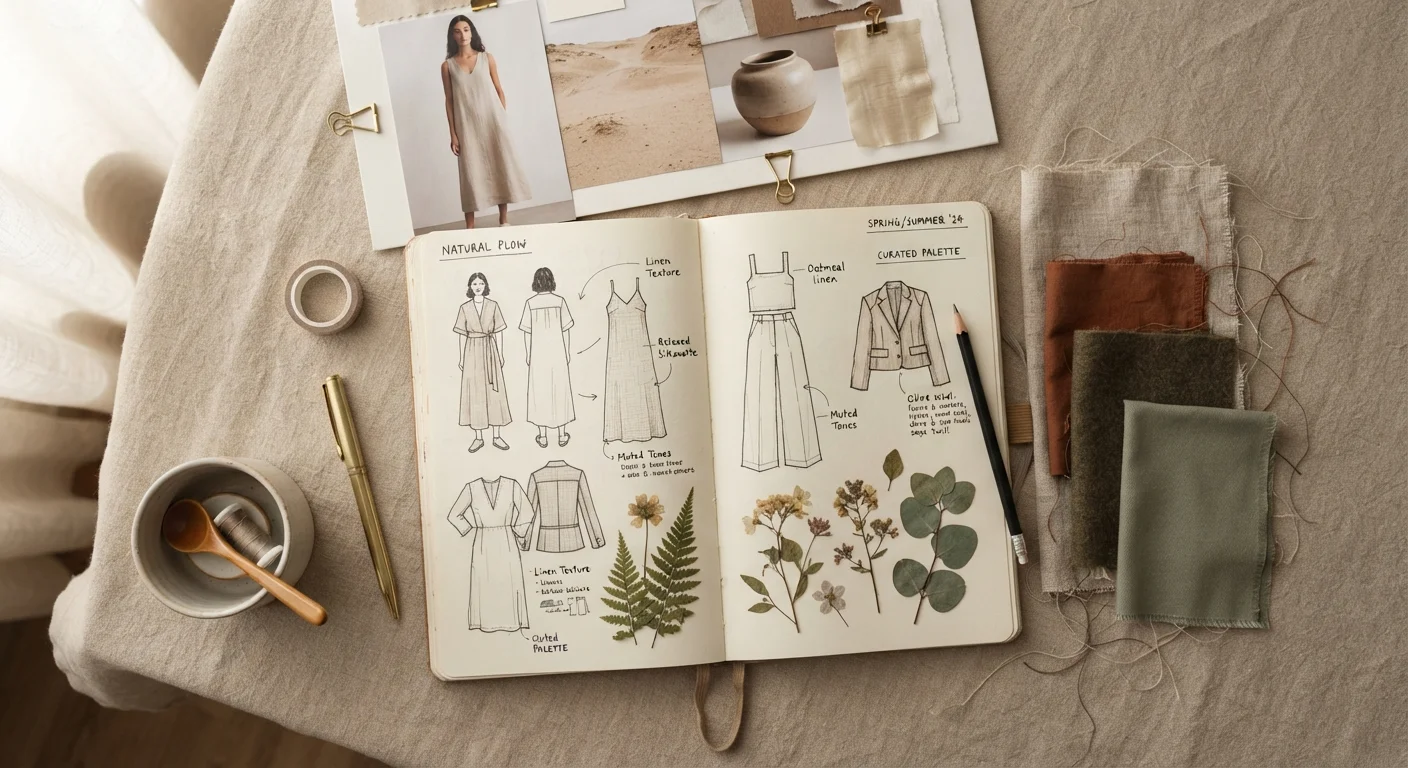
A curated collection of images — outfits, interiors, textures, nature — that captures a visual feeling. Used as a reference tool to identify and articulate aesthetic preferences.
Style audit
A structured review of what you already own, designed to reveal patterns, highlight gaps, and separate what you actually wear from what you keep out of habit.
This guide walks you through that noticing process — moving from vague visual attraction to a clearer, more actionable sense of the style that is authentically yours. If you are ready to eventually put that aesthetic to work in an actual wardrobe, our first wardrobe guide is a natural next step.
How to Start Identifying What Draws You In
The most practical starting exercise is also the simplest: collect images without filtering yourself. Save screenshots, tear out magazine pages, bookmark outfits on social platforms — anything that generates a reaction, even if you cannot explain why. Do this for two to three weeks before analyzing anything.
When you review your collection, look for pattern clusters rather than individual pieces. Ask yourself:
- What color palette keeps appearing? Warm neutrals, cool jewel tones, high contrast black and white?
- What silhouettes recur? Loose and oversized, structured and tailored, fitted and form-following?
- What textures and fabrics show up? Linen, silk, chunky knits, leather?
- What is the overall mood? Relaxed and effortless, polished and put-together, playful and eclectic?
Those clusters are your aesthetic in rough draft form. To help structure this process visually, our guide on using mood boards effectively explains how to organize inspiration into a reference that actually informs real decisions rather than just adding noise.
Save First, Analyze Later
Resist the urge to edit your inspiration collection in real time. If something catches your eye, save it — even if it feels contradictory to other things you have saved. Patterns only become visible when you have enough data points. Give yourself at least two weeks of collecting before you start looking for themes.
Common Aesthetic Frameworks (and Why They're Just a Starting Point)
Named aesthetic categories — minimalist, maximalist, cottagecore, coastal, streetwear, dark academia, and so on — are genuinely useful shorthand. They help you communicate preferences quickly and discover new references you might love. The risk is treating them as rigid identity labels rather than vocabulary.
Most people with a strong, coherent style draw from two or three frameworks simultaneously. Someone might gravitate toward minimalist silhouettes with maximalist color, or combine streetwear ease with tailored precision. That blending is not confusion — it is nuance, and it is where personal style actually lives.
Use named aesthetics as a search tool. If the minimalist aesthetic broadly resonates, explore it: what specific elements attract you, and which feel cold or sterile? Narrowing within a category is just as useful as finding the category itself. For a deeper look at the structural elements that make a look feel coherent, see our piece on the building blocks of personal style.
Aesthetic Labels Are Vocabulary, Not Identity
Platform-driven aesthetic categories shift constantly and are often defined by algorithm rather than any coherent design tradition. Use them as a starting point for discovery, not as a box you need to fit inside. What matters is whether the specific elements within a category resonate with you — not whether you can claim the label cleanly.
Translating Aesthetic Into Actual Choices
Aesthetic clarity becomes useful the moment you connect it to concrete decisions. The bridge between inspiration and wardrobe is built through three lenses:
- Silhouette
- The shape of garments relative to your body. Do you consistently admire structured shapes that hold their form, or relaxed drape that moves with the body? This preference cuts across every category of clothing and is one of the most consistent expressions of aesthetic.
- Color palette
- A defined personal palette — even a loose one — makes getting dressed and shopping far more coherent. Most developed aesthetics operate within a recognizable color range rather than reaching for every available option.
- Texture and material
- The tactile quality of clothing shapes how an outfit reads and how you feel wearing it. A preference for natural, breathable fabrics signals something different from a preference for sleek, structured synthetics — both are valid, and both communicate aesthetic.
Before you start shopping around any of these preferences, it is worth understanding what your existing wardrobe already reveals. A style audit of what you already own often surfaces your real preferences more honestly than any inspiration board could.
Letting Your Aesthetic Breathe and Evolve
One of the most common anxieties among style beginners is the fear of getting it wrong — of committing to an aesthetic only to feel differently in a year. That fear is worth releasing. Aesthetic development is iterative by nature, and a style that never shifts is probably a style that was never truly explored.
The goal is not permanence but intentionality. When you have a clear sense of what your aesthetic is rooted in — your foundational color preferences, silhouette instincts, and mood references — then changes feel like natural growth rather than starting over. You carry the through-line even as the details shift.
Our article on letting your style evolve without losing yourself explores how to update your aesthetic as your circumstances and tastes change, without discarding what made it feel authentic in the first place. Style is a living practice — the more fluently you understand your own aesthetic, the more confidently you can shape it.
Style Inspiration Mood Board Guide
A practical walkthrough for building a focused visual reference that informs real outfit decisions rather than just adding more inspiration noise to scroll through.
Wardrobe Style Audit Checklist
A structured checklist for reviewing what you already own, identifying recurring preferences, and spotting gaps — before spending anything new.