

Key Takeaways
- A capsule wardrobe is a small, curated clothing collection where every item pairs with multiple others.
- The concept reduces decision fatigue and makes getting dressed faster and less stressful.
- Capsule wardrobes are built around your actual lifestyle, not an idealized version of it.
- Quality and versatility matter more than quantity when building a capsule collection.
- A capsule wardrobe is a starting framework, not a rigid ruleset — it adapts to you.
Capsule Wardrobe
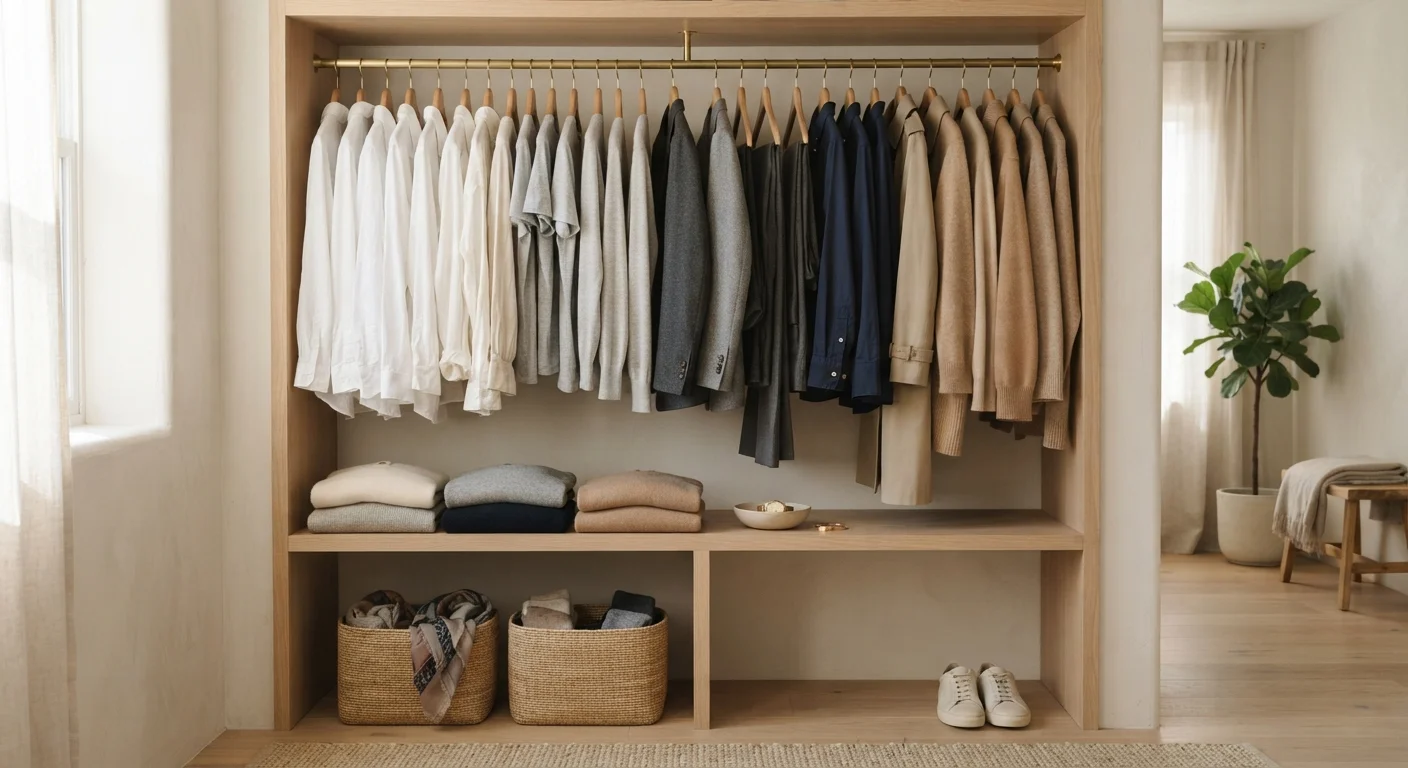
A capsule wardrobe is a compact, intentional collection of clothing pieces — typically between 25 and 50 items — chosen because they work well together and cover your everyday needs. Every piece earns its place by being versatile, durable, and aligned with your personal style. The goal is fewer decisions, less clutter, and more outfits you actually feel good wearing.
The term was popularized by London boutique owner Susie Faux in the 1970s and later brought to mainstream attention by designer Donna Karan's 1985 "Seven Easy Pieces" collection.
What Makes a Wardrobe a "Capsule"?
The word "capsule" signals something contained and complete — like a time capsule that holds only what matters most. Applied to clothing, it means a collection where nothing is filler. Every item you keep should serve a clear purpose and pair naturally with at least three or four other pieces you own.
Think of it less as a specific number of hangers and more as a relationship between pieces. A white button-down works with tailored trousers, dark jeans, a midi skirt, and under a blazer. A pair of clean white sneakers bridges casual and smart-casual looks. That interconnectedness is the defining feature — and it's what separates a capsule from simply owning fewer clothes.
For a deeper look at which clothing categories earn this versatile status, explore versatile wardrobe pieces that naturally adapt across settings.
~30
Average outfits worn from most people's wardrobes
Studies and wardrobe audits cited by fashion researchers consistently suggest most people regularly wear only a small fraction of the clothes they own.
25–50
Typical capsule wardrobe item range
Most capsule wardrobe frameworks recommend this range as sufficient to cover everyday life without overwhelming decision-making.
Why the Concept Actually Works
Getting dressed shouldn't be stressful. Yet research in decision science consistently shows that more choices — not fewer — tend to increase anxiety and lower satisfaction with outcomes. A wardrobe full of items you don't love or can't combine creates a paradox: lots of clothes, nothing to wear.
A capsule wardrobe sidesteps this by design. When everything coordinates, any combination becomes a valid outfit. That reliability builds real confidence, especially for first-time shoppers who are still figuring out their personal style.
There's also a financial logic worth noting. Investing thoughtfully in fewer, more durable pieces tends to cost less over time than repeatedly replacing cheap items that wear out quickly. For guidance on shopping within a budget, budgeting basics offers practical frameworks to set and stick to your spending limits.
Start With a Wardrobe Audit, Not a Shopping List
Before purchasing anything new, spend 20 minutes pulling out everything you own and identifying your most-worn pieces. These are your capsule anchors. Building outward from what you already love saves money and ensures your capsule reflects your real preferences — not a hypothetical style version of yourself.
How to Start Building Yours
Before you buy a single thing, start with what you already own. Pull everything out and sort it into three groups: what you wear constantly, what you wear sometimes, and what you never reach for. The first group is the seed of your capsule. The second group gets evaluated — does it coordinate? Does it fit your current lifestyle? The third group is a candidate for donation.
Next, identify your lifestyle needs honestly. A person who works from home, spends weekends outdoors, and rarely attends formal events needs a very different capsule than someone commuting to an office five days a week. Your capsule should reflect the life you actually live.
Once you know your gaps, fill them with wardrobe essentials — foundational pieces that form the backbone of most versatile collections. When you're ready to go further, building your first wardrobe from scratch walks through the process step by step.
Capsule Thinking as a Style Foundation
A capsule wardrobe isn't a finish line — it's a framework you'll refine over time as your style clarifies and your life changes. Seasons shift, jobs change, tastes evolve. The approach adapts with you because the principles stay constant: choose intentionally, prioritize versatility, and keep only what you actually wear.
It's also worth knowing this approach exists on a spectrum. Some people thrive with a strict minimal capsule; others prefer a larger wardrobe with capsule principles loosely applied. Comparing capsule and full wardrobe approaches can help you figure out which philosophy suits how you actually live.
For the philosophical underpinning — why owning fewer clothes can genuinely feel more freeing — the logic behind a minimal wardrobe explores the psychological and practical case. And whenever you want help discovering the style that's distinctly yours, personal style tips is a great ongoing resource.
“A capsule wardrobe is about owning the right things, not the most things. When your wardrobe reflects your actual life, getting dressed stops being a chore.”
— Susie Faux, London boutique owner and originator of the capsule wardrobe concept