

Key Takeaways
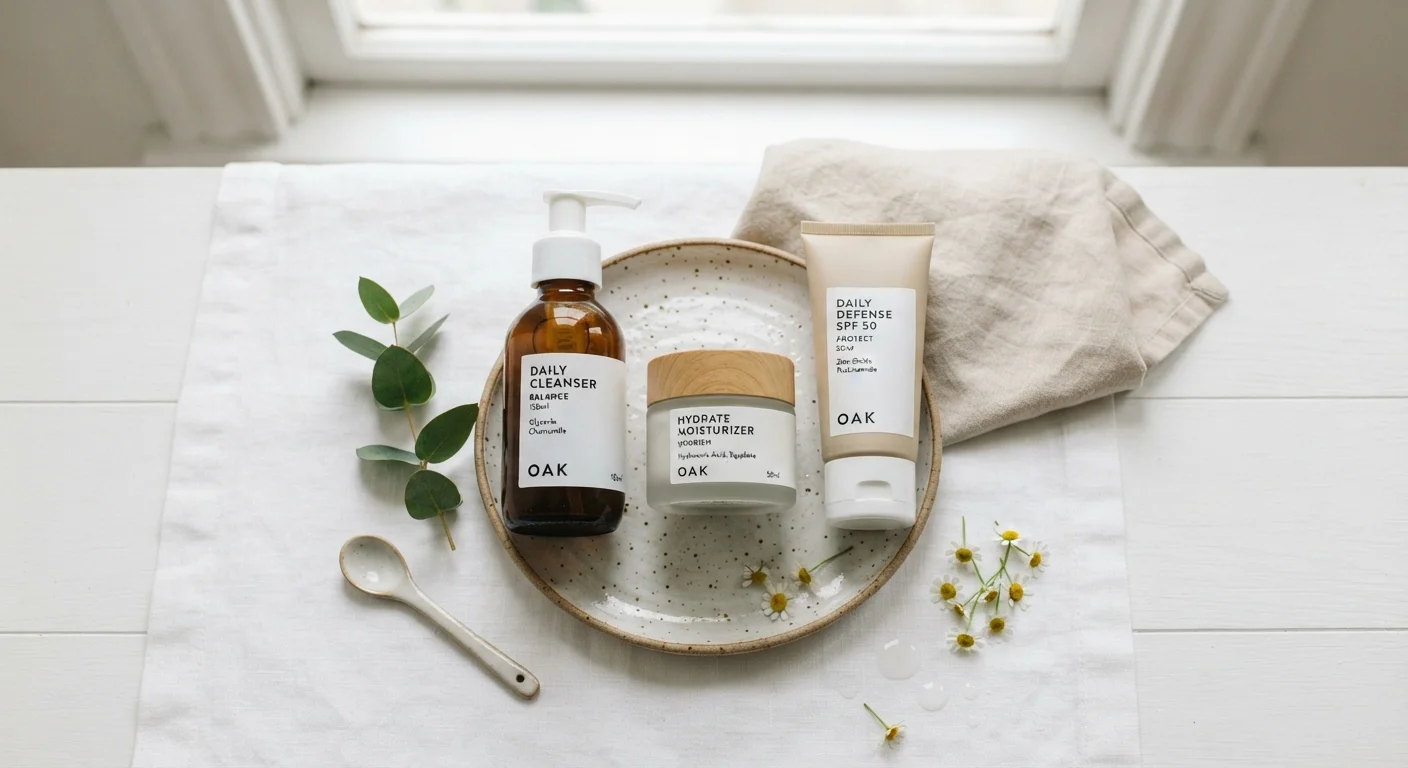
- Three products — cleanser, moisturizer, and SPF — form the foundation of every effective skincare routine.
- Knowing your skin type guides every product decision you'll make going forward.
- Consistency over weeks matters far more than the number of products you use.
- Morning routines prioritize protection; evening routines focus on repair and recovery.
- Adding too many new products at once makes it impossible to identify what's helping or causing irritation.
Start here
Why a Skincare Routine Actually Matters
Next
Know Your Skin Type First
Core skills
The Core Three: Cleanse, Moisturize, Protect
Apply it
Building Morning and Evening Routines
When you're ready
When to Add More Steps
Why a Skincare Routine Actually Matters
Skincare doesn't need to be a ten-step ritual with a shelf full of serums. At its core, a routine is simply a consistent set of habits that help your skin stay clean, balanced, and protected from daily stressors like pollution and UV exposure. The payoff isn't just about appearance — intact, well-maintained skin is your body's first line of defense against environmental damage.
If you've never followed any kind of routine before, the good news is that starting from zero gives you a clean slate. You don't need to undo years of elaborate habits; you just need to build a few reliable ones. For a deeper overview of how skin actually functions, this complete skincare reference is an excellent companion read.
Skincare Is General Wellness, Not Medicine
The information here is meant to help you build general healthy habits, not to treat or diagnose any skin condition. Concerns like persistent acne, rosacea, eczema, or unusual changes to your skin should be evaluated by a qualified dermatologist — not managed with over-the-counter products alone.
Know Your Skin Type First
Before buying a single product, identify your general skin type — it's the compass for every decision that follows. The five commonly recognized types are normal, dry, oily, combination, and sensitive. You can get a rough sense by washing your face, patting it dry, and waiting 30 minutes without applying anything.
Skin barrier
The outermost layer of skin that acts as a protective shield, keeping moisture in and irritants out. Harsh products or over-cleansing can damage it.
Non-comedogenic
A product formulated to avoid clogging pores. This label is especially relevant if you have oily or acne-prone skin.
Broad-spectrum SPF
A sunscreen that protects against both UVA (aging) and UVB (burning) rays, rather than just one type. The 'broad-spectrum' label indicates both are covered.
Hyaluronic acid
A naturally occurring molecule that attracts and holds water. In skincare, it's used as a humectant ingredient to boost skin hydration.
Humectant
An ingredient that draws moisture from the environment or deeper skin layers toward the surface. Glycerin and hyaluronic acid are common examples.
Exfoliant
A product that helps remove dead skin cells from the surface. Chemical exfoliants (like AHAs or BHAs) dissolve the bonds holding dead cells together; physical ones use gentle abrasion.
- Normal: Skin feels comfortable, neither tight nor greasy.
- Dry: Skin feels tight, may look flaky or dull.
- Oily: Skin looks shiny, especially in the T-zone (forehead, nose, chin).
- Combination: Oily in the T-zone but dry or normal on the cheeks.
- Sensitive: Skin reacts easily to products or environmental factors — redness, stinging, or itching are common signals.
Your skin type isn't permanent; it can shift with seasons, age, hormones, and environment. Treat this as a starting point, not a fixed label.
The Core Three: Cleanse, Moisturize, Protect
Every dermatologist-backed routine starts with the same three pillars. Master these before adding anything else.
Cleanser
A cleanser removes dirt, oil, and environmental residue without stripping your skin's natural moisture barrier. Gel cleansers tend to suit oily skin; cream or milk formulas work well for dry or sensitive types. Cleanse once in the morning and once at night — more frequent cleansing can disrupt your skin's natural balance.
Moisturizer
Moisturizer helps the skin retain water and keeps the outer barrier functioning properly. Even oily skin benefits from a lightweight, non-comedogenic (won't clog pores) moisturizer. Look for ingredients like glycerin or hyaluronic acid, which attract water to the skin rather than sitting on top of it.
SPF (Sunscreen)
Broad-spectrum SPF is non-negotiable in a morning routine. UV exposure is widely considered the leading environmental factor in premature skin aging. Choose SPF 30 or higher and apply it as the last step before going outside. If you wear makeup, the makeup starter kit guide explains how SPF and foundation layer together.
Apply SPF to Your Neck and Hands Too
Most people stop SPF application at the jawline, but the neck and backs of hands receive significant sun exposure daily. Extending your sunscreen just a few extra inches takes seconds and makes a meaningful difference over time.
Building Morning and Evening Routines
Morning and evening routines serve genuinely different purposes, and structuring them around those goals makes each step feel logical rather than arbitrary.
Morning: Cleanse → Moisturize → SPF. The goal is protection. You're preparing your skin to handle the day's UV exposure, pollution, and environmental stress.
Evening: Cleanse → Moisturize. The goal is recovery. Nighttime is when your skin does most of its repair work, so you're removing the day's buildup and supporting that process with hydration. Skipping evening cleansing leaves pollutants and makeup sitting on your skin for hours.
For a more detailed breakdown of how each routine differs in purpose and product selection, morning vs. evening skincare is the natural next read once you've got the basics down.
When to Add More Steps
Once your core three-step routine feels effortless and your skin is stable — typically after four to six weeks — you can consider adding one new product at a time. Common next steps include a toner (to balance pH after cleansing), a serum targeting a specific concern like uneven tone or texture, or an exfoliant used once or twice a week to clear away dead skin cells.
Don't Introduce Multiple New Products at Once
Adding several new products simultaneously makes it nearly impossible to tell what's helping, what's neutral, and what's causing a reaction. Introduce one new product every two to three weeks and watch how your skin responds before moving on.
The one-at-a-time rule matters enormously here. If you introduce three new products in a week and your skin reacts, you'll have no idea which one caused the problem. Patience pays off.
If you're also exploring makeup alongside your new skincare habits, getting the primer and foundation sequence right will save you a lot of trial and error.
This article is for informational and educational purposes only and is not a substitute for professional medical or dermatological advice. If you have a skin condition or persistent concern, consult a qualified dermatologist.