

Key Takeaways
- Knowing your skin type is the single most important step before buying any product.
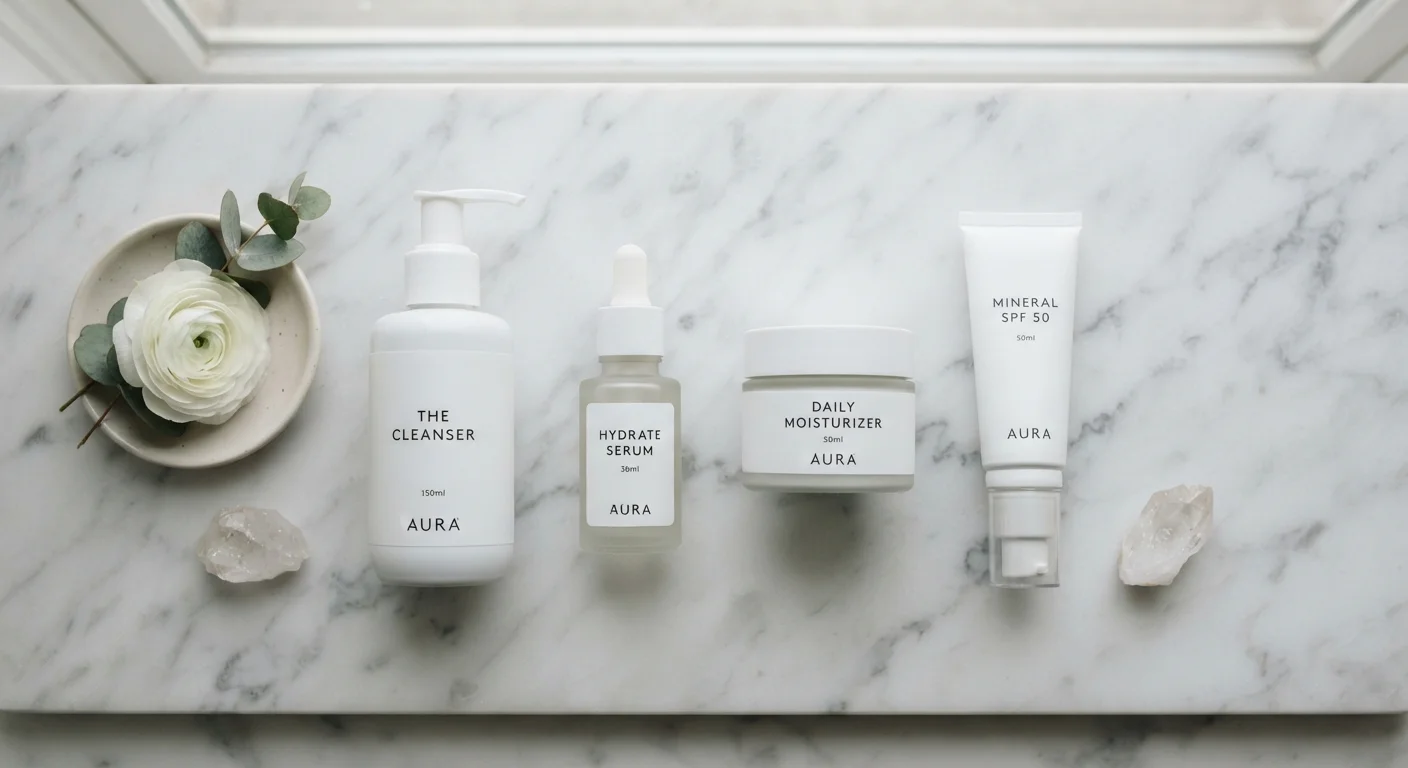
- Every effective routine needs just four fundamentals: cleanser, moisturizer, SPF, and targeted treatment.
- Active ingredients like AHAs and retinoids are powerful — introduce them slowly to avoid irritation.
- A healthy skin barrier is the foundation of good skin; damaging it makes every other product less effective.
- Layering products in the right sequence dramatically changes how well they absorb and perform.
- Consistency over time matters far more than which specific products you choose.
Why Skincare Feels So Overwhelming (And How to Simplify It)
Walk into any beauty aisle — or open any beauty app — and you'll be met with hundreds of serums, toners, essences, mists, and masks, each promising transformation. For a first-time shopper, that's a lot. The good news: effective skincare is genuinely simple at its core, and most of what feels complicated is marketing layered on top of science.
The framework that cuts through the noise is this: understand your skin, learn a handful of key ingredients, and build a short, consistent routine. That's it. Everything else — the 12-step routines, the exotic botanicals — is optional. This guide walks you through every foundational concept so you can make confident, calm decisions without needing a chemistry degree.
90%
Of visible skin aging linked to UV exposure
According to research published in dermatology literature, the majority of photoaging — wrinkles, dark spots, and loss of elasticity — is attributed to cumulative sun exposure over time.
28 days
Typical skin cell turnover cycle
General dermatological consensus holds that the average skin renewal cycle is approximately 28 days in younger adults, slowing with age — which is why skincare results require consistent use over weeks.
60%+
Of people report using wrong products for their skin type
Consumer surveys in the beauty industry consistently find that the majority of shoppers select skincare products without a clear understanding of their own skin type.
Know Your Skin Type First
Skin type is your starting point for everything. Using the wrong products for your type can cause breakouts, dryness, or irritation — not because the products are bad, but because they weren't right for your skin. The five main categories are:
- Normal: Well-balanced, rarely oily or dry, minimal sensitivity.
- Oily: Excess sebum (oil) production, often shiny by midday, prone to clogged pores.
- Dry: Tight, sometimes flaky, needs more moisture and gentle formulas.
- Combination: Oily in the T-zone (forehead, nose, chin), drier on cheeks — the most common type.
- Sensitive: Reacts easily to ingredients, fragrances, or environmental changes.
A simple self-check: wash your face with a gentle cleanser, pat dry, wait 30 minutes, then observe. If your skin feels tight, you're likely dry. If it looks shiny all over, oily. A mix? Combination. Redness or itching? Sensitive. This one observation will save you a lot of wasted purchases.
If you're genuinely unsure of your skin type, err on the side of a gentle, fragrance-free routine for at least a month before introducing anything targeted. This gives your skin a neutral baseline to respond from.
Many apparent skin 'problems' — excess oiliness, breakouts, sensitivity — are actually reactions to existing products, not your true baseline skin type. A reset period removes that variable.
Don't judge a product by how it feels immediately after application. The real test is how your skin behaves 6–8 hours later and over two to four weeks of consistent use.
Short-term sensations like tightness or greasiness often normalize as your skin adjusts to a new formula, and long-term results only emerge after the skin's full cell-turnover cycle.
The Core Four: Products Every Routine Actually Needs
Forget the 10-step routine for now. Here are the four product categories that form the backbone of any effective skincare routine, regardless of skin type:
- Cleanser: Removes dirt, oil, and pollutants without stripping the skin's natural moisture. For most people, a gentle, fragrance-free formula is the safest starting point.
- Moisturizer: Replenishes hydration and helps seal the skin's protective barrier. Even oily skin needs moisture — skipping it can trigger more oil production.
- Sunscreen (SPF): The single most evidence-backed anti-aging and skin-health product available. Dermatologists consistently identify daily broad-spectrum SPF 30+ as essential for all skin tones and types.
- Targeted treatment: A single product addressing your main concern — acne, hyperpigmentation (uneven skin tone), dryness, or early signs of aging.
Start With Just the Core Four
Resist the urge to add serums, toners, or treatments right away. Running a cleanser, moisturizer, and SPF consistently for four to six weeks first gives your skin a stable baseline — and tells you whether any new product you later add is actually helping or causing a reaction.
Once you have these four consistently in place, adding anything else is genuinely optional. You can also read our deep-dive on skincare layering and application order once your routine feels stable.
Understanding Actives: Acids, Retinoids, and Antioxidants
Actives are ingredients formulated to produce a measurable change in the skin. They're the workhorses of skincare — and also where most beginners run into trouble by using too much, too soon. Here's a plain-language breakdown of the main categories:
- AHAs (Alpha Hydroxy Acids)
- Water-soluble acids — like glycolic and lactic acid — that exfoliate the surface of the skin, helping with dullness and uneven texture. Best used a few times a week, not daily.
- BHAs (Beta Hydroxy Acids)
- Oil-soluble acids, with salicylic acid being the most common. They penetrate into pores, making them popular for oily or acne-prone skin.
- Retinoids
- Vitamin A derivatives that increase cell turnover and stimulate collagen production. Highly effective for aging concerns and acne, but require a slow introduction to avoid peeling and redness.
- Antioxidants
- Ingredients like vitamin C and niacinamide that neutralize environmental damage from pollution and UV exposure. Generally well-tolerated and a great entry-level active.
Always Introduce Actives Slowly
Actives are where most skincare mistakes happen. Starting with too high a concentration or using actives too frequently — especially retinoids and AHAs — is the leading cause of self-inflicted skin irritation and barrier damage among beginners. Start with the lowest available concentration, use it infrequently, and build up only once your skin has fully adjusted. If you experience persistent redness, burning, or peeling, stop use and consult a dermatologist.
The Skin Barrier: What It Is and Why It Matters
Your skin barrier — technically the stratum corneum — is the outermost layer of skin. Think of it as a brick wall: skin cells are the bricks, and lipids (fats like ceramides and fatty acids) are the mortar holding them together. When this barrier is intact, it keeps moisture in and irritants out. When it's compromised, skin becomes reactive, dry, and prone to breakouts.
Common barrier disruptors include over-exfoliating, using harsh cleansers, skipping moisturizer, and layering too many actives at once. Signs of a damaged barrier include persistent redness, stinging when applying even gentle products, and skin that feels perpetually tight or flaky.
Repairing the barrier means stepping back: simplify your routine, use a fragrance-free moisturizer rich in ceramides and hyaluronic acid (a humectant that draws water into the skin), and give your skin time — usually a few weeks — to recover.
Barrier Damage Is More Common Than You Think
Over-exfoliation is one of the most frequent mistakes beginners make, often because more product use feels proactive. In reality, exfoliating acids and physical scrubs should be used sparingly. If your skin is suddenly reacting to products it previously tolerated, a compromised barrier is often the culprit — not a new allergy.
Building Your First Routine: A Practical Starting Point
Here's what a sustainable beginner routine looks like in practice:
- Morning: Gentle cleanser → moisturizer → SPF 30+
- Evening: Cleanser → treatment (if using one) → moisturizer
Run this routine consistently for at least four to six weeks before evaluating results. Skin cell turnover takes roughly 28 days in younger adults and longer as we age, so patience is genuinely part of the process.
When you're ready to add an active, introduce one at a time and start slowly — two or three times a week, not daily. This makes it easy to identify what's working (or causing a reaction). And remember, skincare doesn't exist in a vacuum: hydration, sleep, and nutrition all affect how your skin looks and behaves. For a broader health context, explore our Nutrition Basics hub for concepts that connect directly to skin health.
“The best skincare routine is the one you'll actually do every day. Consistency with simple steps will always outperform an elaborate routine you abandon after two weeks.”
— Dr. Whitney Bowe, Board-certified dermatologist and author
The same mindful approach that works for a capsule wardrobe — a few versatile pieces done well — applies here. A short, well-chosen routine will always outperform a cluttered shelf. If you're also building out your personal style, our guide to wardrobe essentials for new shoppers uses the same principles of simplicity and intentionality.
Skincare Layering Order Guide
A step-by-step breakdown of how to layer skincare products in the correct sequence for maximum absorption and effectiveness. Essential reading once your core routine is stable.
Nutrition Basics Hub
Core nutrition concepts that support everyday health — including how diet and hydration connect to skin appearance and overall wellbeing.
EWG Skin Deep Database
A publicly available ingredient safety database that lets you look up individual skincare ingredients and understand what the research says about them.
American Academy of Dermatology — Skin Care Tips
The AAD publishes free, evidence-based skincare guidance written by board-certified dermatologists, covering everything from daily routines to specific skin conditions.
This article is for general informational and educational purposes only and is not a substitute for professional dermatological or medical advice. If you have persistent skin concerns, a skin condition, or are unsure which ingredients are appropriate for you, please consult a qualified dermatologist or healthcare provider.