

Key Takeaways
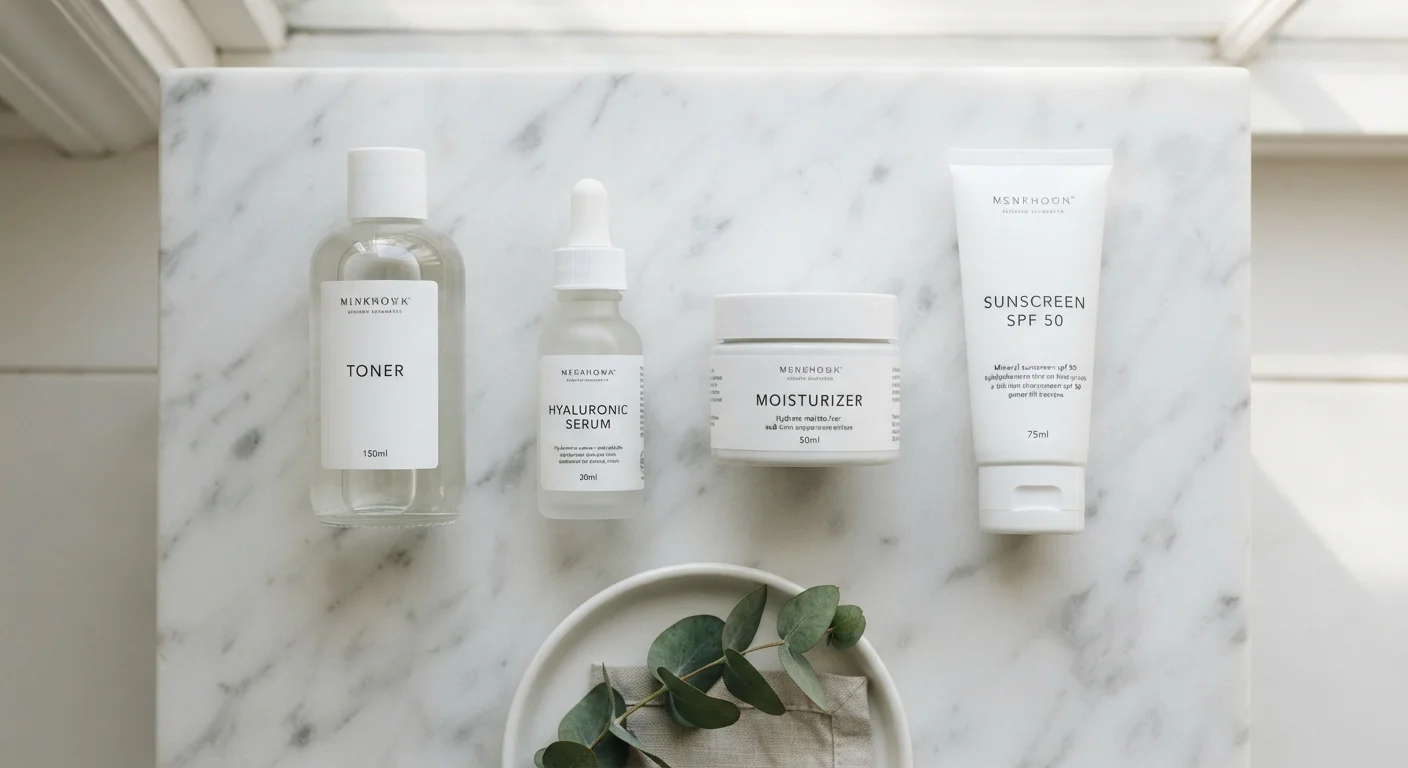
- Apply products from thinnest to thickest texture for maximum absorption.
- Cleansing first removes barriers that block active ingredients from working.
- Sunscreen always goes on last in a morning routine — nothing goes over it.
- Certain ingredient combinations (like retinol and AHAs) can cause irritation when layered together.
- Waiting 30–60 seconds between layers helps each product absorb before the next is applied.
Skincare Layering
Skincare layering is the practice of applying multiple skincare products in a deliberate sequence so each one can penetrate and work effectively. The general rule is to move from lightest to heaviest texture — think water-based formulas before oils and creams. Getting the order right allows active ingredients to reach the skin instead of being blocked by heavier products applied on top.
Molecular weight plays a role: smaller molecules in serums and essences can penetrate deeper layers of the skin, while larger molecules in moisturizers primarily work at the surface to seal in hydration.
Why Sequence Isn't Just a Preference
There's a reason dermatologists and estheticians talk about the order of a skincare routine rather than just the products in it. Skin is a selective barrier — it doesn't absorb everything you put on it equally. When a thick cream sits on the surface before a lightweight serum is applied, the serum essentially can't get through. The heavier formula acts like a lid.
The lightest-to-heaviest rule exists because of how different formulations behave at skin level. Water-based products (toners, essences, serums) have smaller molecules and thinner consistencies that allow them to penetrate more readily. Oils and creams work closer to the surface, locking in what's already been absorbed and creating a seal. Apply them in reverse and you've wasted the active ingredients buried underneath.
Before anything else can work, skin needs to be clean. A cleanser removes makeup residue, sebum, sunscreen, and environmental pollutants that would otherwise block everything that follows. Once you understand that logic, the rest of the sequence starts to make intuitive sense. If you're still figuring out which products your skin actually needs, understanding your skin type is the smartest first step.
Start With Clean, Slightly Damp Skin
Applying toner or essence to skin that's still slightly damp from cleansing — rather than fully dry — can improve absorption. Water helps carry water-based actives into the skin before they evaporate. Aim to begin your next step within about 30 seconds of cleansing, rather than walking away and letting skin dry out completely.
The Standard Layering Framework
Here's how a typical full routine breaks down, along with the reason each step lands where it does:
- Cleanser — Always first. Removes the surface buildup that would block every subsequent step.
- Toner — Rebalances skin's pH after cleansing and provides a hydrating base layer. Applied while skin is still slightly damp for better absorption.
- Essence or serum — The workhorse step. This is where targeted actives live — vitamin C, niacinamide, hyaluronic acid, retinol. Serums go here because they need direct skin access.
- Eye cream — The under-eye area has thinner, more delicate skin; applying eye cream before heavier moisturizer prevents the area from being overwhelmed.
- Moisturizer — Seals in everything below it while providing its own hydration. Thicker formulas go here, not earlier.
- Sunscreen (morning only) — Always the final step. A physical or chemical SPF needs an unobstructed surface to form an even protective layer. Daily sunscreen is one of the most consistently supported habits in skin health research.
Evening routines follow the same logic but swap sunscreen for a richer night cream or facial oil, and this is typically when retinol fits in. For a deeper look at why morning and evening routines diverge, morning vs. evening skincare goals covers the full picture.
~30–60 sec
Recommended wait time between skincare layers
General guidance from estheticians and skincare educators suggests brief absorption time between steps improves efficacy, particularly for watery actives.
3–5
Focused steps in an effective routine
Skincare educators broadly agree that a focused routine of three to five well-chosen products typically outperforms a crowded one with competing actives.
Ingredient Conflicts: What Not to Layer
Getting the order right is one piece of the puzzle. The other is knowing which ingredients don't play well together in the same routine.
Ingredient Interactions Are Still Being Studied
Guidance on ingredient conflicts often evolves as formulation science advances. Some combinations flagged years ago are now considered less problematic at the concentrations found in most consumer products. General caution is still reasonable, but extreme rigidity isn't necessary — especially with well-formulated products designed to minimize pH conflicts.
A few widely acknowledged combinations to approach carefully:
- Retinol + AHAs/BHAs — Both are exfoliating actives. Using them together can lead to significant irritation, dryness, and a compromised skin barrier. Most guidance suggests alternating them (one in the morning, one at night) or on different days.
- Vitamin C + niacinamide — Historically flagged as a problematic pair, though more recent formulation research suggests the concern may be overstated at normal product concentrations. If you're cautious, separating them into different routines is a low-risk approach.
- Retinol + vitamin C — Both are pH-sensitive. Vitamin C works best at a low pH; retinol performs differently at the same level. Morning vitamin C and evening retinol is a straightforward way to sidestep the issue.
If your skin starts showing unexpected redness, flaking, or sensitivity after adding a new product, the layering order — or a conflict between actives — is a reasonable place to investigate. See why skincare sometimes stops working for more on troubleshooting a stalled routine.
Keeping It Simple Without Sacrificing Results
You don't need six steps to have an effective routine. A cleanser, a targeted serum, a moisturizer, and a sunscreen cover the core bases for most people. The value of understanding layering order isn't that it unlocks a ten-step regimen — it's that it makes whatever steps you do use actually work.
If you're new to building a routine, sequencing your base makeup products follows similar logic and is a natural next layer of understanding. And because the right routine also depends on more than just products, lifestyle habits that affect how skin looks rounds out the picture with what no serum can replicate.
Start simple, apply in the right order, and give products time to work. That's the foundation everything else builds on.
This article is for general informational and educational purposes only and does not constitute medical or dermatological advice. Consult a qualified skincare professional or dermatologist if you have concerns about your skin or experience persistent irritation.