

Key Takeaways
- A truly useful starter kit has fewer than ten product categories — quality over quantity always wins.
- Skincare prep matters more than any makeup product you own; hydrated skin changes everything.
- Multipurpose products reduce overwhelm and stretch your budget further as a beginner.
- Start with products that match your real daily routine, not a look you aspire to once a month.
- Knowing what to skip is just as valuable as knowing what to buy.
Summary
18 items · 15–30 minutes
Why Less Is the Real Starting Point
Walking into a beauty aisle for the first time can feel like being handed a menu in a language you don't speak. Hundreds of products, overlapping claims, and zero road map. The good news: most of what lines those shelves is genuinely optional, especially at the beginning.
A beginner kit isn't about building toward a full face of makeup. It's about identifying the small set of products that give you the most confidence, flexibility, and wearability for everyday life. Think of it like a capsule wardrobe — the same logic applies. If you've ever worked through building a foundational wardrobe, you already understand the principle: a few versatile pieces outperform a crowded collection every time.
Before you reach for any makeup product, it also helps to have your skincare basics locked in. Makeup performs noticeably better on a prepped, moisturized base. If you haven't built a daily routine yet, start with the skincare fundamentals first — it's the single best investment you can make before touching foundation.
Skin Prep (Before Any Makeup)
Complexion Essentials
Eye Basics
Lip Essentials
Application Tools
Removal and Hygiene
How to Use This Checklist
Work through each group in order. The first group covers the non-negotiables — items that make every other product work better. Later groups introduce optional additions worth considering only once you've got the basics down.
A note on budget: this checklist is product-category focused, not brand-specific. Prices vary enormously across the market, and the category matters far more than the label at this stage. If you want to apply smart spending habits to your kit-building process, the Budgeting Basics hub has practical frameworks for setting and sticking to a beauty budget.
Don't Skip Skincare to Get to Makeup Faster
Makeup applied over dry, un-prepped skin tends to look patchy, settle into fine lines, and fade faster. Moisturizer and SPF aren't optional extras — they're the literal base your makeup sits on. If your skin feels tight or flaky, no amount of foundation will fix it. Invest five minutes in skin prep and every product you apply afterward will perform noticeably better.
Once you feel solid with this checklist, your natural next step is understanding how the base products — primer, foundation, and concealer — actually work together in sequence. Our follow-up guide on getting the application order right walks through exactly that.
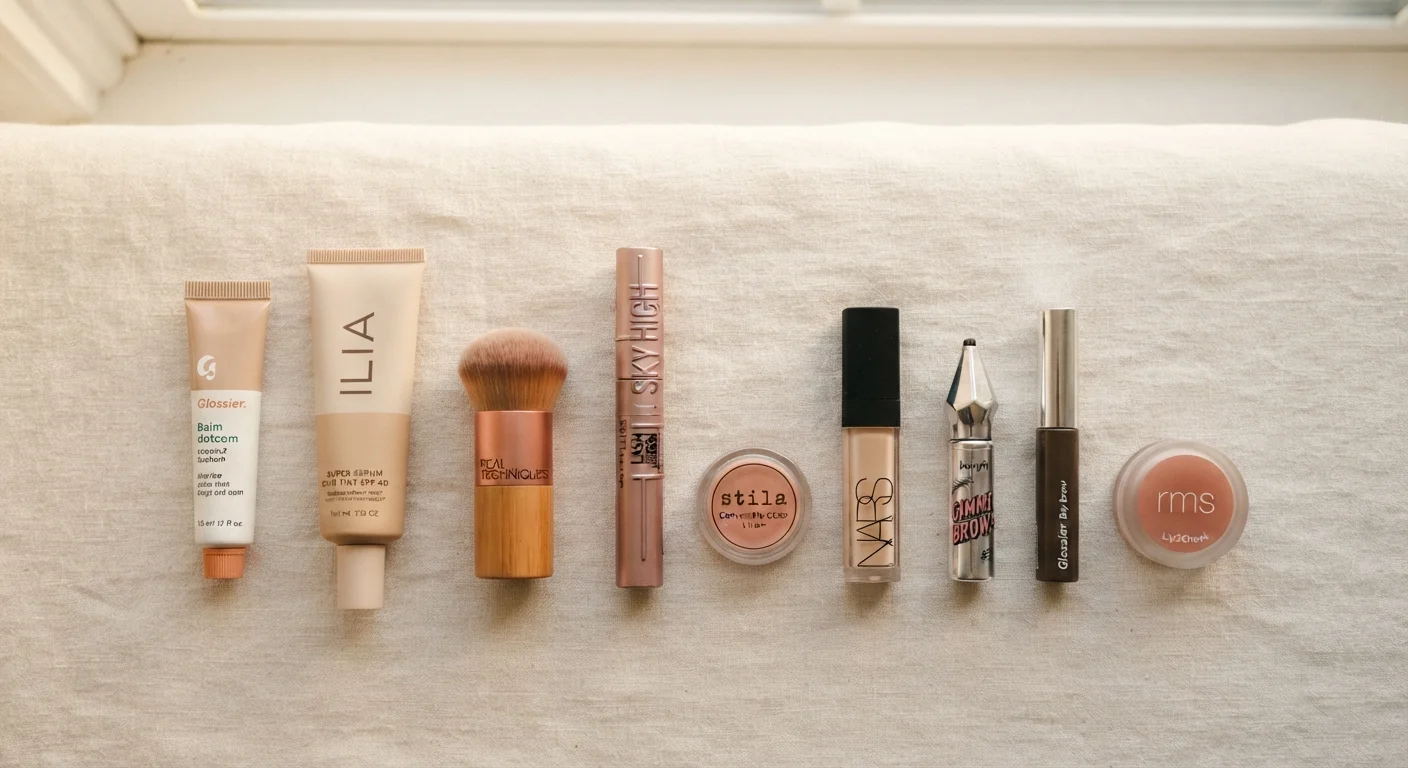
Tinted Moisturizer or Skin Tint
Acts as your complexion base with less coverage and more skin-friendly wearability than traditional foundation — ideal for beginners.
Concealer
Targets specific areas needing coverage without requiring you to apply product all over your face.
Mascara
The single most impactful eye product for beginners; defines lashes and opens the eye with minimal technique.
Tinted Lip Balm
Delivers everyday color and moisture in one step, with no precision application required.
Fluffy Powder Brush
Blends setting powder and blush evenly across the face for a polished, natural finish.
Damp Blending Sponge
Applies liquid or cream base products with a skin-like, seamless finish that brushes don't always replicate.
Micellar Water or Makeup Remover
Gently dissolves makeup at the end of the day without stripping the skin's natural moisture barrier.
Spoolie Brush
Grooms brows and blends eye products into the skin for a natural, intentional look.