

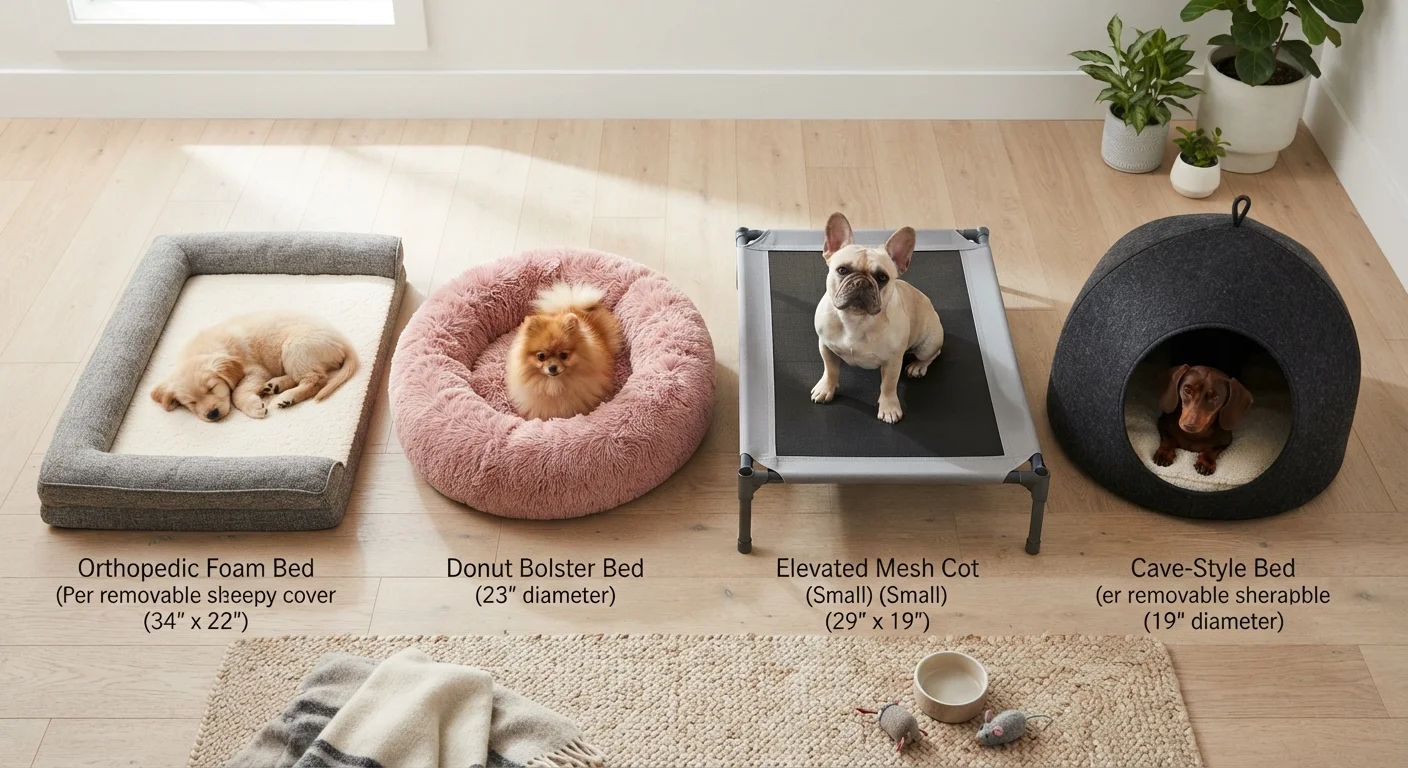
| Primary orthopedic bed benefit | Joint pressure relief via high-density foam |
| Best sleep style for donut beds | Curled-up or leaning against surfaces |
| Elevated bed main function | Temperature regulation through airflow |
| Cave bed best suited for | Burrowing breeds and anxious small pets |
| Key factor in bed selection | Age, health status, breed size, and sleep posture |
Why Bed Design Actually Matters
A pet bed isn't just a comfort accessory — each design reflects a specific intent, whether that's joint support, thermal regulation, anxiety relief, or cooling. Knowing what each style was engineered to do makes it far easier to match a bed to your pet's age, health status, breed tendencies, and sleeping habits.
New owners often default to whatever looks comfortable or affordable, but a mismatch — like putting an arthritic senior dog on a thin, flat cushion — can undercut the benefit entirely. This reference guide breaks down the most common pet bed types, what they're built for, and which pets tend to benefit most.
For a broader look at getting your pet's environment right from day one, see how to set up a safe space for a new pet.
| Primary orthopedic bed benefit | Joint pressure relief via high-density foam |
| Best sleep style for donut beds | Curled-up or leaning against surfaces |
| Elevated bed main function | Temperature regulation through airflow |
| Cave bed best suited for | Burrowing breeds and anxious small pets |
| Key factor in bed selection | Age, health status, breed size, and sleep posture |
The Main Bed Types and Their Intended Functions
Understanding each bed category helps cut through marketing language and focus on functional fit.
Orthopedic bed
A pet bed built with high-density or memory foam to reduce pressure on joints and distribute body weight evenly. Primarily recommended for senior pets, large breeds, or animals with diagnosed joint conditions.
Bolster
A raised, padded edge or wall built into a pet bed. It provides a surface for pets to lean or rest their head against, supporting the neck and spine.
Elevated bed
A cot-style pet bed raised off the floor on a frame. The primary function is airflow and temperature regulation rather than joint support.
Cave bed
An enclosed or hooded pet bed that mimics a den environment. Designed for pets that burrow or prefer reduced light and external stimulation during rest.
Donut bed
A round or oval pet bed with a raised bolster rim that curves inward. Suited for pets that curl into a ball when sleeping and benefit from a sense of enclosure.
Orthopedic Beds
Designed primarily for joint and pressure-point relief, orthopedic beds use high-density memory foam or structured foam layers to distribute body weight evenly. They reduce the pressure that standard bedding places on hips, elbows, and shoulders — areas particularly vulnerable in large-breed dogs and aging pets. If your pet has been diagnosed with arthritis or hip dysplasia, an orthopedic bed is typically what a veterinarian would suggest exploring. See what supplies genuinely support senior pets for more context.
Donut and Bolster Beds
These round or oval beds have raised, cushioned edges that curve inward. The raised rim gives pets something to lean against, which supports the neck and spine during sleep — many dogs and cats instinctively press against a solid surface when resting. The enclosed shape also creates a sense of security, making donut beds a common recommendation for anxious or skittish animals. Pets that curl into a ball when sleeping tend to find this style most natural. Watch how your pet typically rests — their posture tells you a lot. Reading your pet's body language can help you interpret their resting preferences more accurately.
Elevated and Cot-Style Beds
Raised off the floor on a frame, these beds promote airflow beneath the sleeping surface. This makes them particularly effective in warm climates or for double-coated breeds prone to overheating. The elevated design also keeps pets away from cold drafts along the floor in winter. Orthopedic benefits are minimal here — the primary function is temperature regulation and keeping the sleeping surface off damp or cool ground.
Cave and Hooded Beds
These enclosed or semi-enclosed beds mimic a den-like environment. Animals that burrow — certain terrier breeds, dachshunds, and many cats — often strongly prefer this style. The covering reduces ambient light and external stimulation, which can support deeper rest. Cave beds are also frequently used for small pets that run cold, since body heat is retained within the enclosure.
A Note on "Orthopedic" Labeling
The term "orthopedic" is not regulated in the pet supply industry, meaning manufacturers can apply it without meeting a defined foam-density standard. When evaluating an orthopedic bed, look for specifics like foam density (measured in pounds per cubic foot) or foam depth (typically 3–4 inches for meaningful joint support) rather than relying on the label alone. Your veterinarian can also offer guidance on what construction features matter for your pet's specific condition.
Matching Bed Type to Your Pet's Actual Needs
Once you understand what each design does, the selection process becomes more straightforward. Consider three factors: age and health status, breed size and coat type, and observed sleep behavior.
- Senior or large-breed pets with joint concerns: Prioritize orthopedic foam depth and surface area.
- Anxious or insecure pets: Donut or cave styles that offer enclosure and contact points.
- Warm-climate pets or heavy-coated breeds: Elevated cot styles for airflow.
- Burrowing breeds or small pets that run cold: Cave or hooded designs.
For a deeper understanding of what supplies genuinely matter before you stock up, new dog owner supply essentials is a practical starting point. And if a label claims something specific — like "orthopedic-grade foam" — it's worth knowing how those terms are regulated: pet supply labels decoded explains what packaging language actually means.
This article is for general informational purposes only. If your pet has a diagnosed health condition affecting mobility or comfort, consult your veterinarian before selecting bedding or making changes to their environment.