

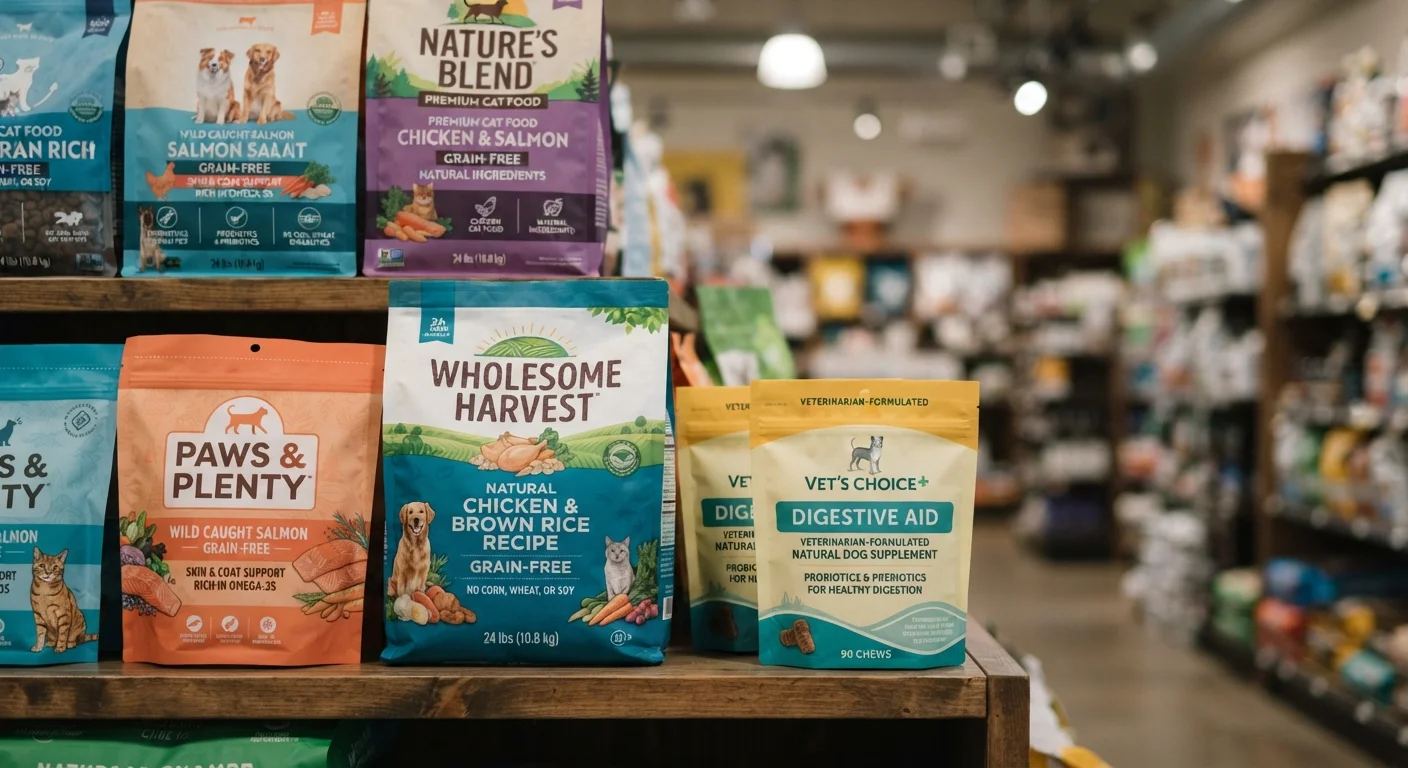
Key Takeaways
- Not all pet product label claims are regulated — some are purely marketing language.
- "Natural" and "holistic" have no standardized legal definition for most pet supplies.
- AAFCO regulates pet food labels more strictly than labels on treats, toys, or accessories.
- "Veterinarian-formulated" does not mean a product has been clinically tested or approved.
- Reading the ingredient list and guaranteed analysis gives more reliable information than front-of-pack claims.
- When in doubt, consult your veterinarian before choosing products based on label language alone.
Pet Supply Label Claims
Pet supply label claims are words and phrases printed on product packaging — such as "natural," "holistic," or "veterinarian-formulated" — that describe or market the product to consumers. Some of these terms are regulated by government bodies and carry specific legal definitions, while others are unregulated marketing language with no standardized meaning. Understanding the difference helps you evaluate what you're actually buying for your pet.
In the U.S., pet food labels are primarily regulated by the Association of American Feed Control Officials (AAFCO) and the FDA, but many non-food pet supply claims fall outside formal regulatory oversight.
Why Pet Product Labels Can Be Misleading
Walking down a pet supply aisle can feel overwhelming. Packaging is designed to attract attention — words like "premium," "holistic," "all-natural," and "vet-approved" appear on everything from kibble bags to flea collars. The problem is that many of these terms carry no legal definition and no regulatory enforcement behind them.
This matters because first-time pet owners, in particular, are likely to trust packaging language at face value. Knowing which claims are meaningful and which are purely promotional helps you filter out noise and focus on what actually signals quality. For a broader look at how to evaluate product claims across categories, see our guide to comparing products.
Pet Food vs. Pet Supplies: Different Rules Apply
Pet food and treats fall under FDA oversight and AAFCO guidelines, which set specific standards for labeling claims like "complete and balanced." Non-food pet supplies — including toys, bedding, grooming products, and supplements — are subject to far less formal regulation. This means the same label term can carry different weight depending on what type of product it appears on. Always consider the product category when evaluating a claim.
Regulated vs. Unregulated Label Terms
The most important distinction to understand is whether a claim on a label is regulated (meaning a government or industry body has defined it and manufacturers must meet specific standards to use it) or unregulated (meaning any company can use it freely, regardless of what it actually contains).
Regulated claims to know
- Complete and balanced: On pet food, this AAFCO-backed phrase means the food meets established nutrient profiles for a stated life stage (e.g., adult maintenance or growth/reproduction). It's one of the most meaningful terms you'll find.
- Natural (pet food only): AAFCO defines "natural" for pet food as ingredients from plant, animal, or mined sources without chemical synthesis. This definition applies only to food and feed — not grooming products or accessories.
- Organic: Products labeled "organic" that use the USDA seal must meet the National Organic Program standards. However, the USDA does not have a formal organic certification program specifically for pet food, making this term less consistent than it sounds.
Unregulated terms to view with caution
- Holistic: No regulatory definition exists. It's entirely a marketing descriptor.
- Premium / Super-premium: Also unregulated. These words say nothing specific about ingredient quality or sourcing.
- Veterinarian-formulated / Vet-approved: Unregulated. A vet may have consulted on the recipe, or their name may simply appear on packaging as a branding decision — there's no required standard of involvement.
For deeper context on how to read ingredient lists on pet food specifically, our pet food label guide breaks down the guaranteed analysis section and what it tells you.
Start with the Back Label, Not the Front
Front-of-pack claims are marketing. The ingredient list, guaranteed analysis, and AAFCO nutritional adequacy statement on the back or side panel are where the substantive information lives. Make it a habit to flip the package over before forming an opinion about a product's quality.
Non-Food Pet Products: Even Less Oversight
Pet food has more regulatory structure than most people realize — but non-food supplies like toys, beds, grooming products, and supplements operate in a much looser environment. A dog shampoo labeled "natural" or a cat toy described as "non-toxic" may reflect genuine care from the manufacturer, or it may simply be unverified marketing language.
When evaluating non-food pet products, these practical steps are more useful than relying on front-of-pack claims:
- Check for third-party certifications where they exist — for example, the USDA organic seal or certifications from recognized safety testing organizations.
- Read ingredient or material disclosures rather than summary descriptors. A full ingredient list tells you more than "made with natural ingredients."
- Look for specific, verifiable language over vague superlatives. "Contains no artificial dyes" is more verifiable than "premium quality."
If you're selecting a pet bed and encountering terms like "orthopedic" or "memory foam," our guide to pet bed types explains what those design terms actually mean in practice.
~50%
Pet owners who rely on packaging claims when choosing food
Survey data from the American Pet Products Association suggests a significant portion of pet owners cite label information as a primary purchase driver, even when those claims are unregulated.
0
Regulatory definitions for "holistic" or "premium" in pet food
According to AAFCO, terms like "holistic," "premium," and "super-premium" have no standardized or enforceable definition on pet product packaging in the United States.
How to Cut Through the Label Clutter
Once you know which claims to trust and which to question, shopping for pet supplies becomes significantly less stressful. Here's a practical framework:
- For pet food: Look for an AAFCO nutritional adequacy statement, prioritize the ingredient list over front-of-pack claims, and consult your veterinarian about your specific pet's needs. Our companion article on popular pet food claims covers trending terms like "grain-free" in detail.
- For supplements: The FDA regulates pet supplements less strictly than pet food. Look for products that have undergone third-party testing, and always discuss supplements with your veterinarian before use.
- For grooming and care products: Prioritize ingredient transparency. If a product makes a health claim (e.g., "promotes coat health"), look for supporting evidence beyond the packaging itself.
The same critical lens applies to human product labels too — if you find this kind of label literacy useful, reading a nutrition label uses a similar approach for food products.
This article is for general informational and educational purposes only and is not a substitute for veterinary advice. Always consult a licensed veterinarian regarding your pet's specific health and nutritional needs.