

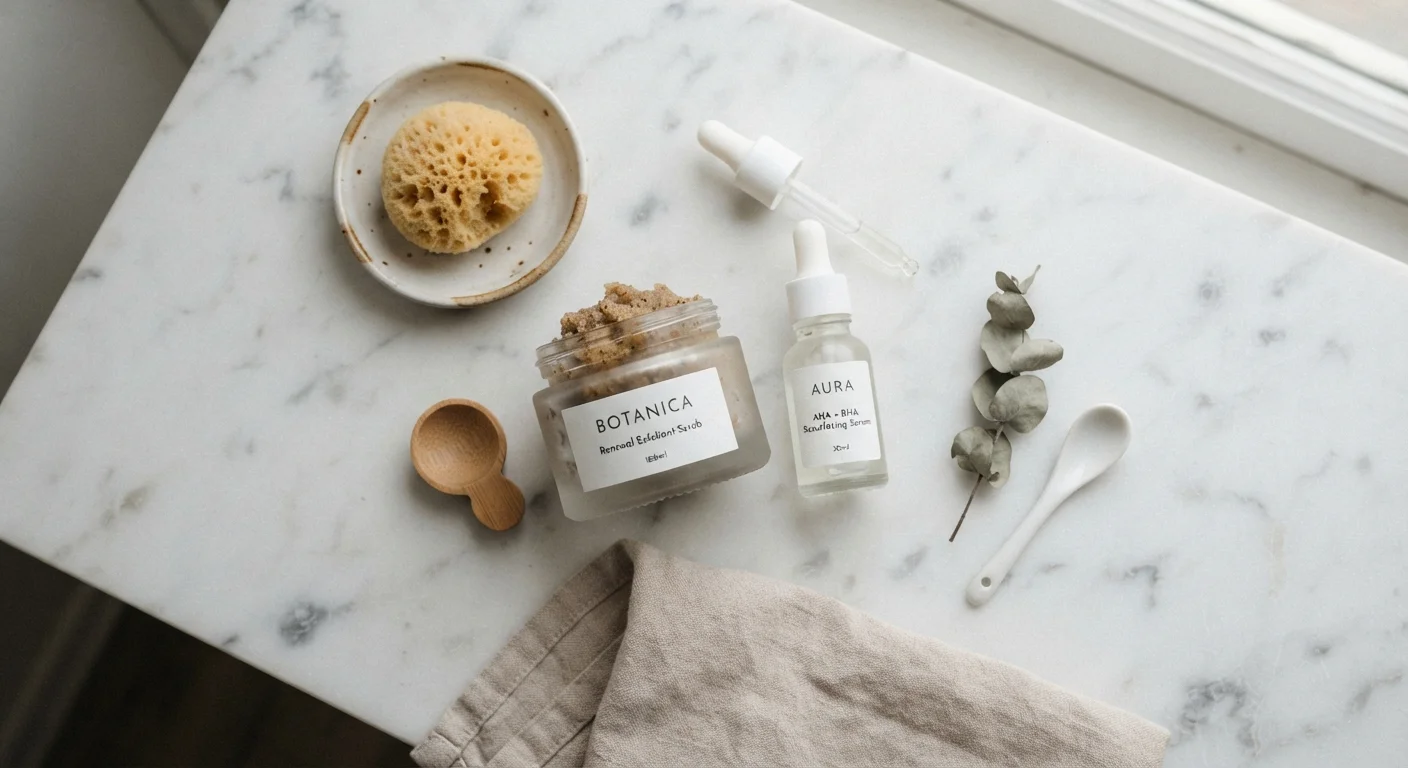
Key Takeaways
- Physical exfoliation removes dead skin manually using grit or texture; chemical exfoliation uses acids or enzymes to dissolve it.
- Chemical exfoliants are generally considered more even and controlled, making them well-suited for sensitive or acne-prone skin.
- Over-exfoliating with either method can damage the skin barrier — frequency matters as much as method.
- Dry and sensitive skin types often respond better to gentle chemical options like lactic acid or enzyme exfoliants.
- Always follow exfoliation with SPF during the day, as freshly exfoliated skin is more vulnerable to sun damage.
Option A
Physical Exfoliation
The hands-on, tactile approach to smoother skin.
Best for: Those who want immediate, visible texture improvement and prefer a familiar scrub-based routine.
Option B
Chemical Exfoliation
The science-backed, deeper-working skin renewer.
Best for: Those targeting uneven tone, clogged pores, or sensitivity who want a gentler but more precise method.
If you have oily or combination skin and want fast texture results
Physical Exfoliation
A gentle physical scrub used once or twice a week can effectively buffer excess surface buildup on oilier skin types without disrupting balance.
If you have sensitive, dry, or acne-prone skin
Chemical Exfoliation
Acids and enzymes work without friction, reducing the risk of micro-tears or irritation that can worsen breakouts or redness.
If you're targeting hyperpigmentation or uneven tone
Chemical Exfoliation
AHAs like glycolic and lactic acid are well-studied for encouraging cell turnover and fading surface discoloration more evenly than scrubs.
If you're a complete skincare newcomer wanting simplicity
Physical Exfoliation
A basic scrub requires no ingredient knowledge and offers an intuitive introduction to exfoliation with easy-to-read results.
What Exfoliation Actually Does
Your skin naturally sheds dead cells roughly every 28 to 40 days — a process that slows as you age. When dead cells linger on the surface, skin can look dull, feel rough, or break out. Exfoliation speeds up the removal of that layer, revealing fresher skin underneath.
The method you choose changes how that removal happens — and that difference has real consequences depending on your skin type. Before picking a product, it helps to understand what each approach actually does at a surface level. For context on where exfoliation fits within a full routine, see our guide to skincare layering.
Physical Exfoliation: Scrub, Polish, Buff
Physical exfoliants work through direct contact. Grains, beads, cloths, or brushes physically dislodge dead skin cells when rubbed across the surface. The feedback is immediate — skin often feels noticeably smoother right after use.
The downside is control. Uneven pressure, coarse particles, or over-scrubbing can cause micro-abrasions — tiny surface tears that compromise the skin barrier and trigger inflammation. This is especially relevant for anyone with active breakouts, rosacea, or thin skin.
Used with a light hand and the right particle size, physical exfoliation remains a valid option — particularly for normal to oily skin types that tolerate friction well. The key is choosing finely milled textures and limiting sessions to once or twice per week.
| Criterion | Physical Exfoliation | Chemical Exfoliation |
|---|---|---|
| How it works | Manual friction removes dead cells | Acids/enzymes dissolve cell bonds |
| Results timeline | Immediate surface smoothness | Gradual improvement over weeks |
| Best skin types | Normal to oily, non-sensitive | All types, including sensitive |
| Pore-clearing ability | Surface only | Inside pores (BHAs especially) |
| Risk of irritation | Higher if over-scrubbed | Lower with correct concentration |
| Sun sensitivity increase | Mild | Notable — SPF required |
| Beginner learning curve | Low — intuitive to use | Moderate — ingredient awareness needed |
Chemical Exfoliation: Acids and Enzymes at Work
Chemical exfoliants don't scrub — they dissolve the bonds holding dead skin cells together. The two main categories are AHAs (alpha-hydroxy acids, like glycolic and lactic acid) and BHAs (beta-hydroxy acids, primarily salicylic acid). A third group, PHAs (polyhydroxy acids), works similarly to AHAs but with larger molecules that penetrate more slowly, making them gentler overall.
AHAs are water-soluble and work on the skin's surface — useful for dullness, dry texture, and uneven tone. BHAs are oil-soluble, meaning they can work inside pores, making them a go-to for blackheads and congestion. Enzyme exfoliants (typically derived from papaya or pineapple) offer a particularly mild option for those new to the category.
Chemical exfoliants require some patience — results build gradually rather than immediately — and they do increase sun sensitivity. Applying SPF the morning after use isn't optional; it's necessary. Common beauty myths often understate how much exfoliation affects sun vulnerability, so treat this step seriously.
Start Low, Go Slow With Acids
If you're new to chemical exfoliants, begin with a low concentration — typically 5–10% for AHAs or around 1–2% for BHAs. Higher percentages don't automatically deliver better results and significantly increase the chance of irritation. Give your skin two to four weeks at a lower strength before considering an increase, and introduce only one new exfoliant at a time so you can accurately assess how your skin is responding.
How to Choose — and How to Avoid Overdoing It
The most common exfoliation mistake isn't choosing the wrong type — it's using either one too often. Signs of over-exfoliation include persistent redness, tightness, unexpected breakouts, and a shiny, almost raw-looking skin surface. These signal barrier damage that needs rest and recovery, not more exfoliation.
A practical starting point: once a week with one method. Assess how your skin responds before increasing frequency. Combining physical and chemical exfoliation in the same routine — or the same week — is rarely necessary for beginners and raises the risk of irritation.
Once you've found your rhythm with exfoliation, the next natural step is understanding how to layer supporting products around it. Our moisturiser vs. serum breakdown explains which products to reach for post-exfoliation to support and nourish freshly renewed skin. You might also find it helpful to review how morning and evening routines differ — exfoliation timing matters more than most beginners expect.
This article is for general informational and educational purposes only. If you have a skin condition, persistent irritation, or are unsure which approach is appropriate for you, consult a qualified dermatologist or licensed skincare professional.