

Key Takeaways
- Moisturisers seal in hydration and protect the skin's outer barrier; serums deliver concentrated actives deeper into the skin.
- Serums are thinner and faster-absorbing; moisturisers are richer and sit on top to lock everything in.
- Most skin types benefit from using both — serum first, moisturiser second.
- You don't need an expensive serum to have a solid routine; a basic moisturiser alone is a valid starting point.
- Choosing the right serum depends heavily on your specific skin concern, not just general hydration.
Option A
Moisturiser
The dependable daily barrier that locks hydration in.
Best for: Anyone who wants to prevent moisture loss, soothe dryness, and maintain a healthy, comfortable skin surface.
Option B
Serum
The targeted treatment that goes deeper and faster.
Best for: Anyone addressing a specific skin concern — uneven tone, fine lines, dullness, or breakouts — who wants concentrated active ingredients.
If you're brand new to skincare and want a simple, effective starting point
Moisturiser
A good moisturiser covers the fundamentals — hydration, barrier protection, and skin comfort — without overwhelming you with choices.
If you have a specific concern like dullness, dark spots, or early fine lines
Serum
Serums deliver higher concentrations of targeted ingredients that a standard moisturiser simply can't replicate.
If your skin feels both dehydrated and you have visible texture or tone concerns
Moisturiser
Use both — but lead with the serum and seal it in with a moisturiser for maximum benefit from each step.
If you have oily or acne-prone skin and worry about feeling greasy
Serum
A lightweight, water-based serum delivers active ingredients without the heavier texture of a cream, keeping skin balanced.
The Core Difference: Function Over Format
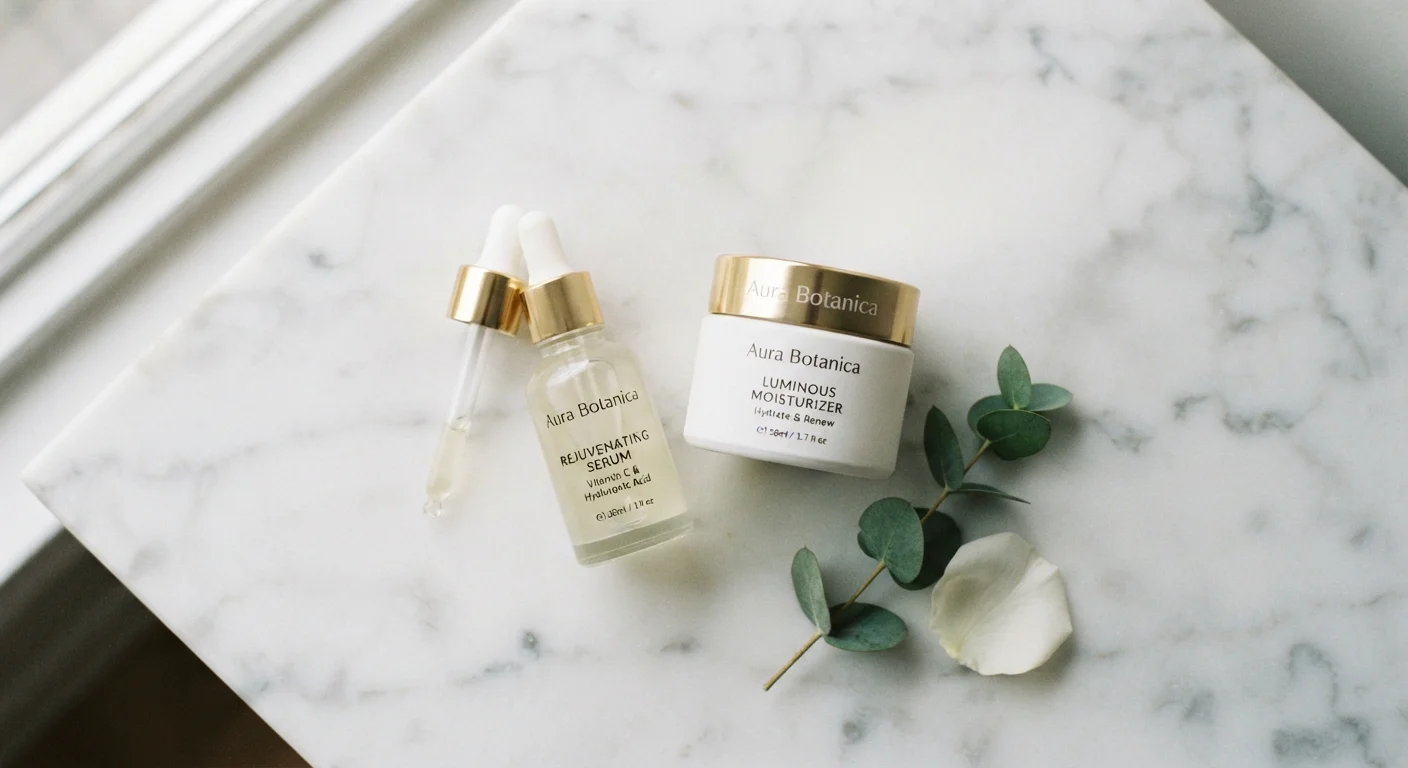
Walk into any beauty aisle and you'll spot both — serums in sleek droppers, moisturisers in satisfying jars. They look different, they feel different, and crucially, they do different things. Understanding that difference is genuinely the unlock for building a routine that works.
A moisturiser is primarily an occlusive and emollient product. Its job is to reinforce the skin's outer barrier, slow down water loss, and keep the surface soft and comfortable. Think of it as a protective seal. A serum, on the other hand, is a lightweight, highly concentrated formula designed to penetrate more deeply and deliver active ingredients — things like vitamin C, hyaluronic acid, niacinamide, or retinol — where they can have a more targeted effect.
Neither is a luxury add-on. They just work at different levels, which is why most dermatologists suggest using both when you're ready. To understand your own starting point, it helps to first know what your skin type actually is — that context shapes every product decision that follows.
| Criterion | Moisturiser | Serum |
|---|---|---|
| Primary purpose | Hydration and barrier protection | Targeted active ingredient delivery |
| Texture | Cream, lotion, or gel (thicker) | Lightweight liquid or oil (thinner) |
| Penetration depth | Surface layer (epidermis) | Deeper skin layers |
| Key ingredients | Occlusives, emollients, humectants | Actives: vitamin C, retinol, niacinamide |
| Application order | Applied last (seals everything in) | Applied first (before moisturiser) |
| Who needs it | Everyone, daily | Those with specific skin concerns |
| Can it stand alone? | Yes, as a baseline routine | No — needs a moisturiser over the top |
What a Moisturiser Is Actually Doing
Moisturisers work through three main mechanisms: occlusives (ingredients like shea butter or petrolatum that form a physical barrier to lock in water), emollients (oils and fatty acids that smooth and soften skin texture), and humectants (ingredients like glycerin that attract water to the skin). Most moisturisers combine all three in varying ratios.
The result is a product that sits primarily on the skin's surface, making it feel comfortable, reducing tightness, and preventing that uncomfortable dryness that comes from environmental exposure — wind, heating, air conditioning, and so on. If you do nothing else in your skincare routine, a basic moisturiser with SPF in the morning is a genuinely solid foundation.
~75%
Skin water content in the epidermis
Research on skin physiology generally estimates that maintaining adequate water content in the epidermis is central to healthy barrier function and skin appearance.
2–3 min
Ideal wait time between serum and moisturiser
Dermatologists commonly recommend allowing a serum to absorb briefly before applying moisturiser so both products can function without interference.
What a Serum Is Actually Doing
Serums are formulated to be thin, fast-absorbing, and ingredient-dense. Because they contain less thickening agents and more active compounds, they can reach the deeper layers of the skin where cellular processes actually happen. The trade-off? They don't provide much in the way of barrier protection on their own — which is exactly why they're applied before your moisturiser, not instead of it.
Different serums target different concerns. A vitamin C serum works on brightening and antioxidant protection. A hyaluronic acid serum pulls moisture into the skin. A niacinamide serum helps with pore appearance and oil balance. Choosing one means getting clear on what you actually want to address — not just grabbing whatever promises the most on the label.
Once you've got both products sorted, how you layer them matters just as much as which ones you pick. Our guide to skincare layering and product order walks through exactly why sequence changes results.
Do You Actually Need Both?
Short answer: not necessarily at first, but probably yes over time. If you're starting from zero, a solid moisturiser is the non-negotiable. Once your routine feels comfortable and consistent, adding a serum targeted to a specific concern makes real sense.
If budget or simplicity is a priority, know this: a well-formulated moisturiser that includes humectants can handle light hydration duties on its own. Serums earn their place when you have a clear goal beyond baseline comfort — and when you're ready to commit to a slightly more involved routine. You might also find your needs shift between morning and evening; morning and evening routines actually serve different purposes, which affects which products belong where.
This article is for general informational and educational purposes only. It does not constitute medical or dermatological advice. If you have a skin condition or medical concern, please consult a qualified healthcare professional.