

Key Takeaways
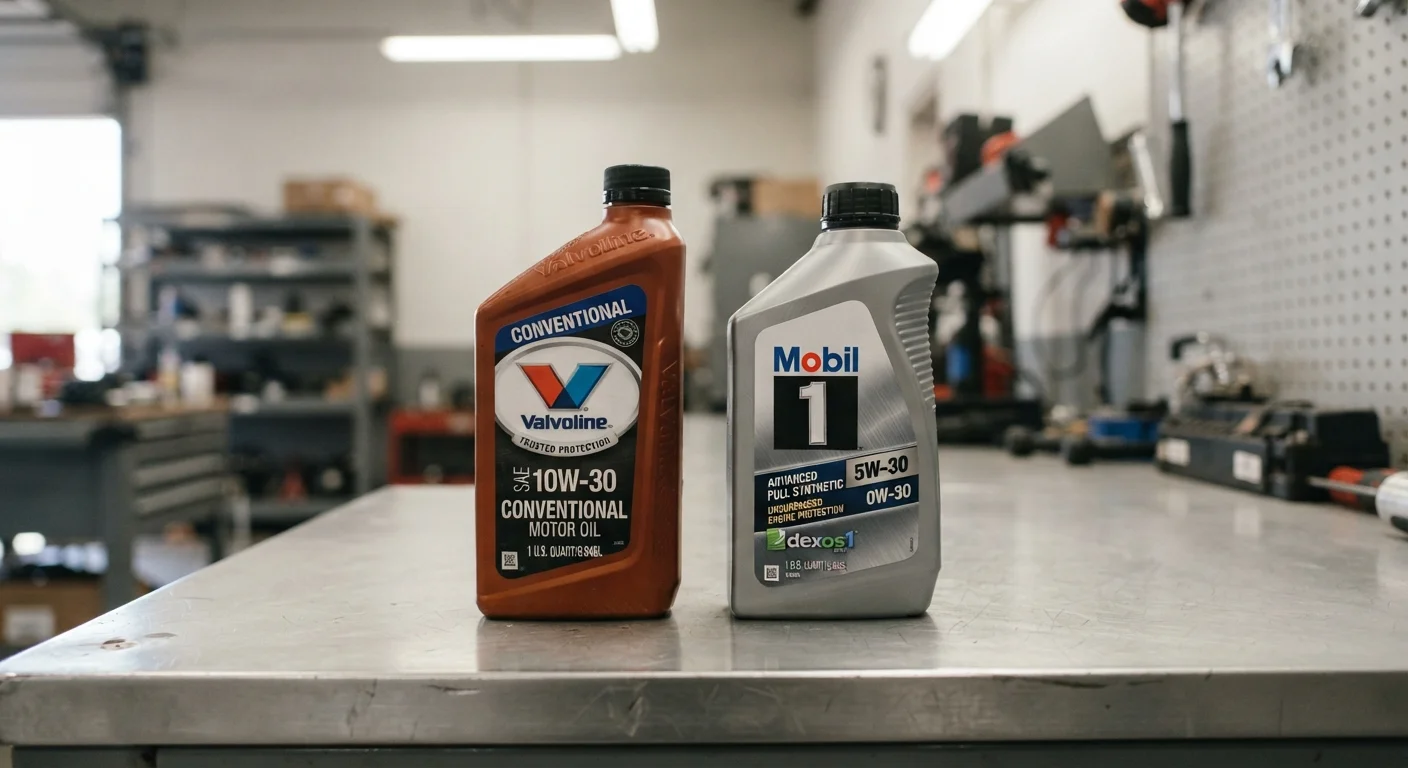
- Conventional oil is refined from crude oil; synthetic is chemically engineered for consistent molecular structure.
- Synthetic oil generally lasts longer between changes and performs better in temperature extremes.
- Conventional oil typically costs less per quart but may require more frequent changes.
- Your owner's manual — not general advice — is the definitive guide to which oil type your car requires.
- Switching from conventional to synthetic is usually safe, but always check manufacturer guidance first.
- Oil type matters less than changing it on schedule — neglect is the real engine killer.
Option A
Conventional Engine Oil
The time-tested, widely available standard.
Best for: Older vehicles with straightforward engine designs and owners following frequent change schedules.
Option B
Synthetic Engine Oil
The engineered option built for modern demands.
Best for: Newer vehicles, high-performance engines, extreme climates, and drivers who prefer longer intervals between changes.
If you drive an older vehicle with high mileage
Conventional Engine Oil
Older engines with more wear may actually benefit from conventional oil's slightly thicker film. Some mechanics also recommend high-mileage blends specifically formulated for engines over 75,000 miles.
If your car's manufacturer specifies synthetic oil
Synthetic Engine Oil
Many modern engines — especially turbocharged and direct-injection designs — are engineered around synthetic oil's properties. Using conventional oil in these engines can void warranties or reduce protection.
If you drive in very hot summers or very cold winters
Synthetic Engine Oil
Synthetic oil flows more reliably at cold startup and resists breakdown at high temperatures, giving better protection in climatic extremes.
If you want the lowest upfront cost per oil change
Conventional Engine Oil
Conventional oil costs less per quart, which can make each service cheaper — provided your vehicle and driving habits support the shorter change intervals it requires.
If you drive infrequently or want longer change intervals
Synthetic Engine Oil
Synthetic oil degrades more slowly, making it a practical fit for drivers who accumulate miles slowly or want fewer service visits per year.
Where Each Oil Comes From
Engine oil's job is straightforward: lubricate moving metal parts, reduce heat, and carry contaminants away to the filter. The difference between conventional and synthetic lies in how that oil is made.
Conventional oil is refined directly from crude petroleum. Refiners remove impurities and add chemical additives, but the base stock retains naturally occurring molecules of varying sizes and shapes. That inconsistency is manageable — but it has limits under stress.
Synthetic oil is built in a laboratory. Starting from either a refined petroleum base or other chemical compounds, engineers restructure the molecules into a uniform shape. The result is an oil with predictable, consistent behavior across a wider range of conditions.
For a deeper look at how viscosity grades (like 5W-30 or 0W-20) interact with oil type, see our guide to engine oil grades and change intervals.
| Criterion | Conventional Oil | Synthetic Oil |
|---|---|---|
| Origin | Refined from crude petroleum | Chemically engineered base stock |
| Molecular consistency | Variable, natural mix | Uniform, controlled structure |
| Cold-weather flow | Thickens more at low temps | Flows faster at cold startup |
| Heat resistance | Breaks down faster under heat | Resists oxidation longer |
| Typical change interval | 3,000–5,000 miles (varies) | 7,500–10,000+ miles (varies) |
| Cost per quart | Lower upfront cost | Higher upfront cost |
| Best engine fit | Older, simpler engine designs | Modern, turbocharged, high-performance engines |
Performance, Protection, and Practicality
In everyday driving, both oil types provide adequate engine protection when used correctly. The practical differences emerge in edge cases that new owners often don't anticipate.
Cold starts are where synthetic oil earns its reputation. On a freezing morning, oil must flow instantly to protect metal surfaces before the engine warms up. Conventional oil thickens more at low temperatures, creating a brief window of higher wear. Synthetic flows faster, shortening that vulnerable period.
High heat is the other extreme. Stop-and-go city driving, towing, or a long summer highway run pushes oil temperatures up. Conventional oil oxidizes and breaks down faster under sustained heat. Synthetic's engineered molecules resist that degradation, maintaining viscosity longer.
Change intervals reflect this durability gap. Conventional oil is commonly changed every 3,000–5,000 miles under older guidelines, though many modern engines and oils can go further. Synthetic oil is often rated for 7,500–10,000 miles or more, depending on the product and your driving conditions. That said, your owner's manual overrides any general rule — always follow the manufacturer's specified interval. You may also want to review common car maintenance myths that lead owners to change oil more — or less — often than necessary.
~75%
US motor oil market share held by synthetic and synthetic-blend oils
Industry estimates suggest synthetic and blend products now account for the majority of US passenger-vehicle motor oil sales, reflecting the shift in modern engine requirements.
0W-20
Most common factory-fill viscosity in new US vehicles
Low-viscosity synthetic-grade oils like 0W-20 are increasingly specified by manufacturers to improve fuel efficiency and cold-start protection in modern engines.
How to Decide What's Right for Your Car
The single most reliable source for this decision is your vehicle's owner's manual. It specifies the viscosity grade and, in many cases, whether synthetic is required or recommended. Modern turbocharged engines and many vehicles built in the last decade specifically call for full synthetic — using conventional oil in them can compromise protection and, in some cases, affect warranty coverage.
If your manual allows either type, consider your driving environment and habits. Extreme heat, extreme cold, frequent short trips, or a high-performance engine all tilt the balance toward synthetic. Moderate climates, older low-stress engines, and tight budgets can make conventional a reasonable choice — provided you keep to the change schedule.
If you're weighing a new versus used vehicle purchase and wondering how oil type factors into long-term running costs, our article on new car vs. used car trade-offs covers the bigger picture. And for guidance on whether an oil change is a task you can handle yourself or one better left to a shop, see our DIY vs. workshop guide.
Can You Switch from Conventional to Synthetic?
For most vehicles, switching from conventional to full synthetic is straightforward and does not require an engine flush. The persistent belief that mixing or switching causes leaks is considered a myth by most automotive engineers — modern seals and gaskets are compatible with both types. However, if your engine has very high mileage and existing seal wear, consult a mechanic before switching, as some high-mileage formulations are specifically designed to address that situation.
This article provides general educational information about engine oil types and is not a substitute for guidance from a qualified mechanic or your vehicle manufacturer's specifications.