

Key Takeaways
- The 3,000-mile oil change rule is outdated; most modern cars can go 5,000–10,000+ miles between changes.
- Warming up a cold engine by idling wastes fuel and provides little benefit with today's fuel-injected engines.
- Premium fuel only benefits engines specifically designed or required to use it.
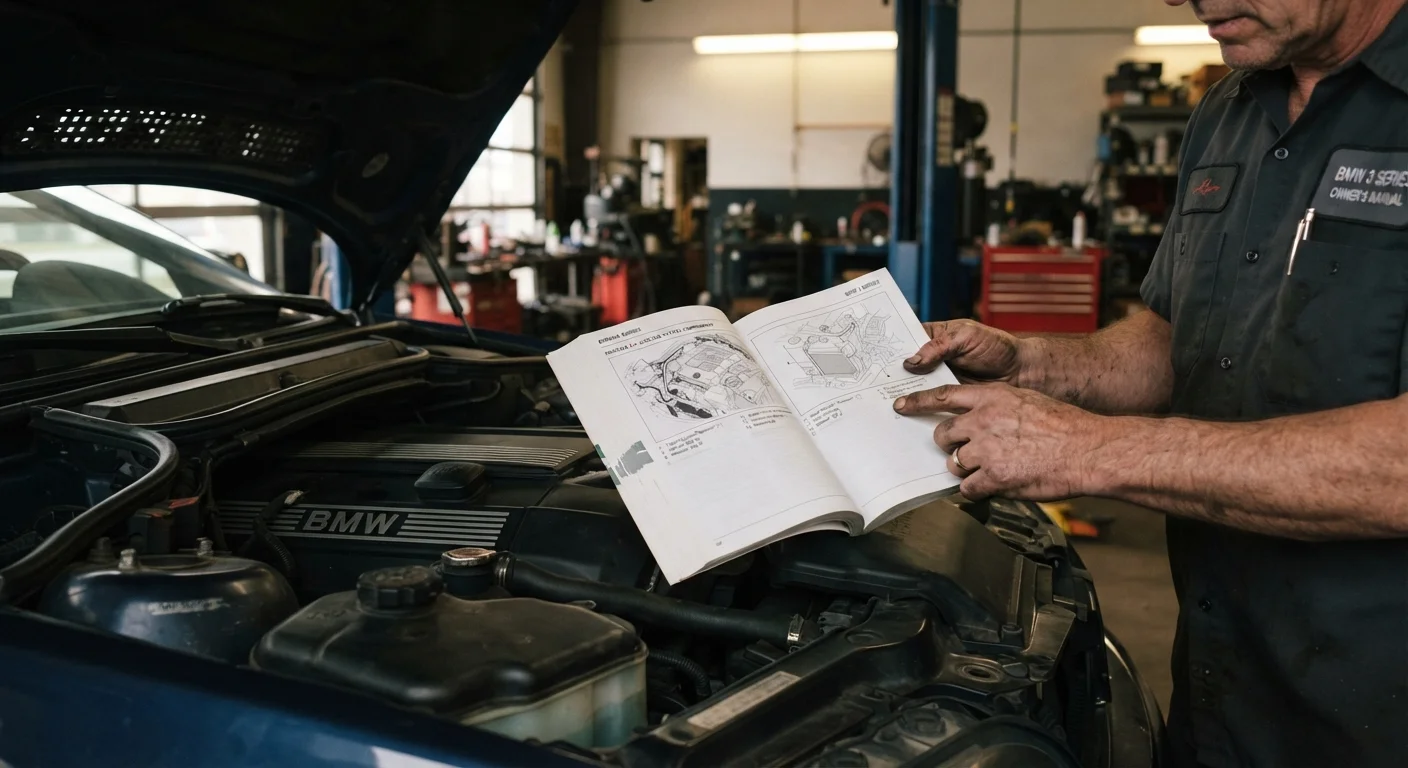
- Your owner's manual — not shop folklore — is the authoritative source for your car's maintenance schedule.
- Tire pressure should be set to the vehicle placard spec, not the number printed on the tire sidewall.
Why Maintenance Myths Are Expensive
Car maintenance advice travels fast — from parents, coworkers, and online forums — and much of it is decades out of date. Acting on outdated information doesn't just waste money on unnecessary services; it can lead new owners to skip genuinely important upkeep. Before you follow any routine you've "always heard," it's worth checking whether the evidence actually supports it.
If you're still sorting out the buying process, our guide to car-buying myths addresses a separate set of costly misconceptions. For a full picture of what your car actually needs over time, see our complete maintenance roadmap.
Myth
You need to change your oil every 3,000 miles, no exceptions.
Fact
Most modern vehicles with conventional oil can go 5,000–7,500 miles between changes; many synthetic-oil cars can go 10,000 miles or more.
The 3,000-mile rule originated when engine technology and oil formulations were far less advanced. Today's engines have tighter tolerances, and modern motor oils — especially full synthetics — are engineered to last significantly longer. Following the 3,000-mile rule on a car that doesn't need it means paying for unnecessary oil changes, which adds up quickly over years of ownership. Check your owner's manual for the manufacturer's actual recommended interval, and look for your car's oil-life monitoring system if it has one. For more detail, see our engine oil guide.
Myth
You should let your engine idle for several minutes to warm it up before driving in cold weather.
Fact
Modern fuel-injected engines warm up faster and more efficiently under light driving load than they do sitting at idle.
Extended idling made sense for older carbureted engines, which needed time to stabilize fuel delivery in cold temperatures. Fuel-injected engines — standard on virtually every car sold in the past 30+ years — don't share that limitation. Prolonged idling in cold weather wastes fuel, increases engine wear by allowing unburned fuel to wash cylinder walls, and contributes to unnecessary emissions. The practical approach: start the car, wait 30–60 seconds for oil to circulate, then drive gently for the first few minutes rather than sitting stationary.
Myth
Premium fuel will improve performance or fuel economy in any car.
Fact
Premium fuel only provides a benefit in engines specifically engineered to require or recommend it — using it in other engines offers no measurable gain.
Higher-octane fuel resists engine knock (pre-ignition) under high compression or boost. If your engine isn't designed to take advantage of that property, you're simply paying more per gallon with no return. Your owner's manual will state whether premium is required (necessary for the engine to operate as designed) or recommended (may offer modest benefits under certain conditions) or not mentioned at all, meaning regular is fine. Using premium in a regular-fuel car is a common and costly misunderstanding.
Myth
The tire pressure printed on the tire sidewall is what you should inflate your tires to.
Fact
The correct tire pressure for your vehicle is on the driver's door jamb placard or in the owner's manual — the sidewall number is the tire's maximum pressure, not the target.
Inflating tires to the sidewall maximum rather than the vehicle specification can result in overinflation — reducing the tire's contact patch with the road, degrading ride quality, and increasing the risk of uneven wear or blowout. The vehicle placard accounts for the car's weight, suspension tuning, and intended load. Always use the placard figure as your baseline. Pressure should also be checked when tires are cold (before driving), since heat from driving increases pressure readings.
Myth
If a car looks and drives fine, it doesn't need a mechanic visit.
Fact
Many significant maintenance items — coolant condition, brake fluid moisture content, serpentine belt wear — show no obvious symptoms until they fail.
Reactive maintenance (waiting until something feels wrong) routinely turns minor scheduled services into expensive repairs. Coolant degrades chemically and becomes acidic over time, corroding the cooling system from the inside, without any visible warning sign to the driver. Brake fluid absorbs moisture, which lowers its boiling point and can compromise braking under hard use. Following the manufacturer's time- and mileage-based service schedule — not just symptom-based attention — protects against these invisible failure modes. Our fluid checks guide covers what you can monitor yourself at home.
Putting the Myths to Rest
Each myth below persists because it once had some basis in reality — older engine technology, leaded fuels, or carbureted engines that genuinely behaved differently. Modern vehicles work differently, and your maintenance habits should reflect that.
5,000–10,000 mi
Typical modern oil change interval
Vehicle manufacturers specify intervals in owner's manuals that frequently exceed the traditional 3,000-mile rule for both conventional and synthetic oils.
~30–60 sec
Recommended idle time before driving in cold weather
Most automakers' cold-start guidance for fuel-injected engines calls for a brief idle, followed by gentle driving — not extended stationary warm-up.
The single most reliable reference you have is your vehicle's owner's manual. It specifies the correct oil grade, change interval, fuel octane requirement, and tire pressure for your exact car — details that vary by make, model, and engine. For a deeper look at how oil types and grades differ, our guide to conventional vs synthetic oil breaks it down clearly. Tire-related numbers — pressure, tread depth, rotation intervals — are covered in our tyre pressure and tread depth guide.
Your Owner's Manual Is the Final Word
No general rule — including anything in this article — overrides the specifications in your vehicle's owner's manual. Oil type, change interval, fuel octane requirement, tire pressure, and service milestones all vary by make, model, and engine. If your manual and a piece of common advice conflict, follow the manual. When in doubt, consult a qualified mechanic.
Understanding which tasks you can handle yourself versus which require a professional is also worth knowing. Our article on DIY maintenance vs workshop helps you draw that line safely.