

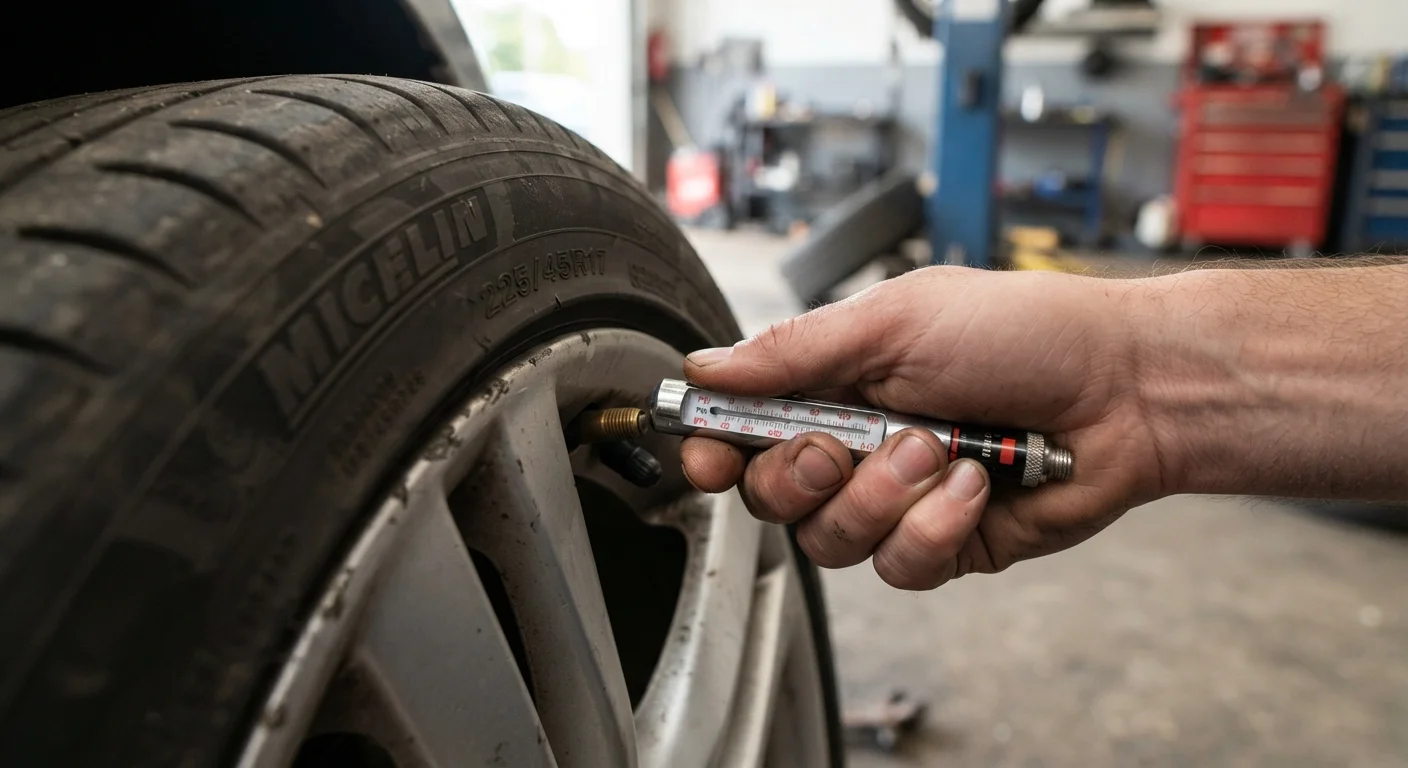
Key Takeaways
- Tyre pressure should be set to the vehicle manufacturer's specification, not the number printed on the tyre sidewall.
- In the US, the legal minimum tread depth is 2/32 of an inch, but safety experts recommend replacing tyres at 4/32.
- Tyres lose roughly 1 PSI of pressure for every 10°F drop in outside temperature.
- Most vehicles benefit from tyre rotation every 5,000 to 7,500 miles to even out wear patterns.
- Under-inflated tyres reduce fuel economy, increase tread wear, and raise the risk of a blowout.
Why These Numbers Matter More Than Most New Drivers Realise
Tyres are the only part of your car in contact with the road, yet tyre maintenance is among the most frequently skipped tasks for first-time owners. The numbers involved — PSI readings, tread depth fractions, rotation intervals — can feel abstract until something goes wrong. Understanding what each figure means and where it comes from is the fastest way to protect both your safety and your wallet.
Neglecting tyre basics isn't just a mechanical issue. Under-inflated or worn tyres compromise braking distances, cornering stability, and fuel economy. For context on how deferred upkeep compounds over time, see The Hidden Costs of Skipping Routine Maintenance.
Using the pressure number printed on the tyre sidewall as the target PSI.
Why it happens: The sidewall number is the tyre's maximum rated pressure, not the recommended operating pressure. It is the most visible number, so new drivers assume it is the target.
Not adjusting tyre pressure as seasons and temperatures change.
Why it happens: Drivers check pressure once and assume it stays stable. In reality, air contracts in cold weather and expands in heat — a swing of 10°F changes pressure by roughly 1 PSI.
Waiting until the tread wear indicator bars are flush before replacing tyres.
Why it happens: Wear indicator bars are molded into tyre grooves at 2/32 of an inch — the legal minimum in most US states. Drivers treat this as the safe replacement threshold when it is actually the legal floor.
Ignoring uneven tread wear across or between tyres.
Why it happens: New drivers often check overall tread depth but do not look at the wear pattern. Uneven wear — heavier on one edge, cupping, or feathering — points to underlying issues that simple pressure checks will not catch.
Skipping or delaying tyre rotation because the car feels fine.
Why it happens: Front tyres wear faster than rear tyres — especially on front-wheel-drive vehicles — but the difference builds gradually and is not always noticeable in daily driving until the front pair is significantly more worn.
Building a Simple Tyre Check Routine
Consistency matters more than perfection. Check tyre pressure once a month and before any long trip — always when the tyres are cold (meaning the car has been parked for at least three hours or driven fewer than a mile). Warm tyres read higher, which can mask a genuine shortfall.
For tread depth, keep a quarter or a dedicated tread-depth gauge in your glovebox. Insert the gauge or coin into the main groove at three points across the tyre width. Uneven readings across the width signal an alignment or inflation problem, not just normal wear.
1 PSI
Pressure lost per 10°F temperature drop
This relationship between temperature and tyre pressure is a well-established principle of gas physics and is cited by the US Department of Energy as a factor in seasonal pressure loss.
4/32"
Recommended tread replacement threshold
Safety organisations and tyre industry guidance consistently recommend replacing tyres at 4/32 inch rather than waiting for the 2/32 inch legal minimum, particularly for wet-weather performance.
~0.5%
Fuel economy lost per 1 PSI under-inflation
The US Department of Energy estimates that under-inflated tyres reduce fuel economy by approximately 0.5% for every 1 PSI below the recommended level.
Rotation is the step most new owners skip entirely, often because there is no warning light to prompt it. Build it into your oil change schedule as a memory aid, or set a mileage reminder in your phone. If you are unsure which tasks you can handle yourself versus what needs a shop, DIY Car Maintenance vs Workshop walks through where the line sits for most drivers.
This article provides general educational information about tyre maintenance. Always consult your vehicle owner's manual and a qualified mechanic for guidance specific to your vehicle and driving conditions.