

Key Takeaways
- Deferred maintenance rarely saves money — small service costs often prevent much larger repair bills.
- Some neglected items, like brake fluid and tires, directly affect safety, not just reliability.
- Staying on a manufacturer-recommended schedule is the most practical way to protect your vehicle's long-term value.
- Understanding which tasks carry the greatest risk helps first-time owners prioritize when budgets are tight.
Our Verdict
Skipping routine maintenance can feel like a sensible short-term saving, but the compounding mechanical and financial consequences usually outweigh the upfront cost of staying on schedule. For most first-time owners, maintaining a basic service record — even if imperfect — is far less expensive than the emergency repairs that tend to follow prolonged neglect.
This article is most useful for first-time car owners trying to understand which maintenance items matter most and why the costs of skipping them are rarely as invisible as they seem.
Why Routine Maintenance Gets Skipped
For many first-time car owners, scheduled maintenance can feel optional — especially when the car appears to be running fine. An oil change or tire rotation doesn't come with an obvious warning sign the way a flat tire does. That invisibility is exactly what makes deferred maintenance a common and costly habit.
Budget pressure is often a factor. When money is tight, a $60 oil change can feel easy to postpone. But the economics of car ownership don't work in favor of delay. As outlined in Car Ownership Costs Beyond the Sticker Price, maintenance is one of the predictable expenses that owners can control — unlike depreciation or fuel prices.
Understanding the real trade-off means looking honestly at both sides: there are situations where skipping a service has limited immediate impact, and situations where it sets off a chain of expensive consequences.
The Real Risks: What Neglect Actually Costs
The most financially damaging maintenance items to skip are those tied to lubrication, cooling, and structural wear — because failure in these systems rarely stays isolated.
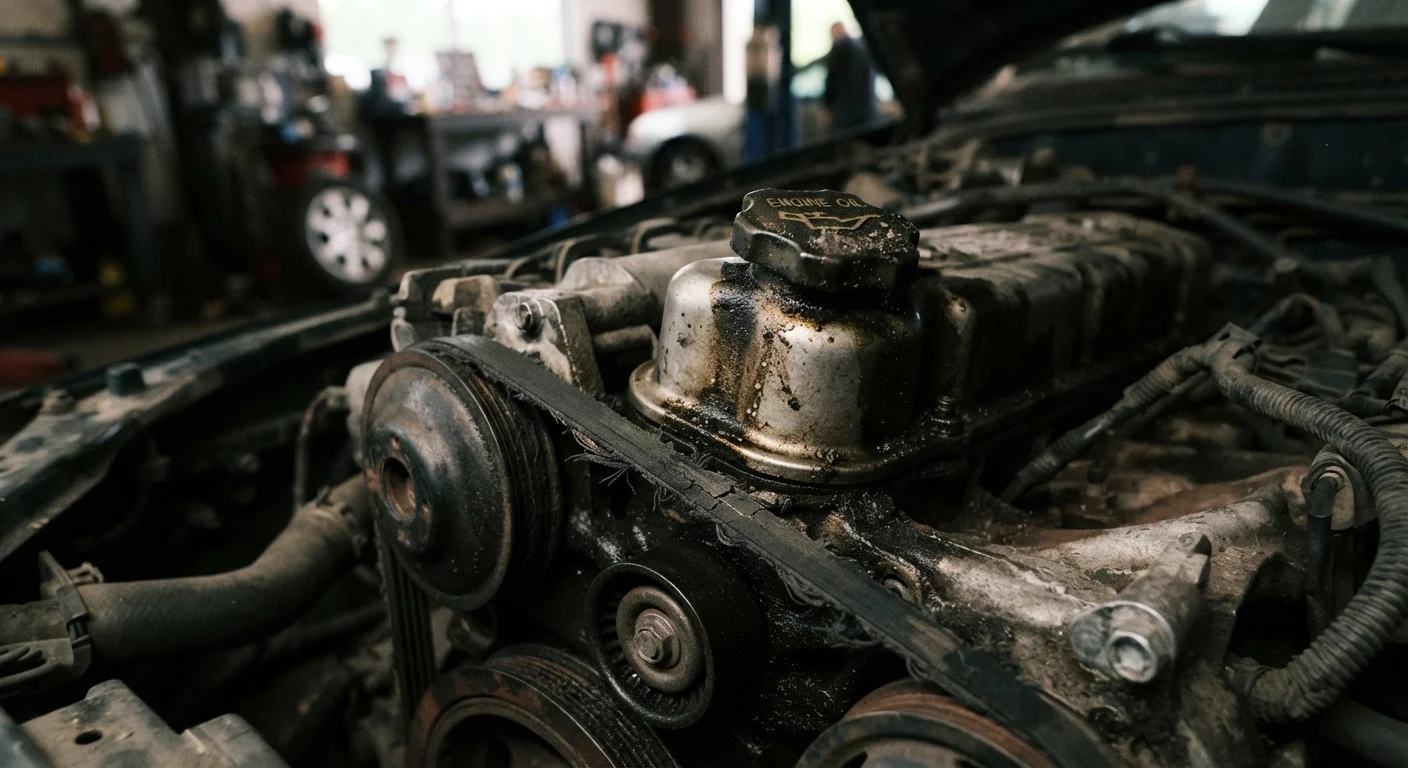
Engine oil is the clearest example. Old, degraded oil loses its ability to lubricate moving metal parts, accelerating wear on components like camshafts and bearings. Replacing an engine — or even rebuilding one — can run into thousands of dollars. The oil change that might have prevented it typically costs a fraction of that.
Coolant, brake fluid, and transmission fluid follow similar logic. These fluids degrade over time and, when neglected, allow corrosion and heat damage to build up inside systems that are expensive to repair or replace. Air Filters, Spark Plugs, and Belts represent another category of overlooked services that quietly compound when ignored.
~$80B
Annual cost of vehicle repair from neglected maintenance (US estimate)
The Car Care Council has estimated that neglected vehicle maintenance contributes to tens of billions of dollars in avoidable repair costs in the US each year.
1 in 3
Vehicles found to have needed maintenance during roadside checks
Industry car care awareness campaigns have consistently found that roughly one-third of vehicles inspected during public check events had at least one deferred maintenance issue.
Safety Consequences That Go Beyond Repair Bills
Some deferred maintenance items aren't just expensive — they're dangerous. Worn brake pads, deteriorated tires, and failing suspension components all affect a vehicle's ability to stop, steer, and hold the road safely.
Brake systems are especially unforgiving. Pads worn past their minimum thickness can damage rotors — turning a simple pad replacement into a more expensive rotor-and-pad job. More critically, severely worn pads reduce stopping power in ways that can become apparent at the worst possible moment.
Tire maintenance — including pressure checks, rotation, and timely replacement — affects both handling and fuel efficiency. Under-inflated tires wear unevenly and reduce the contact patch that keeps the vehicle stable. These aren't abstract risks; they directly influence how the car responds in an emergency.
Check Your Owner's Manual First
Manufacturer-recommended service intervals — found in your vehicle's owner's manual — are the most reliable reference for what your specific car needs and when. Intervals vary meaningfully by make, model, and driving conditions (city stop-and-go driving is harder on many components than highway driving). If you've misplaced your manual, most manufacturers make digital versions available through their official websites.
Prioritizing When Your Budget Is Limited
Not every maintenance item carries the same urgency. When budgets are genuinely tight, a practical approach is to tier services by consequence: safety-critical items first, engine-protection items second, and comfort or efficiency items third.
Safety-critical items include brakes, tires, steering components, and lights. Engine-protection items include oil and filter changes, coolant, and timing belt or chain service (which, if it fails, can destroy an engine). Efficiency items — like cabin air filters or wiper blades — matter for comfort but rarely create cascading damage if delayed briefly.
For first-time owners weighing DIY options against workshop visits, DIY Car Maintenance vs Workshop outlines which routine tasks can safely be handled at home and which require a qualified mechanic. Knowing that line can help stretch a maintenance budget further without adding unnecessary risk.
Budgeting proactively for maintenance — treating it as a fixed monthly cost rather than a surprise — is one of the more effective habits first-time owners can build. For broader strategies on managing irregular expenses, see Budgeting Basics.
This article is for general informational and educational purposes only. Always consult a qualified mechanic for advice specific to your vehicle's condition and service needs.