
Air Filters, Spark Plugs, and Belts: The Forgotten Services with Big Consequences

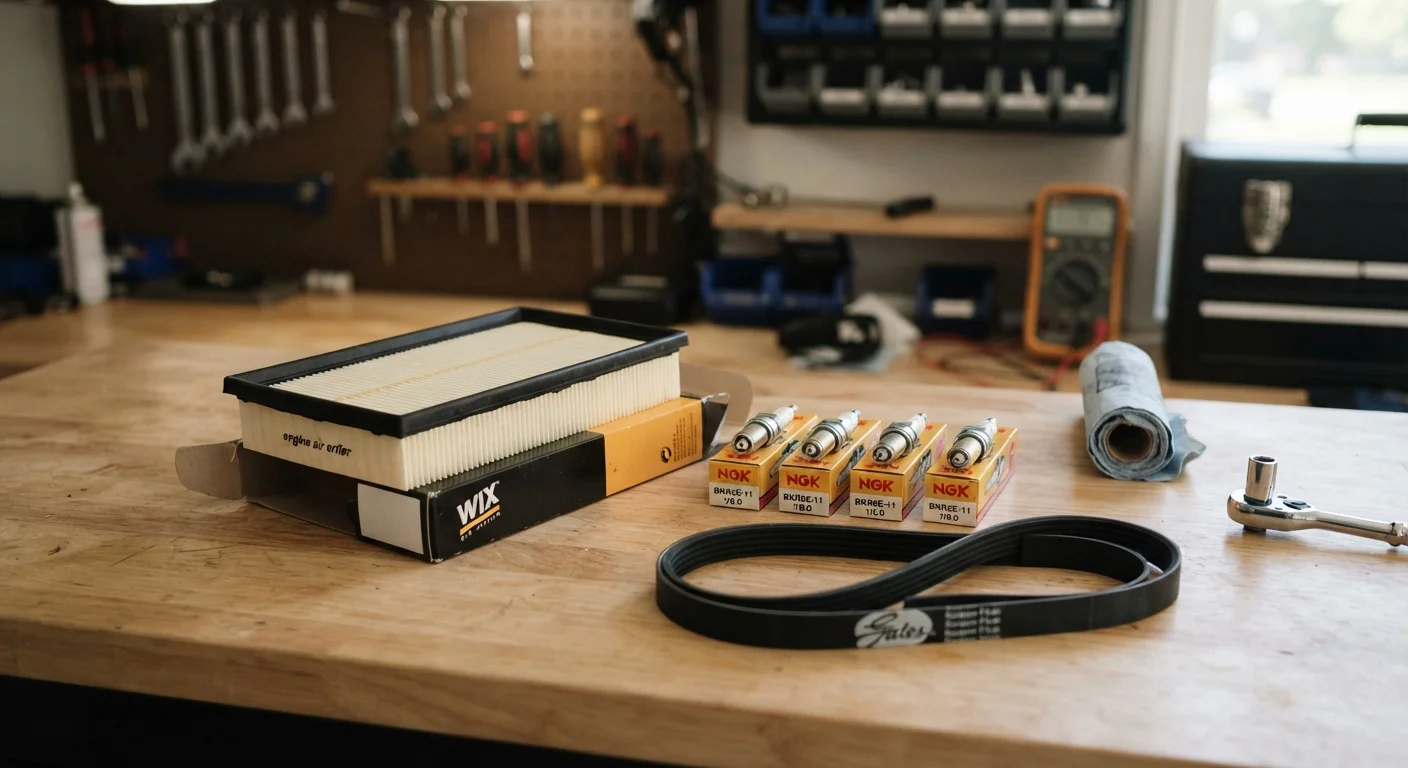
Key Takeaways
- Air filters, spark plugs, and belts are often skipped during routine service but carry serious consequences when neglected.
- Most of these components have manufacturer-recommended replacement intervals you can find in your owner's manual.
- Catching these items early is almost always far cheaper than repairing the damage their failure causes.
- A timing belt failure, in particular, can destroy an engine entirely — making it one of the costliest oversights.
- First-time owners should treat these as non-negotiable line items in their ongoing maintenance budget.
The Maintenance Items Nobody Talks About
When first-time car owners think about maintenance, oil changes and tire rotations dominate the conversation. That's fair — they're frequent and well-publicized. But there's a quieter category of services that most drivers forget entirely, often because nothing feels wrong until something goes very wrong.
Air filters, spark plugs, and drive belts don't announce their wear the way a squealing brake pad or a low tire does. They degrade gradually, their effects are subtle at first, and by the time a problem is obvious, the repair bill can be substantial. Understanding what these components do — and what happens when they're neglected — is one of the most practical things a new owner can do. For a broader view of ongoing ownership expenses, see our guide on car ownership costs beyond the sticker price.
Start With Your Owner's Manual
Every maintenance interval mentioned in this article has a manufacturer-specified schedule — and it's already in your glove box. Your owner's manual lists recommended replacement intervals for every service item specific to your vehicle's engine and design. Using it as a reference takes guesswork out of the equation and helps you ask informed questions when speaking with a mechanic.
Five Overlooked Services That Matter More Than You Think
Engine Air Filter
The engine air filter keeps dirt, dust, and debris out of your engine's intake. A clean filter ensures the right balance of air and fuel reaches the combustion chamber. A clogged one restricts airflow, forcing the engine to work harder — which reduces fuel efficiency, dulls acceleration, and over time can stress engine components.
Most manufacturers recommend replacing the engine air filter every 15,000 to 30,000 miles, though driving in dusty or high-pollution environments shortens that interval. It's one of the cheapest filters you'll replace, and it's a straightforward visual check: a gray or black filter that was once white or cream is overdue.
A clogged air filter quietly drains fuel efficiency before you ever notice it.
Cabin Air Filter
Separate from the engine filter, the cabin air filter cleans the air flowing through your heating and air conditioning system into the passenger compartment. A blocked cabin filter reduces HVAC airflow, strains the blower motor, and — in severe cases — allows unfiltered air carrying allergens and pollutants to circulate inside the car.
Replacement intervals typically fall between 12,000 and 25,000 miles, but check your owner's manual. If you notice a musty smell from your vents or reduced airflow even at high fan settings, the cabin filter is the first thing worth checking. Replacement is usually inexpensive and can often be done without specialized tools.
A clogged cabin filter strains your blower motor and degrades the air you breathe while driving.
Spark Plugs
Spark plugs ignite the air-fuel mixture in each cylinder. Worn spark plugs misfire, leading to rough idling, hesitant acceleration, reduced fuel economy, and — if left long enough — damage to the catalytic converter, which is a significantly more expensive repair.
Conventional copper spark plugs often need replacement around 30,000 miles. Extended-life iridium or platinum plugs can last 60,000 to 100,000 miles or more, depending on the vehicle. Because the symptoms of worn plugs develop gradually, many drivers attribute the changes to something else entirely and delay action. Checking your manual for the recommended interval is the most reliable guide.
Worn spark plugs can damage your catalytic converter — turning a minor service into a major repair.
Serpentine Belt
The serpentine belt drives multiple engine accessories simultaneously — the alternator, power steering pump, air conditioning compressor, and water pump in many vehicles. When it fails, those systems stop working. A snapped serpentine belt can leave you stranded immediately and, depending on engine design, may also cause overheating if the water pump loses drive.
Serpentine belts are made of rubber and degrade over time regardless of mileage. Cracks, fraying, or glazing are visible warning signs. Most manufacturers suggest inspection around 60,000 miles and replacement in the 60,000–100,000 mile range, but a mechanic can assess belt condition during routine service.
A snapped serpentine belt can disable your alternator, power steering, and cooling system simultaneously.
Timing Belt (Where Applicable)
Not all vehicles have a timing belt — some use a timing chain, which typically lasts the life of the engine. But if yours does have a belt, its failure is one of the most consequential mechanical events a driver can face. The timing belt synchronizes the crankshaft and camshaft, controlling valve and piston movement. If it snaps, pistons and valves can collide in what engineers call an interference engine — causing catastrophic internal damage that can write off an engine entirely.
Replacement intervals vary widely but commonly fall between 60,000 and 105,000 miles. Because the belt doesn't usually show obvious external symptoms before it fails, strict adherence to the manufacturer's schedule is critical. Check whether your vehicle has a belt or chain — your owner's manual or a trusted mechanic can confirm this. For a seasonal maintenance checklist that incorporates belt inspection reminders, that resource covers year-round vehicle upkeep.
A timing belt failure on an interference engine can destroy the engine entirely — replacement on schedule is non-negotiable.
Timing Belt vs. Timing Chain
Not every vehicle uses a timing belt. Many modern engines use a metal timing chain, which is designed to last the engine's lifetime under normal conditions. However, chains can still stretch and wear, particularly if oil changes are neglected. Confirming which system your engine uses is an important first step — your owner's manual or a qualified mechanic can tell you definitively.
For a complete picture of what each scheduled service interval actually covers — and what gets left off the standard checklist — the car service schedule breakdown is a useful companion read. And if you're wondering what the financial stakes of skipping any of these look like, the hidden costs of skipping routine maintenance offers a grounded look at real-world consequences.
Building These Into Your Routine
The most effective way to stay on top of these services is to treat them as scheduled appointments rather than reactive fixes. Pull out your owner's manual, note the recommended intervals for each item listed here, and add them to your calendar or mileage tracker. Many shops will flag these items during an oil change — but not all will, and some will only act if you ask.
If your car sits more than it drives, interval timing gets more complicated. Low-mileage vehicles still experience rubber degradation, moisture buildup, and fuel system issues. Our article on keeping a car in good shape when you rarely drive it covers what to watch for in that situation. For a full milestone-by-milestone view across your ownership years, the car care roadmap from purchase to 100,000 miles is worth bookmarking.
This article is for general informational purposes only. Always consult your vehicle's owner's manual and a qualified mechanic for maintenance decisions specific to your car.