

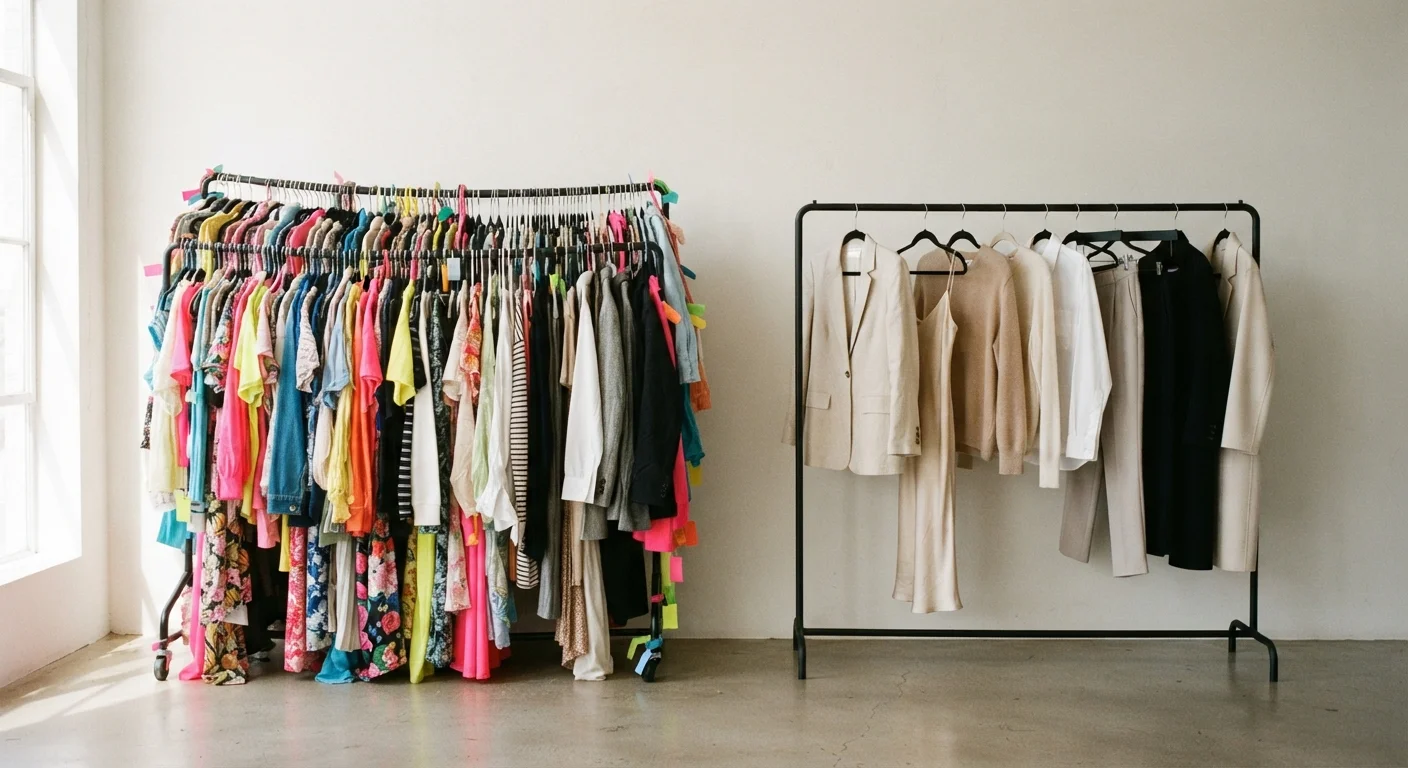
Key Takeaways
- Fast fashion offers low upfront cost and trend access but typically sacrifices durability and environmental consideration.
- Slow fashion costs more initially but often delivers better quality and longer garment lifespan.
- Neither approach is all-or-nothing — most shoppers can benefit from a thoughtful combination of both.
- Understanding fabric quality and construction helps you evaluate any garment regardless of price point.
- Your wardrobe goals, budget, and values should guide how you balance the two approaches.
Very low upfront cost per garment
Fast fashion makes clothing accessible to shoppers on tight budgets, allowing wardrobe building without large initial outlay.
Immediate access to current trends
Styles reach stores within weeks of runway or social media emergence, making it easy to try popular looks without long waits.
Low-risk way to experiment with style
Buying inexpensively lets new shoppers test silhouettes, colors, and fits before investing in quality versions of what actually works for them.
Wide availability and convenience
Fast fashion retailers operate broadly online and in-store, making it easy to find and replace items quickly when needed.
Poor durability means frequent replacement
Garments made with lower-grade materials and lighter construction often wear out, fade, or lose shape after relatively few washes, increasing long-term costs.
Higher environmental footprint per item
High-volume production and synthetic fabric use contribute to textile waste and microplastic shedding; the Ellen MacArthur Foundation has documented fashion's significant resource consumption globally.
Encourages overconsumption habits
The low cost-per-item model can lead to buying more than you actually use, resulting in a cluttered wardrobe with many items that rarely get worn.
Supply chain transparency is often limited
Fast fashion's compressed production timelines make it harder for shoppers to verify labor and sourcing standards — though this varies across retailers.
Our Verdict
Fast fashion works well as a low-risk entry point for trend-testing or filling short-term wardrobe gaps, but it rarely delivers lasting value. Slow fashion requires more upfront investment and research, but tends to reward shoppers who prioritize durability and intentionality. The most practical approach for most first-time shoppers is a blended strategy: anchor your wardrobe in a handful of quality slow-fashion staples, and use fast fashion selectively for lower-stakes purchases.
Shoppers who want to build a wardrobe that feels intentional and lasts longer will find slow fashion principles most rewarding, while budget-constrained newcomers may lean on fast fashion while they develop their personal style.
What Do These Terms Actually Mean?
Fast fashion refers to a retail model built on rapid production cycles — new styles arrive weekly or even daily, manufactured at high volume to match trending looks at low price points. Think of it as disposable-friendly clothing designed to move quickly off shelves.
Slow fashion is the countermovement. It emphasizes deliberate purchasing, quality construction, ethical sourcing, and building a wardrobe designed to last years rather than seasons. The pace is intentional — buying less, choosing more carefully.
Neither term is a brand or certification; they describe production and shopping philosophies. Understanding both helps you make smarter decisions no matter your budget. For a deeper look at how price signals can mislead shoppers, see our guide on price vs. quality myths.
A Note on Labeling
The terms 'fast fashion' and 'slow fashion' are descriptive, not regulated. No official certification body defines them, and retailers may use 'sustainable' or 'conscious' language without independent verification. When evaluating any brand's claims, look for third-party certifications or transparent supply chain reporting rather than marketing language alone.
The Case for Fast Fashion
Fast fashion has real advantages — especially for first-time shoppers still figuring out what they like to wear.
Very low upfront cost per garment
Fast fashion makes clothing accessible to shoppers on tight budgets, allowing wardrobe building without large initial outlay.
Immediate access to current trends
Styles reach stores within weeks of runway or social media emergence, making it easy to try popular looks without long waits.
Low-risk way to experiment with style
Buying inexpensively lets new shoppers test silhouettes, colors, and fits before investing in quality versions of what actually works for them.
Wide availability and convenience
Fast fashion retailers operate broadly online and in-store, making it easy to find and replace items quickly when needed.
When you're new to building a wardrobe, fast fashion lets you experiment at low financial risk. Buying an inexpensive item to test a silhouette or color palette before committing to a pricier version is a legitimate strategy. The key is using it deliberately rather than defaulting to it for everything.
The Drawbacks Worth Knowing
The low price tag on fast fashion often reflects hidden costs — in garment lifespan, in environmental impact, and sometimes in labor practices across supply chains.
Poor durability means frequent replacement
Garments made with lower-grade materials and lighter construction often wear out, fade, or lose shape after relatively few washes, increasing long-term costs.
Higher environmental footprint per item
High-volume production and synthetic fabric use contribute to textile waste and microplastic shedding; the Ellen MacArthur Foundation has documented fashion's significant resource consumption globally.
Encourages overconsumption habits
The low cost-per-item model can lead to buying more than you actually use, resulting in a cluttered wardrobe with many items that rarely get worn.
Supply chain transparency is often limited
Fast fashion's compressed production timelines make it harder for shoppers to verify labor and sourcing standards — though this varies across retailers.
Fabric quality is one of the clearest indicators of where costs were cut. Learning to read fabric content labels — and what to look for in stitching and construction — can help you spot low-quality items before you buy. Our article on natural fibers vs. synthetic fabrics breaks down what those material differences mean day-to-day.
Building a Balanced Wardrobe Strategy
Most shoppers don't need to choose one philosophy absolutely. A hybrid approach — anchoring your closet in a few well-made foundational pieces while using fast fashion selectively — is both practical and realistic.
~$30
Average cost of a fast-fashion garment
Industry analysts generally estimate fast-fashion items fall in the $10–$50 range, compared to multiples higher for equivalent slow-fashion or quality-focused pieces.
3×
More clothes bought vs. 20 years ago
The Ellen MacArthur Foundation has reported that global clothing production roughly doubled in the 2000–2015 period, with garments being kept for shorter periods.
Start by identifying the garments you wear most frequently and would replace most often. Those are the items worth investing in. For everything else — a seasonal trend piece, an item for a one-time event — a lower-cost option may be perfectly reasonable.
If secondhand clothing fits your budget goals, it can bridge the gap between fast and slow fashion: often better construction than fast fashion at a lower price than new slow-fashion pieces. See secondhand vs. new clothing considerations for a balanced breakdown. You might also explore investing in fewer, better pieces as your style confidence grows.
For guidance on setting a clothing budget that supports this kind of intentional shopping, budgeting basics is a practical starting point.