
Natural Fibres vs. Synthetic Fabrics: What Actually Matters When You're Dressing Daily

Key Takeaways
- Natural fibres like cotton and wool breathe well but often require more careful washing and handling.
- Synthetic fabrics such as polyester and nylon are durable and wrinkle-resistant but can trap heat and moisture.
- Blended fabrics combine properties of both and are extremely common in everyday clothing.
- Fabric choice directly affects comfort, longevity, and how much time you spend on garment care.
- Neither category is universally better — the right choice depends on the garment's purpose and your lifestyle.
Option A
Natural Fibres
The time-tested, breathable choice rooted in nature.
Best for: Everyday comfort, sensitive skin, and wardrobe pieces you plan to keep for years.
Option B
Synthetic Fabrics
The engineered, performance-driven modern alternative.
Best for: Active lifestyles, budget-conscious shopping, and garments that need to hold their shape through heavy use.
If you have sensitive skin or overheat easily
Natural Fibres
Cotton and linen allow air to circulate and are less likely to cause irritation against the skin, making them a more comfortable daily option.
If you want low-maintenance, wrinkle-free clothing
Synthetic Fabrics
Polyester and nylon hold their shape with minimal effort, resist creasing, and often need only a quick machine wash to look presentable.
If you're building a long-lasting wardrobe on a budget
Synthetic Fabrics
Synthetics tend to cost less at the point of purchase and resist wear well, making them practical for high-frequency items like everyday tops or activewear.
If you're investing in core wardrobe staples meant to last
Natural Fibres
Well-cared-for wool, cotton, and linen pieces can last many years and often age more gracefully than synthetics, justifying the higher upfront cost.
If you want the benefits of both in one garment
Natural Fibres
Look for fabric blends — a cotton-polyester mix, for example, offers breathability with added durability and shape retention.
What Are Natural Fibres and Synthetic Fabrics, Really?
When a clothing label lists "100% cotton" or "polyester blend," it's telling you something genuinely useful — if you know how to read it. Fabric composition is one of the clearest signals of how a garment will feel, perform, and hold up over time.
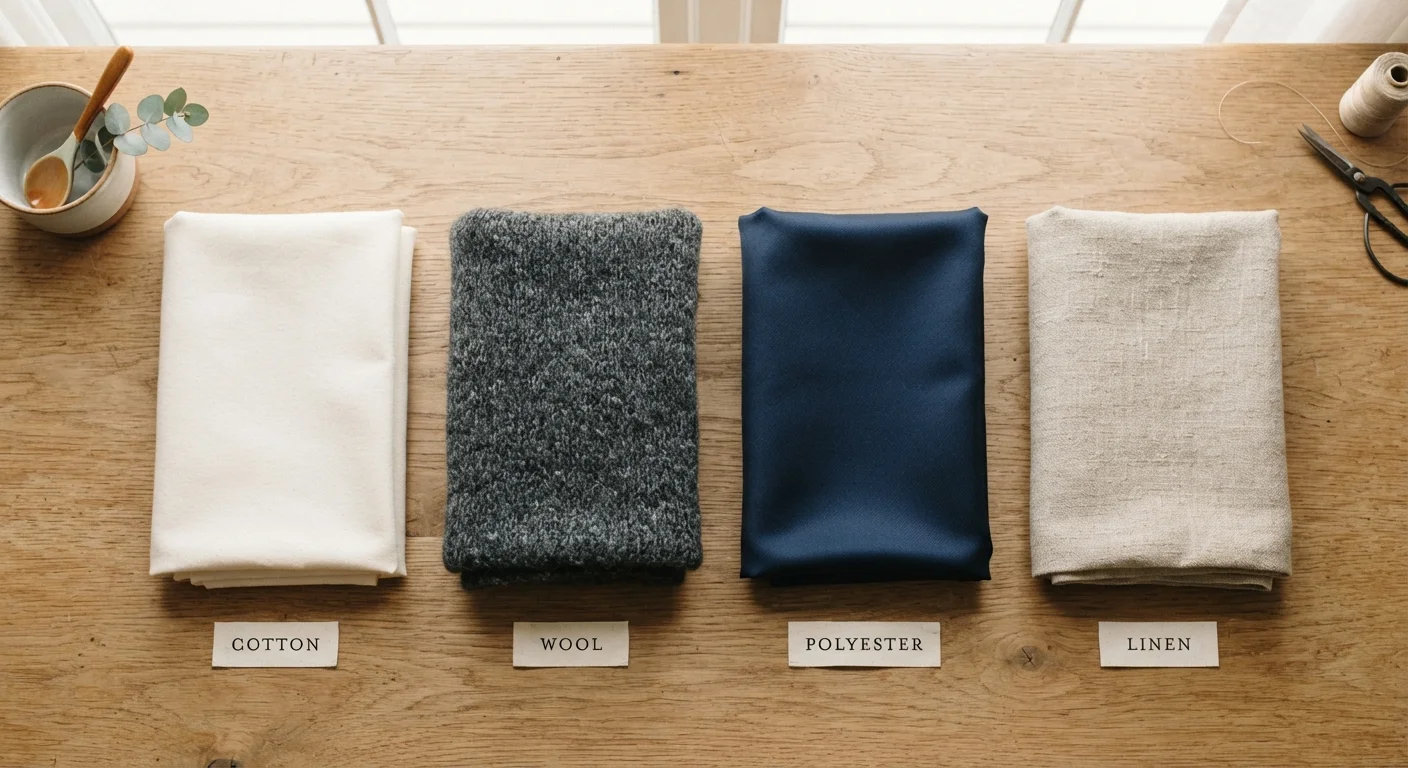
Natural fibres come from plants or animals. Cotton (from the cotton plant), wool (from sheep), linen (from the flax plant), and silk (from silkworm cocoons) are the most common. These fibres have been used in clothing for thousands of years, and their properties reflect their origins: they tend to breathe, absorb moisture, and feel comfortable against skin.
Synthetic fabrics are manufactured from chemical compounds, typically derived from petroleum. Polyester, nylon, acrylic, and spandex fall into this category. They were developed in the 20th century largely to solve problems with natural fibres — to create materials that dry faster, stretch more, and hold their shape better.
Most garments today are actually blends — part natural, part synthetic — designed to capture benefits from both. A cotton-polyester T-shirt, for instance, is softer and more breathable than 100% polyester, but more durable and wrinkle-resistant than 100% cotton. Understanding the spectrum helps you make smarter choices when building your wardrobe. See our guide to wardrobe essentials for a closer look at the foundational pieces where fabric choice matters most.
How Fabric Type Affects Comfort, Care, and Durability
Fabric affects three things you'll notice immediately: how a garment feels to wear, how much effort it takes to care for, and how long it actually lasts.
| Criterion | Natural Fibres | Synthetic Fabrics |
|---|---|---|
| Breathability | Generally excellent | Varies; performance types improved |
| Moisture absorption | High (cotton, wool) | Low; moisture-wicking versions available |
| Care requirements | Often more delicate | Usually machine-washable, quick-dry |
| Durability | Good with proper care | High; resistant to abrasion |
| Wrinkle resistance | Low to moderate | High |
| Cost at point of purchase | Generally higher | Generally lower |
| Environmental profile | Complex (water, land use) | Complex (microplastics, fossil fuels) |
Comfort and Breathability
Natural fibres generally win on breathability. Cotton and linen allow air to move through the weave, which helps regulate body temperature — particularly useful in warm weather. Wool is a notable exception: it's warm, but high-quality merino wool can also be worn in milder temperatures without feeling stifling. Synthetic fabrics can trap heat and moisture, which is why a polyester shirt may feel uncomfortable in hot weather. However, modern performance synthetics like moisture-wicking polyester are engineered specifically to manage sweat during physical activity — they move moisture away from the skin rather than absorbing it.
Care Requirements
Natural fibres often need more attention. Wool can shrink if machine-washed on the wrong setting. Linen creases easily. Silk typically requires hand washing or dry cleaning. Synthetics are generally more forgiving: polyester and nylon tend to be machine-washable, quick-drying, and resistant to shrinking. If low-maintenance care is a priority for your lifestyle, synthetics or blended fabrics are worth prioritising — especially for items you'll wear frequently. Seasonal wardrobe transitions also become simpler when you understand which fabrics suit which climates.
Durability
Durability depends on both the fibre and how the garment is constructed. Synthetics like nylon are exceptionally strong and resistant to abrasion — one reason they dominate activewear and outerwear. Natural fibres can also be highly durable when well-made; a quality wool coat or heavyweight cotton denim can outlast many synthetic alternatives with proper care.
~52%
Share of global fibre production that is synthetic
According to Textile Exchange's Preferred Fiber & Materials Market Report, synthetic fibres — led by polyester — account for the majority of global fibre output.
~10,000 L
Water used to produce 1 kg of cotton
The World Wildlife Fund has cited figures in this range to illustrate cotton's significant water demands relative to other crops.
Sustainability and the Bigger Picture
It's tempting to assume natural fibres are automatically the more sustainable choice — but it's more complicated than that. Cotton cultivation is water-intensive and may involve pesticide use. Wool production varies significantly in its environmental footprint depending on farming practices. Meanwhile, synthetic fabrics shed tiny plastic particles (microplastics) with each wash, which can enter waterways.
Neither category has a clean environmental record. The more useful question is: how long will you actually wear this garment? A well-chosen synthetic piece worn hundreds of times may have a lower overall environmental cost than a natural-fibre item bought cheaply and discarded after a season. This connects directly to broader wardrobe values — something explored in depth in our fast fashion vs. slow fashion comparison.
Blended Fabrics: A Practical Middle Ground
Many everyday garments — T-shirts, trousers, knitwear — are made from blended fabrics that combine natural and synthetic fibres. A common ratio is 60% cotton / 40% polyester, which balances softness with shape retention. When reading labels, look at the full fibre breakdown rather than fixating on a single component. Blends are neither inferior nor superior — they're simply optimised for different priorities.
For first-time shoppers, the most practical sustainability move isn't to fixate on fibre type alone — it's to buy fewer, better-chosen pieces and care for them properly. Fabric knowledge supports that goal by helping you set realistic expectations about longevity before you buy. You can also explore secondhand clothing options as another way to reduce impact without sacrificing quality.