

| Number of common dress code tiers | 6 (Casual → White Tie) |
| Most commonly misunderstood code | Smart Casual |
| Safest default when no code is stated | Smart Casual |
| Rarest formal dress code | White Tie |
Why Dress Codes Still Matter
Seeing "dress code" on an invitation can spark a small wave of anxiety — especially when you're still building your wardrobe. But dress codes aren't gatekeeping; they're context clues. They tell you what the host expects and, more helpfully, what everyone else will likely be wearing so you don't feel out of place.
The good news: most dress codes follow a consistent spectrum from relaxed to formal, and once you understand the logic behind each level, you can decode almost any invitation with confidence. Whether you're prepping for a rooftop birthday or a black-tie gala, this guide has you covered.
For deeper insight into how clothing choices affect how you feel and carry yourself, see our piece on dressing for confidence.
| Number of common dress code tiers | 6 (Casual → White Tie) |
| Most commonly misunderstood code | Smart Casual |
| Safest default when no code is stated | Smart Casual |
| Rarest formal dress code | White Tie |
The Formality Spectrum Explained
Think of dress codes as existing on a sliding scale. Here's how each tier breaks down in plain terms:
Casual
This is your everyday comfort zone — jeans, t-shirts, sneakers, and relaxed sundresses all qualify. "Casual" doesn't mean sloppy; it just means the expectation is comfort over formality. Clean, well-fitting clothes are still the goal.
Smart Casual
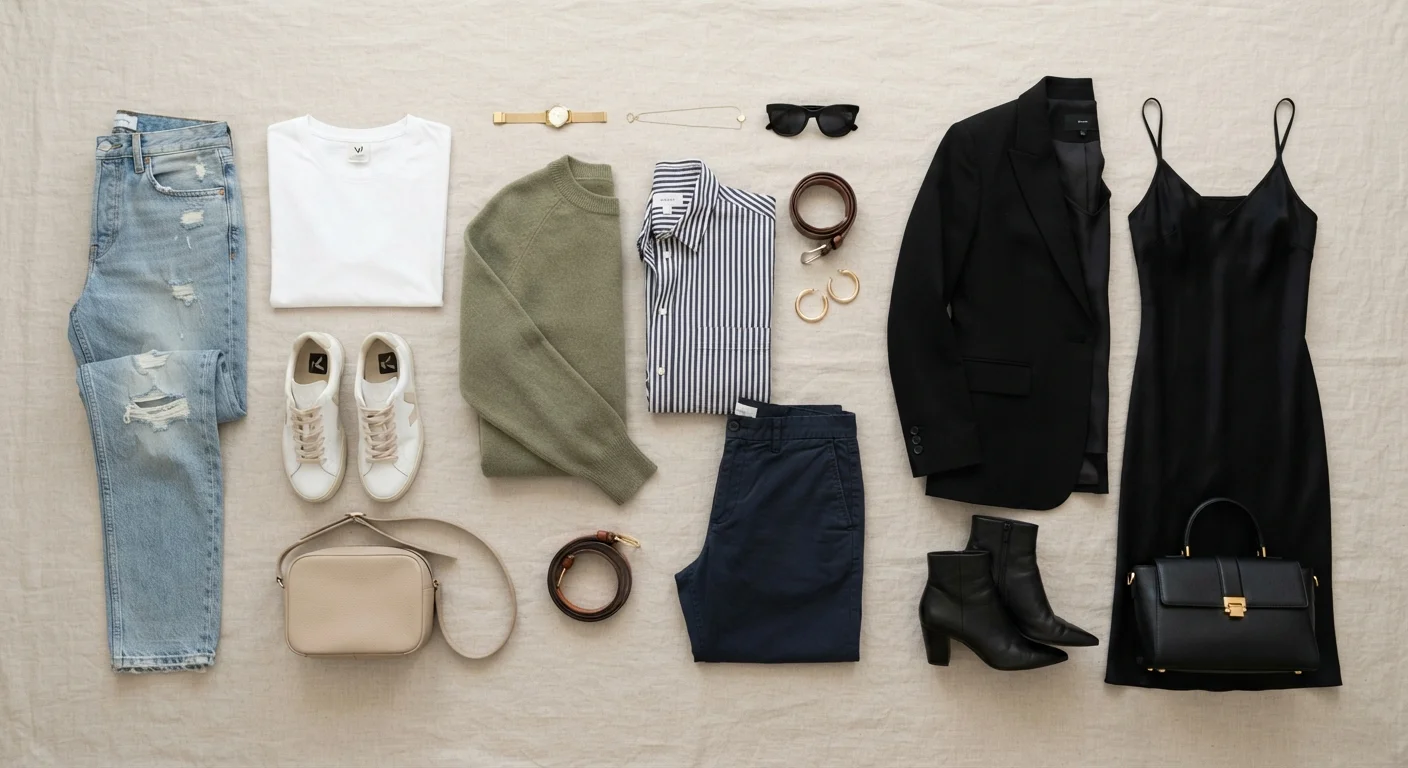
The most misunderstood code of all. Smart casual bridges everyday and formal: think chinos or tailored trousers, a neat blouse or button-down shirt, and shoes a step up from sneakers (loafers, ankle boots, clean flats). Avoid graphic tees or athletic wear. If you're unsure, err toward the smarter end.
Business Casual
Workplace-appropriate but not a full suit. Slacks, blazers, midi skirts, and collared shirts are the backbone of this code. Denim is generally a no — unless the host or company culture explicitly invites it.
Cocktail Attire
A step into formal territory. Cocktail dresses (knee to midi length), tailored jumpsuits, or a sharp suit in a non-black colour are classic choices. Heels, dressy flats, or polished loafers all work. This code appears frequently at evening weddings and corporate events.
Black Tie
The gold standard of formal dressing. Floor-length gowns or sophisticated cocktail-length formal dresses are traditional for guests wearing womenswear; a tuxedo is expected for those in menswear. Focus on refined fabrics: silk, satin, velvet, or wool. Leave the statement sneakers at home.
White Tie
Rare, but it exists. This is the most formal code there is — think state dinners and opera galas. Full-length gowns and tailcoats are the expectation. When in doubt, treat it like black tie and ask your host for guidance.
Smart Casual
A middle-ground dress code combining polished, put-together pieces with everyday comfort. Typically includes tailored trousers or chinos, neat tops, and presentable footwear — avoiding athletic wear and formal suits alike.
Cocktail Attire
A semi-formal dress code suited to evening events. It calls for dressy separates, knee-to-midi-length dresses, or tailored suits in elevated fabrics.
Black Tie
A formal dress code requiring floor-length or sophisticated formal dress for womenswear guests, and a tuxedo for menswear guests. Refined fabrics like silk, satin, or velvet are standard.
Business Casual
A workplace-appropriate code that is less formal than a full suit. Think blazers, slacks, collared shirts, and midi skirts — generally no denim or athletic pieces.
Festive Attire
An informal qualifier added to invitations, usually for holiday or celebratory events, signalling that guests should incorporate colour, sparkle, or seasonal textures into their outfit.
Reading Between the Lines: What Invitations Really Mean
Invitations sometimes add qualifiers that soften or shift these codes. "Garden party attire" usually means smart casual with a summer-fresh spin — flowy fabrics, pastels, block-heeled sandals. "Festive attire" signals you should bring colour, texture, or a hint of sparkle. "Resort casual" invites breathable, relaxed pieces that still feel intentional.
When an invitation says "dress to impress" without a specific code, lean toward cocktail attire. When it says "come as you are," casual is genuinely fine.
One reliable approach: identify two or three versatile wardrobe pieces that can be dressed up or down to cover multiple codes. Our guide to versatile wardrobe pieces walks through exactly which categories to invest in.
When You're Genuinely Unsure, Just Ask
There's no shame in reaching out to the host for clarification — it shows you're thoughtful, not clueless. A quick message asking "Is the dress code more cocktail or smart casual?" is always appreciated over showing up drastically over- or underdressed. When asking isn't an option, erring slightly more formal than you think necessary is almost always the safer call.
As you build fluency across dress codes, you may also find it useful to think about how your personal aesthetic carries through every formality level — our article on keeping your style consistent across contexts explores how to do that.