
Envelope Budgeting vs. Digital Tracking Apps: Two Approaches to Managing Shopping Spend

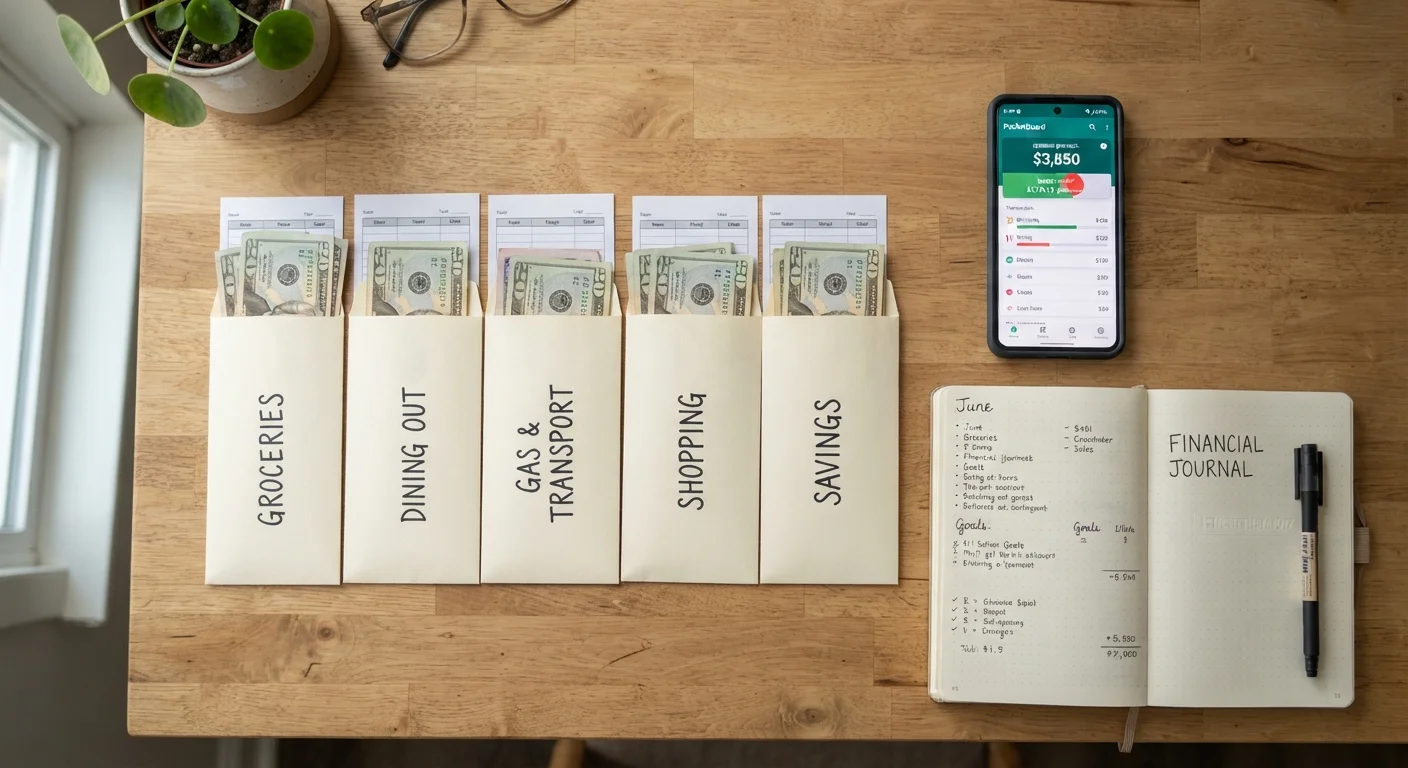
Key Takeaways
- Envelope budgeting uses physical cash to create hard spending limits that are difficult to ignore or override.
- Digital tracking apps automatically categorize transactions and display spending trends in real time.
- Envelope budgeting works best for those who struggle with impulse spending; apps suit those who want data-driven insight.
- Both methods require an honest audit of your current spending habits before they become effective.
- Hybrid approaches — using app data to set envelope amounts — are a practical option for many shoppers.
Option A
Envelope Budgeting
The tactile, cash-first method that makes limits physically real.
Best for: Shoppers who overspend unconsciously and need a concrete, hands-on system to stay within limits.
Option B
Digital Tracking Apps
The automated, data-rich tool that turns spending into visible patterns.
Best for: Shoppers who prefer convenience, want detailed category breakdowns, and are comfortable with technology.
If you regularly exceed your shopping budget without realizing it
Envelope Budgeting
The physical act of handing over cash and watching an envelope empty creates immediate, visceral awareness of each dollar spent — making it harder to overspend without noticing.
If you do most of your shopping online or with a card
Digital Tracking Apps
Apps sync directly with your bank and card accounts, making them far more practical for cashless or online purchases than carrying physical envelopes.
If you want detailed insight into your spending patterns over time
Digital Tracking Apps
Apps generate charts, category reports, and trend data that reveal where your money consistently goes — information that's difficult to extract from cash-based systems.
If you find technology adds complexity rather than clarity
Envelope Budgeting
No app setup, syncing, or subscription is required — just labeled envelopes and a consistent habit of using cash for designated categories.
If you want to combine structure with flexibility
Digital Tracking Apps
Apps let you adjust category limits mid-month and track multiple spending areas simultaneously, offering flexibility that physical envelopes can't easily accommodate.
How Each Method Actually Works
Understanding the mechanics of each approach is the first step to choosing one that fits your life. Before diving in, it's worth doing an honest review of your current habits — our guide on reading your own spending patterns explains exactly how to do that.
Envelope Budgeting
With envelope budgeting, you withdraw a set amount of cash at the start of each pay period and divide it among labeled envelopes — one for groceries, one for clothing, one for entertainment, and so on. When an envelope is empty, spending in that category stops until the next cycle. There is no workaround and no ambiguity: the money is either there or it isn't.
Digital Tracking Apps
Digital tracking apps connect to your bank accounts and credit or debit cards, pulling in transactions automatically and sorting them into categories. You set spending limits for each category, and the app alerts you when you're approaching or exceeding those limits. Unlike envelopes, there's no hard stop — just a notification. The discipline must come from the user, not the system itself.
| Criterion | Envelope Budgeting | Digital Tracking Apps |
|---|---|---|
| Core mechanism | Physical cash divided into labeled envelopes | Automatic transaction import and categorization |
| Spending enforcement | Hard stop when envelope is empty | Alerts and notifications only |
| Works for online shopping | No — cash only | Yes — syncs with cards and accounts |
| Historical data and reporting | None by default | Detailed trend reports and charts |
| Technology required | None | Smartphone and app account |
| Setup effort | Low — envelopes and cash withdrawal | Moderate — account linking and category setup |
| Ongoing cost | None | Free tiers available; premium features often paid |
| Best behavioral benefit | Reduces impulse spending via payment friction | Surfaces patterns invisible to casual observation |
Strengths and Limitations of Each Approach
Neither method is universally superior. Each has distinct trade-offs that matter more or less depending on your habits, lifestyle, and goals. For a broader look at how these fit into different budgeting philosophies, see our overview of widely used personal budgeting approaches.
Where Envelope Budgeting Excels
Research in behavioral economics consistently suggests that people spend more freely with cards than with cash — a pattern sometimes called the "pain of paying." Physical cash makes each transaction feel more significant, which can naturally slow impulsive purchases. Envelope budgeting also requires zero technology, no subscriptions, and no account linking, reducing the friction of getting started.
Where Envelope Budgeting Falls Short
Cash is impractical for online shopping, recurring subscriptions, or bill payments. Carrying multiple envelopes is inconvenient, and losing cash means losing that budget allocation entirely. The system also produces no historical data — once the cash is spent, there's no easy way to review patterns over time.
Where Digital Apps Excel
Apps generate a running history of every transaction, making it possible to spot trends across weeks or months. Many apps offer features like bill reminders, savings goals, and reports exportable for tax or planning purposes. For shoppers managing multiple accounts or income streams, apps can consolidate everything in one dashboard.
Where Digital Apps Fall Short
Apps depend on consistent syncing and accurate auto-categorization — both of which can fail. A subscription fee is common for full-featured versions. More importantly, apps are passive: they report what happened but do not prevent overspending the way an empty envelope does.
A Note on App Privacy and Security
Digital tracking apps that link to financial accounts require you to share login credentials or authorize secure data connections. Before connecting any account, review the app's privacy policy to understand how your data is stored and whether it is shared with third parties. Look for apps that use read-only access and industry-standard encryption. As with any financial tool, it's reasonable to ask questions before granting access to sensitive account information.
Choosing the Right Fit — or Combining Both
The comparison between envelope budgeting and digital apps is ultimately less about which is objectively better and more about which matches how you actually behave. For context on how both methods interact with broader saving strategies, the article on envelope budgeting versus other saving approaches offers a useful parallel lens.
A practical middle path: use a digital app to audit your spending for one or two months, then use that data to set realistic envelope amounts for your most problematic categories. This hybrid approach combines the analytical strength of apps with the behavioral guardrails of cash envelopes.
If you're still deciding on the overall structure of your budget, the guide comparing fixed versus flexible budgets can help you choose a framework before layering in either tracking method. And for a detailed look at how apps compare with other recording methods like spreadsheets and manual logs, see tracking your spending across different methods.
~30%
Reduction in discretionary spending with cash use
Multiple behavioral economics studies have found that consumers tend to spend meaningfully less when using physical cash compared to cards, due to increased psychological awareness of each transaction.
60%+
U.S. adults using mobile banking or finance apps
According to the Federal Reserve's consumer finance surveys, a majority of U.S. adults access financial services or track accounts through mobile devices.
This article is for general informational and educational purposes only and does not constitute personalised financial advice. Please consult a qualified financial professional for guidance tailored to your individual circumstances.