

Key Takeaways
- Loyalty programmes can deliver genuine savings, but only when your spending aligns with your actual needs.
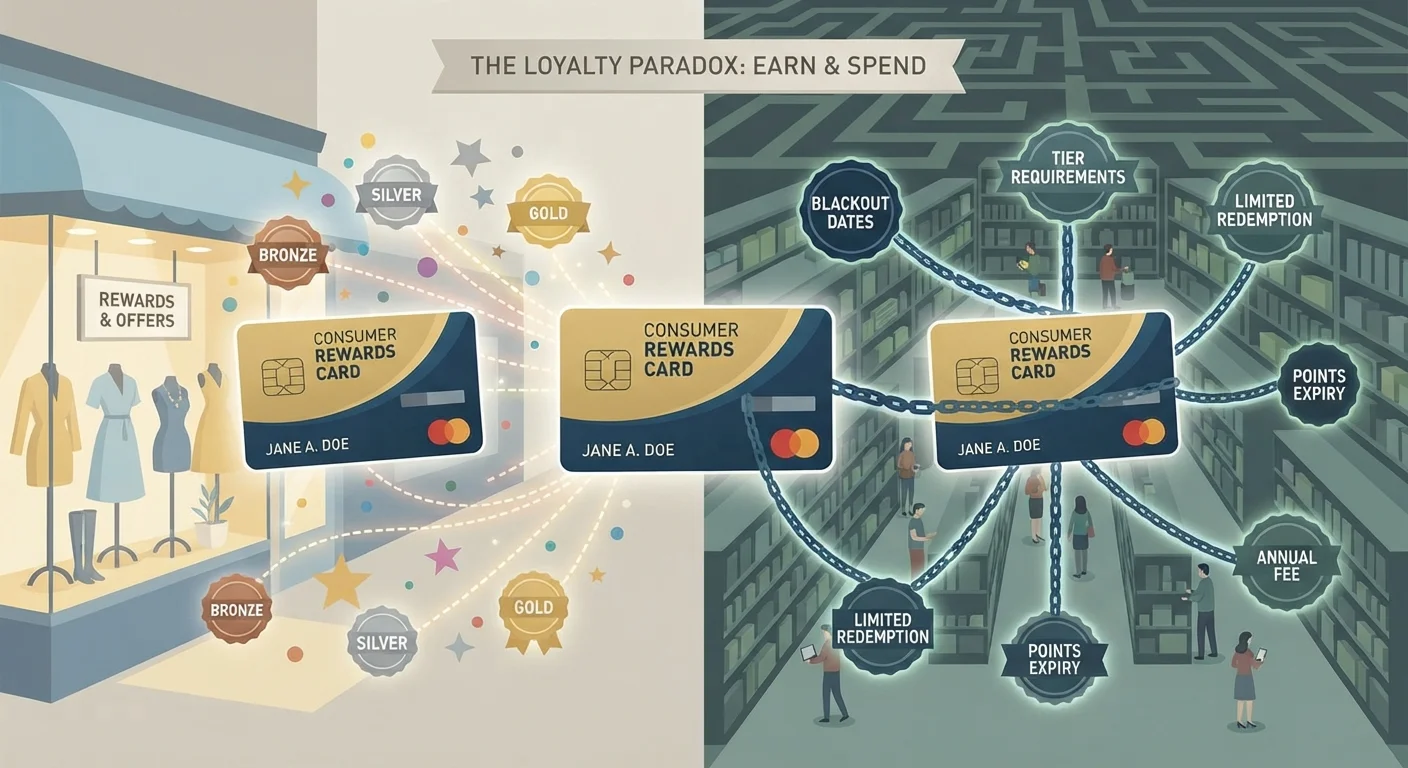
- Expiring points, tier requirements, and data collection are structural features that favour the retailer.
- The most valuable programmes are free to join, reward purchases you'd make anyway, and have no minimum spend.
- Tracking your redemption rate reveals whether a programme is working for you or just for the brand.
Genuine savings on habitual purchases
When a programme rewards spending you'd make regardless, accumulated points translate to real discounts without changing your behaviour. Grocery and pharmacy programmes are the most common examples where this holds.
Access to member-only pricing or early releases
Some programmes offer price advantages unavailable to non-members, particularly in categories like travel and electronics. If you were already planning the purchase, member pricing is a straightforward benefit.
Free to join with no ongoing cost
Many retailer programmes have no membership fee, meaning the downside risk is limited to data sharing rather than direct financial loss if you choose not to engage actively.
Convenience of a centralised purchase record
Programme accounts often serve as a purchase history, which can simplify returns, warranty claims, or reordering — a secondary benefit beyond the points themselves.
Points expiry erodes value before redemption
Many programmes set expiry windows of 12 to 18 months, meaning infrequent shoppers lose accumulated points before reaching redemption thresholds. This breakage is a predictable and profitable outcome for the retailer.
Tier requirements drive unnecessary spending
Status tiers — silver, gold, platinum — create artificial targets that can push members to spend beyond their needs to maintain or qualify for a level. The psychological pull of status is a well-documented behaviour driver.
Extensive personal data collection and sharing
Loyalty programmes generate detailed purchase profiles that are frequently used for targeted marketing and shared with third-party partners. Members often underestimate the scope of this data exchange.
Low actual redemption value per dollar spent
When calculated in cash terms, most retail loyalty programmes return between 0.5% and 1% of spend — far below the perceived value implied by points marketing. Comparison shopping across retailers often yields greater savings.
Anchors spending to a single retailer
Accumulated points and tier status create a switching cost that discourages price comparison. Shoppers may pay more at their loyalty retailer than they would elsewhere simply to protect their standing.
Our Verdict
Loyalty programmes are neither universally good nor bad — they're tools that can be used strategically or exploited by retailers depending on how you engage with them. Used passively, they shape your spending habits without delivering proportional value. Used actively and selectively, they can offset real costs on purchases you'd make regardless.
Shoppers who already have consistent, predictable spending at a particular retailer and can redeem rewards without altering their buying behaviour.
How Loyalty Programmes Actually Work
At their core, loyalty programmes are data and retention systems dressed as reward systems. When you sign up, a retailer gains a persistent view of your purchase history, frequency, and preferences. In exchange, you earn points, stamps, or tier status that can be redeemed for discounts, free items, or exclusive access.
The exchange sounds balanced, but the structure is designed around the retailer's margins. Points are issued at a fraction of a cent's value per dollar spent, redemption thresholds are set high enough to require substantial ongoing spending, and expiry windows ensure a significant portion of issued points are never redeemed at all — a practice sometimes called breakage, which directly benefits the programme operator.
Understanding this architecture is the first step to deciding whether any given programme works in your favour. For a broader look at how retail environments are built to encourage spending, see how retail spaces are engineered to increase spend.
The Real Advantages — When They Apply
Loyalty programmes aren't inherently a trap. For the right shopper in the right context, they deliver measurable value.
Genuine savings on habitual purchases
When a programme rewards spending you'd make regardless, accumulated points translate to real discounts without changing your behaviour. Grocery and pharmacy programmes are the most common examples where this holds.
Access to member-only pricing or early releases
Some programmes offer price advantages unavailable to non-members, particularly in categories like travel and electronics. If you were already planning the purchase, member pricing is a straightforward benefit.
Free to join with no ongoing cost
Many retailer programmes have no membership fee, meaning the downside risk is limited to data sharing rather than direct financial loss if you choose not to engage actively.
Convenience of a centralised purchase record
Programme accounts often serve as a purchase history, which can simplify returns, warranty claims, or reordering — a secondary benefit beyond the points themselves.
The key condition is that the programme rewards spending you would have made regardless. If you shop at a particular grocery chain weekly, accumulating points on that existing behaviour costs you nothing extra and returns tangible discounts. The same logic applies to fuel programmes, pharmacy rewards, and airline miles for frequent travellers.
The Disadvantages You Should Know Before You Sign Up
The drawbacks of loyalty programmes are structural, not incidental — they're built into the design.
Points expiry erodes value before redemption
Many programmes set expiry windows of 12 to 18 months, meaning infrequent shoppers lose accumulated points before reaching redemption thresholds. This breakage is a predictable and profitable outcome for the retailer.
Tier requirements drive unnecessary spending
Status tiers — silver, gold, platinum — create artificial targets that can push members to spend beyond their needs to maintain or qualify for a level. The psychological pull of status is a well-documented behaviour driver.
Extensive personal data collection and sharing
Loyalty programmes generate detailed purchase profiles that are frequently used for targeted marketing and shared with third-party partners. Members often underestimate the scope of this data exchange.
Low actual redemption value per dollar spent
When calculated in cash terms, most retail loyalty programmes return between 0.5% and 1% of spend — far below the perceived value implied by points marketing. Comparison shopping across retailers often yields greater savings.
Anchors spending to a single retailer
Accumulated points and tier status create a switching cost that discourages price comparison. Shoppers may pay more at their loyalty retailer than they would elsewhere simply to protect their standing.
Loyalty mechanics also interact with other checkout pressure tactics. Points bonuses on specific products, double-points events, and tier-qualification deadlines all function similarly to the upsell and cross-sell tactics described in this field guide to checkout pressure. The goal is to activate spending that wouldn't have happened otherwise.
~1%
Typical real cash-back value of retail loyalty points
Consumer advocacy analyses consistently find that most non-premium retail loyalty programmes return less than one cent per dollar spent when points are redeemed at face value.
30–40%
Estimated share of loyalty points never redeemed
Industry estimates suggest a substantial proportion of issued loyalty points expire unused, a revenue benefit to operators known in the industry as breakage.
How to Evaluate Whether a Programme Is Worth Your Time
Before joining — or before continuing with — any loyalty programme, run through these questions:
- Is it free to join? Paid membership tiers require careful value calculation before committing.
- Do points expire? If yes, consider whether your spend frequency is high enough to redeem before they lapse.
- What is the actual redemption rate? Divide the cash value of a typical reward by the spend required to earn it. Many programmes return less than 1% in real value.
- Does membership require a minimum spend? Thresholds can push you to overspend to avoid losing status.
- What data are you sharing, and how is it used? Read the privacy terms — purchase data is often shared with third-party marketing partners.
If a programme fails more than two of these questions, it's worth sitting out. Building a habit of auditing your commitments — including loyalty memberships — is one of the most effective ways to prevent passive overspending.
Paid Loyalty Tiers Warrant Extra Scrutiny
Some retailers offer premium membership tiers for an annual or monthly fee, promising enhanced rewards or exclusive benefits. These require you to calculate break-even spend before committing — the fee is a guaranteed cost, while the rewards are contingent on continued spending. This content is general information only; for decisions involving recurring financial commitments, review the terms carefully and consider consulting a financial adviser if the sums are significant.
Loyalty Programmes and the Broader Spending Ecosystem
Loyalty programmes rarely operate in isolation. They're often paired with branded credit cards, subscription perks, and exclusive member pricing — all of which deepen financial entanglement with a single retailer. This pattern mirrors the mechanics of subscription creep: low-friction sign-ups that become difficult to exit without losing perceived value.
If you're building a more deliberate approach to comparing where you spend, the comparing products hub and smart spending resources offer frameworks for evaluating purchases on your own terms rather than a retailer's. The goal isn't to avoid loyalty programmes entirely — it's to use them as a tool rather than be used by them.