

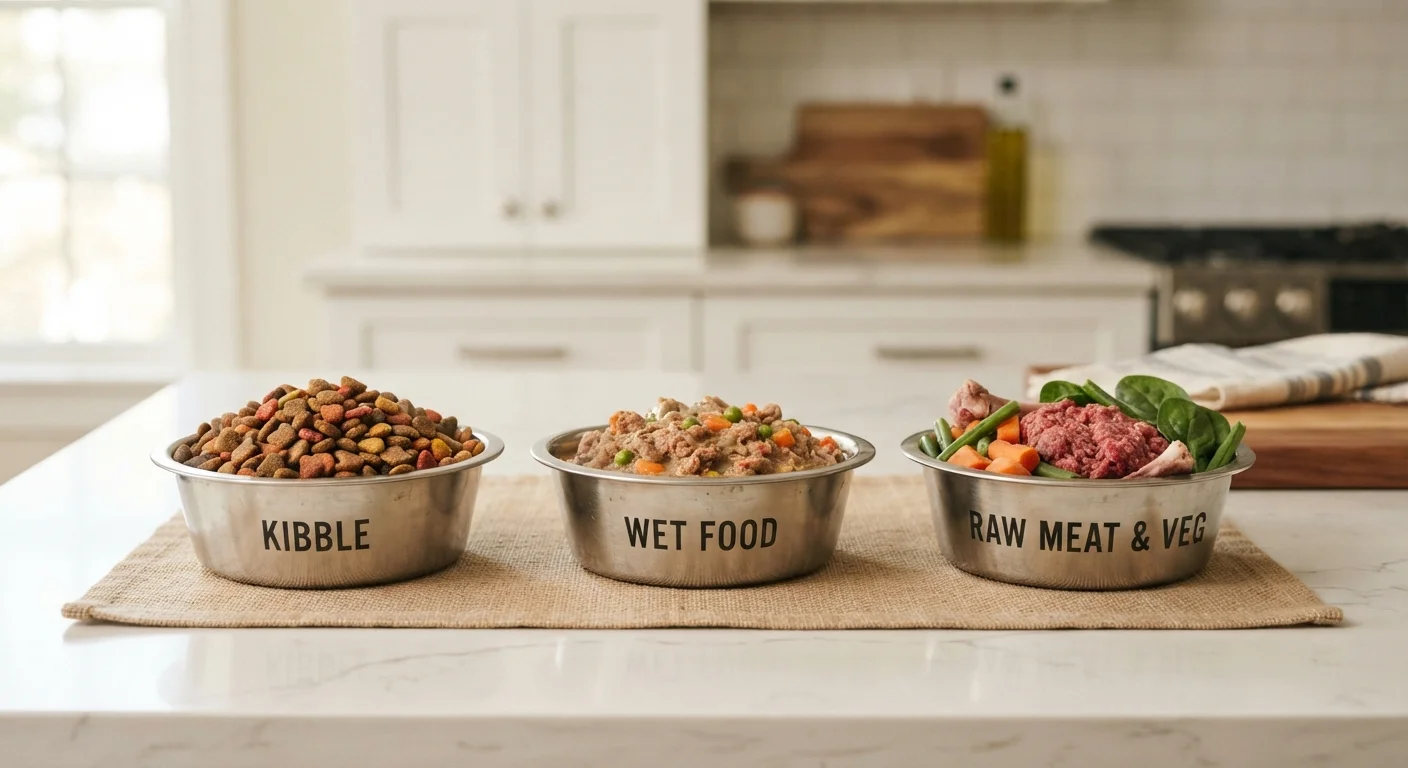
Key Takeaways
- Dry kibble is the most convenient and cost-effective option, but moisture content is low.
- Wet food provides higher hydration and is often more palatable for picky eaters.
- Raw diets carry real food-safety risks and require careful handling and nutritional planning.
- No single feeding approach is universally superior — the right choice depends on your pet's health, your lifestyle, and your budget.
- Always consult your veterinarian before making significant changes to your pet's diet.
Our Verdict
Dry food suits most new pet owners thanks to its convenience, shelf life, and cost efficiency. Wet food works well for pets needing extra hydration or those with lower appetites. Raw feeding can be an option for committed owners, but requires veterinary guidance and strict food-safety protocols to be done safely.
| Best for | Recommended |
|---|---|
| New owners prioritizing convenience and budget | Dry Food (Kibble) |
| Pets with hydration needs or picky eating habits | Wet Food |
| Experienced owners willing to invest time and vet oversight | Raw Diet |
Why Your Feeding Choice Matters More Than You Might Think
For a first-time pet owner, standing in the pet food aisle can feel paralyzing. Dozens of bags, cans, and pouches compete for your attention — and then there's the growing conversation around raw feeding. Each approach has real differences in nutrition, safety, and day-to-day practicality that are worth understanding before you commit.
This guide breaks down the three main feeding approaches — dry food (kibble), wet food, and raw diets — so you can have a more informed conversation with your veterinarian and feel confident in your choice. For a deeper look at what's actually on the packaging, see our guide on reading a pet food label.
| Dry Food (Kibble) | Wet Food | Raw Diet | |
|---|---|---|---|
| Moisture Content | 6–10% | 70–80% | 60–70% (varies) |
| Cost per Serving | Lower | Moderate to high | High (especially commercial) |
| Convenience | High — easy to store and serve | Moderate — refrigerate after opening | Low — requires careful prep |
| Shelf Life (opened) | Weeks in sealed container | 1–2 days refrigerated | 1–2 days refrigerated |
| Food Safety Risk | Low | Low to moderate | High — pathogen risk |
| Nutritional Completeness | AAFCO-compliant formulas available | AAFCO-compliant formulas available | Varies — DIY often incomplete |
| Best Suited For | Most pets and new owners | Pets needing hydration support | Experienced, vet-guided owners |
Dry Food (Kibble): The Everyday Default
Dry kibble is the most widely used pet food format in the United States, and for good reason. It stores easily at room temperature, has a long shelf life once opened, and is generally more affordable per serving than other formats. Many complete and balanced kibble formulas meet established nutritional standards set by the Association of American Feed Control Officials (AAFCO).
The main trade-off is moisture. Kibble typically contains only 6–10% water, compared to 70–80% in wet food. For cats especially — who evolved to get much of their hydration from prey — this can contribute to inadequate water intake if they aren't drinking enough from a bowl. Dogs are generally better at compensating, but hydration still matters for both species.
Transition Slowly When Switching Foods
Abrupt food changes can cause digestive upset in dogs and cats. When moving from one diet to another, gradually mix increasing amounts of the new food with the old over 7–10 days. If your pet shows persistent vomiting, diarrhea, or loss of appetite during a transition, contact your veterinarian.
Kibble also provides some mechanical abrasion on teeth, which may offer a mild dental benefit, though it is not a substitute for dedicated dental care.
Wet Food: Higher Moisture, Higher Cost
Canned or pouch-format wet food is closer in texture and moisture content to whole prey, which makes it more biologically familiar — and often more appealing — to many pets. The higher water content is particularly valuable for cats prone to urinary tract issues or kidney disease, as increased hydration supports kidney function. Consult your veterinarian if your pet has a diagnosed condition before selecting a therapeutic diet.
On the downside, wet food costs more per calorie, spoils quickly once opened, and needs refrigeration after the can or pouch is unsealed. Uneaten portions left in the bowl for more than a few hours can harbor bacteria. For multi-pet households or larger dogs, the cost difference compared to kibble adds up noticeably over time.
Many owners use a mixed approach — dry food as the base, with wet food as a topper or supplement — to balance palatability, hydration, and cost. For guidance on setting up a practical feeding routine, see feeding your pet well.
Raw Diets: Higher Commitment, Real Risks
Raw feeding — which typically involves uncooked muscle meat, organ meat, raw meaty bones, and sometimes vegetables — has gained popularity among owners who prefer a minimally processed approach. Proponents cite improved coat condition and digestion, though the scientific evidence supporting specific health claims remains limited and is still being studied.
The risks, however, are well-documented. Raw meat can carry pathogens including Salmonella, Listeria, and E. coli, posing health risks not just to your pet but to people in your household — particularly children, the elderly, or immunocompromised individuals. The U.S. Food and Drug Administration (FDA) and major veterinary organizations have raised concerns about these risks.
Raw Diets Pose Household Safety Risks
Raw meat can carry pathogens like Salmonella and E. coli that are dangerous to both pets and people. Always use separate cutting boards and utensils, wash hands thoroughly after handling raw pet food, and sanitize surfaces. Households with young children, pregnant individuals, or immunocompromised members should be especially cautious and consult a physician before introducing raw feeding.
Nutritional imbalance is another significant concern. Home-prepared raw diets are frequently deficient in calcium, phosphorus, or key vitamins unless carefully formulated by a board-certified veterinary nutritionist. Commercially prepared raw diets with AAFCO nutritional adequacy statements reduce — but do not eliminate — this concern.
If raw feeding interests you, work directly with a veterinarian or veterinary nutritionist before starting. For a broader look at how popular pet food claims hold up to scrutiny, see the truth about popular pet food claims.
This article is for general informational purposes only and is not a substitute for veterinary nutritional advice. Always consult a licensed veterinarian before changing your pet's diet.