

Key Takeaways
- The first price you see influences how you judge every price that follows — this is anchoring.
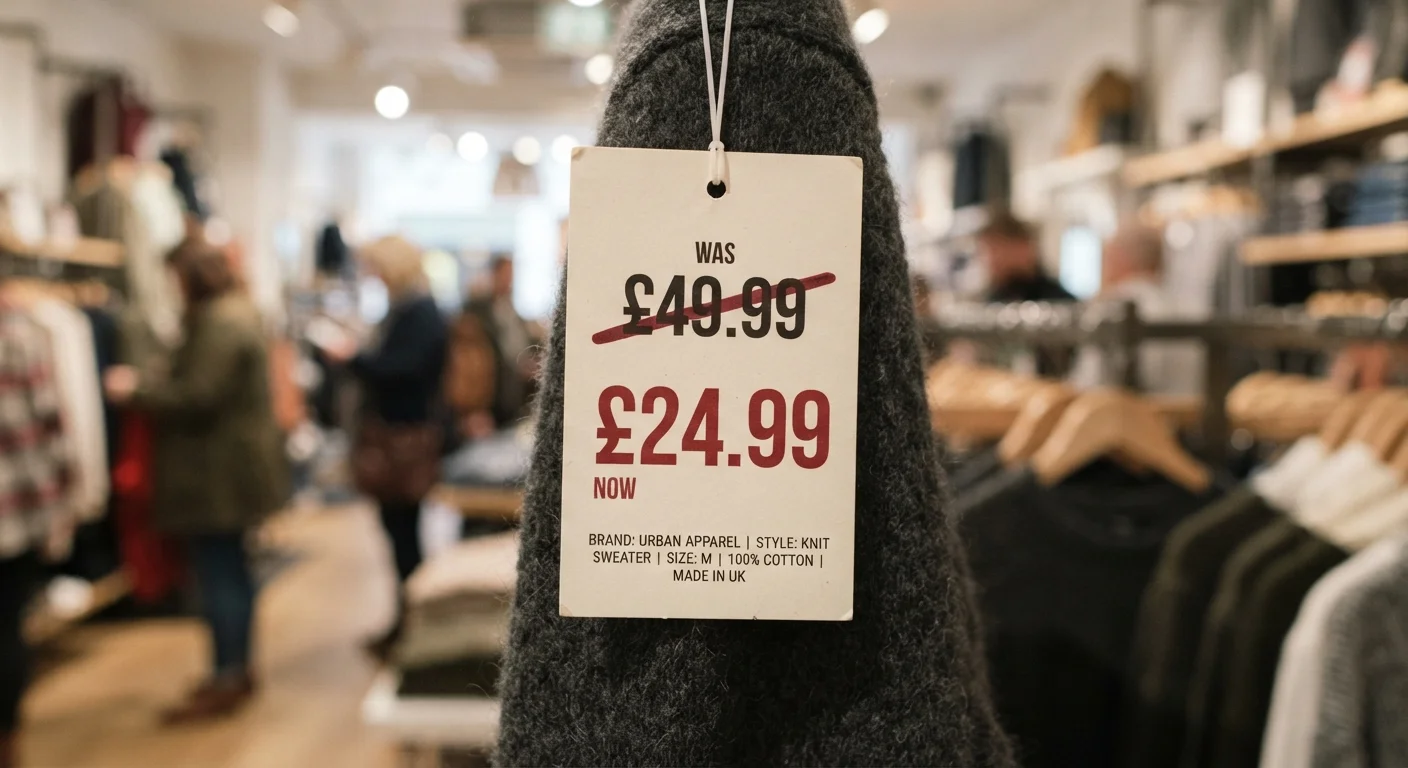
- "Was $200, now $99" only feels like savings if the $200 figure was a genuine, regular price.
- Retailers use anchoring across categories: clothing, electronics, car dealerships, and subscriptions.
- Comparing a price to its anchor is not the same as evaluating whether the price is fair.
- Breaking the anchor means researching what a product actually costs across different sources.
- Awareness of the tactic is the first step toward making purchases on your own terms.
Price Anchoring
Price anchoring is a marketing technique where an initial price — the "anchor" — is shown to a shopper before a second, lower price. The anchor makes the second price feel like a bargain, even if it isn't. Our brains use the first number we see as a reference point, which shapes how we judge everything that follows.
In behavioral economics, anchoring is classified as a cognitive bias — a systematic pattern of thought that deviates from rational judgment. It was prominently documented by psychologists Daniel Kahneman and Amos Tversky in their research on human decision-making under uncertainty.
Why the First Number You See Changes Everything
Imagine you're browsing online and see a jacket listed at "Was $250 — Now $110." Your instinct is probably: that's a significant discount. But here's the question worth pausing on: was $250 ever what anyone actually paid for that jacket?
That's price anchoring at work. When a retailer presents a high number first, your brain locks onto it as a reference point. Every price you encounter afterward gets judged relative to that anchor — not relative to what the item is genuinely worth or what you can actually afford. The result is that you can feel like you're "saving money" while spending more than you planned.
This isn't a flaw in willpower. It's a well-documented feature of how human cognition works. We are wired to evaluate things in relative terms, not absolute ones. Retailers understand this deeply, and they build it into how prices are displayed. Understanding it is your first line of defense.
Anchoring Is Not the Same as Deception
Not all anchoring involves false or inflated prices. Sometimes a genuine full price is used as a reference point for a legitimate discount. The tactic becomes misleading when the "original" price was never a real selling price — something that varies by retailer and is regulated differently across US states. When evaluating a deal, the anchor's legitimacy matters as much as the size of the gap.
How Anchoring Shows Up in Everyday Shopping
Price anchoring takes different forms depending on where you're shopping, but the underlying mechanic is the same: show a high number first, then a lower one.
- Strikethrough pricing: The classic "was / now" format, used heavily in clothing, electronics, and home goods.
- MSRP comparisons: Car dealerships commonly advertise vehicles "below MSRP" (Manufacturer's Suggested Retail Price), using that figure as the anchor even when few cars actually sell at full MSRP.
- Subscription tiers: Software and streaming services often display a premium tier prominently so that mid-tier plans feel like a bargain by comparison.
- Bundle pricing: Listing individual item prices before a bundle total makes the bundle appear more valuable, regardless of whether you wanted all the items.
Across all of these, the pattern is consistent: the anchor does the persuading so the sale price doesn't have to stand on its own merits. For a broader look at how this fits into retail manipulation, see common buyer traps across shopping categories.
60–70%
Shoppers influenced by reference pricing
Research in consumer behavior consistently finds that a majority of shoppers use a displayed "original" or "regular" price as their primary benchmark when judging whether a sale price is fair.
~30%
Lift in perceived value from anchoring
Studies in behavioral economics suggest that showing a higher reference price before a selling price can increase a product's perceived value by roughly 30%, independent of any change to the product itself.
How to Evaluate a Price on Its Own Terms
Breaking an anchor means shifting the question you're asking. Instead of "How much am I saving off the original?", train yourself to ask: "Is this price reasonable for what I'm getting?"
A few practical steps help make that shift:
- Search the item elsewhere before buying. Look at multiple independent retailers. If the "sale" price matches what everyone else charges normally, the anchor was likely inflated.
- Check price history tools. Several browser extensions and websites track historical prices for online products. Seeing that a product has sold at the "sale" price for months deflates the anchor immediately.
- Set your budget before you browse. Knowing what you intended to spend before seeing any prices reduces the anchor's influence. The budgeting basics hub has practical frameworks for doing this.
- Ask whether you need the item. Anchoring exploits the desire for a deal. Separating "this is cheap relative to the anchor" from "this purchase fits my needs" is a key mental habit.
Set Your Price Before You See Theirs
Before opening a product page or walking into a store, decide the maximum amount you're willing to spend on the item. Write it down or note it on your phone. This self-set number acts as your own anchor, making it significantly harder for a retailer's inflated reference price to override your judgment.
Anchoring also interacts with sale events specifically designed to generate urgency. Why sales events often cost you more than you save explains how those two tactics compound each other.
Building Habits That Outlast the Sale
Awareness of anchoring is useful, but habits are more durable than in-the-moment willpower. A few structural approaches help protect your budget consistently:
Wait before you buy. A simple pause — even 24 hours — breaks the emotional momentum an anchor creates. The urgency fades, and the decision gets clearer. This connects directly to the patterns behind impulse buying and unplanned spending, where anchoring often plays a supporting role.
Anchor to your own numbers. Before shopping, write down the maximum you're willing to pay. That self-imposed number becomes your anchor — making it harder for a retailer's figure to override your judgment.
Separate quality from price signals. A high anchor can make you assume quality. It rarely reflects it. Common myths about cheap vs. expensive products unpacks why price and quality don't move in lockstep as reliably as we assume.
None of this means every sale is a trap or every discount is manufactured. Some genuinely reflect real price reductions. The goal isn't suspicion — it's informed evaluation. When you understand what anchoring does, you can weigh a price on its actual merits rather than on the comparison a retailer chose for you.
This article is for general informational and educational purposes only. It does not constitute financial, legal, or professional advice. For guidance specific to your financial situation, consult a qualified financial professional.