

Key Takeaways
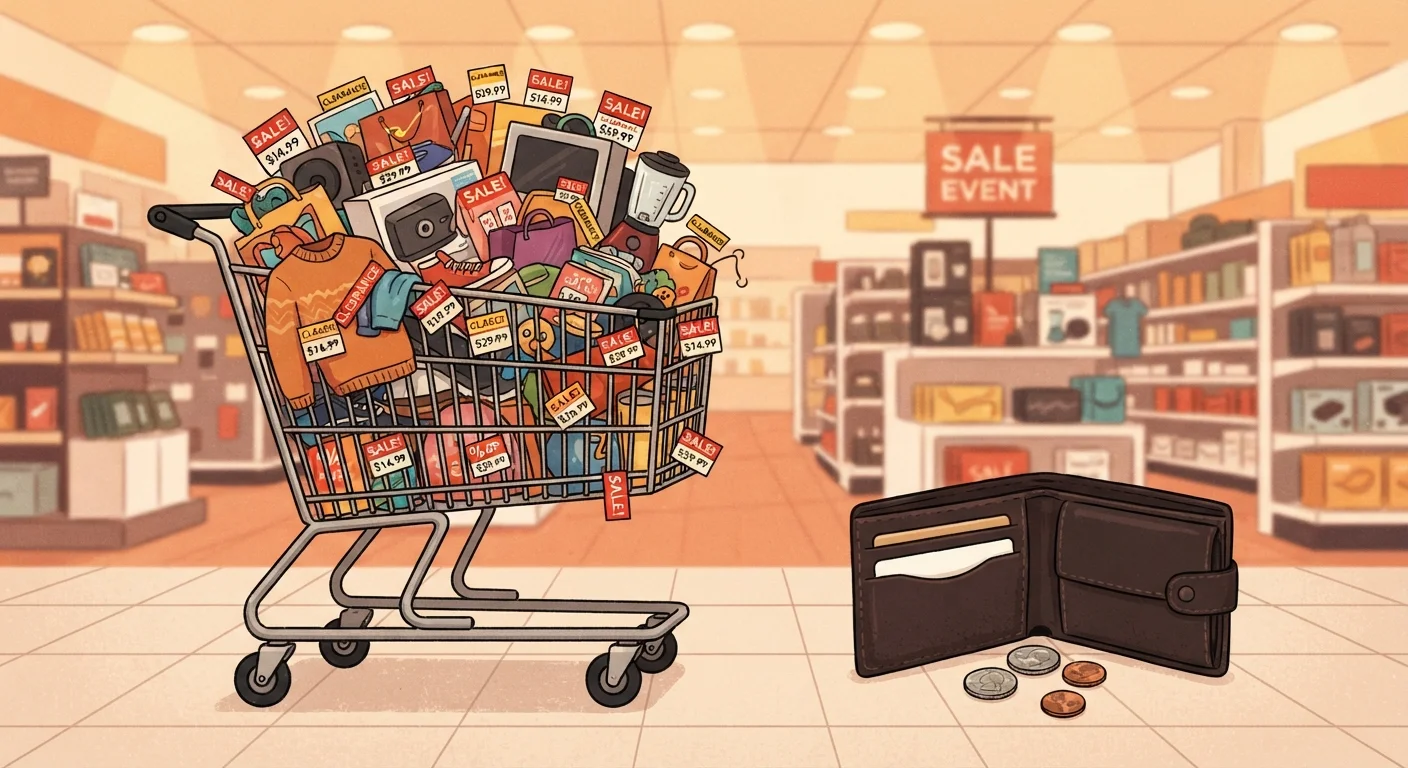
- Sales events use urgency and scarcity to override careful decision-making before you've had time to think.
- Spending money you hadn't planned to spend is a net loss, even if the price is discounted.
- Comparing a sale price to the original isn't enough — compare it to your actual need and budget.
- A structured pre-purchase checklist can interrupt emotional buying and protect your spending plan.
How Sales Events Are Engineered to Override Your Budget
Sales events are not passive opportunities — they are carefully constructed environments designed to encourage spending beyond what you planned. Countdown timers, flash deals, and exclusive member pricing all serve a common purpose: to shorten the time between impulse and purchase.
Understanding this isn't about cynicism. It's about approaching promotions with the same critical thinking you'd apply to any financial decision. The Avoiding Buyer Traps hub covers the broader landscape of these tactics, but sales events deserve specific attention because they feel so intuitively beneficial.
The core issue is a cognitive bias called price anchoring — our tendency to judge value relative to the first number we see. When a product is labeled "was $180, now $90," our brain locks onto $180 and evaluates $90 against it, rather than asking whether $90 is a reasonable price for what we actually need. How price anchoring shapes spending is worth understanding before your next shopping event.
"Limited Time" Pressure Is a Design Choice
Countdown timers, low-stock warnings, and flash-sale windows are deliberate tools retailers use to shorten your decision window. The urgency you feel is manufactured, not incidental. Taking even five minutes to pause before purchasing can dramatically reduce regret-driven spending. For a deeper look at how this works, see how artificial scarcity is engineered.
The Most Costly Mistakes First-Time Buyers Make During Sales
First-time buyers are especially vulnerable to sale-event traps because they haven't yet built an intuition for promotional tactics. The following mistakes are among the most common — and most expensive — ways shoppers lose ground during events that promise savings.
Buying something solely because it's on sale, not because you need it.
Why it happens: Discounts reframe spending as saving. When a product is marked down, the brain registers the gap between the original and sale price as a gain — making the purchase feel responsible rather than impulsive.
Treating the original "was" price as a reliable reference point.
Why it happens: Retailers routinely inflate reference prices to make discounts appear larger. Shoppers naturally anchor their value judgment to the number they see first, which is precisely why that number is often set high.
Spending more in total to qualify for a discount threshold (e.g., "spend $100 to get 20% off").
Why it happens: Minimum-spend incentives feel logical — a little more spending unlocks a reward. But this framing ignores that you're adding unplanned items to your order simply to hit a number.
Buying multiples or larger quantities "while the price is good."
Why it happens: Scarcity messaging — "only 3 left" or "sale ends tonight" — triggers stockpiling behavior. It feels prudent to secure supply now, even if demand is uncertain.
Ignoring the total cost of ownership when evaluating a deal.
Why it happens: Sale prices are front-and-center. Ongoing costs — subscriptions, accessories, maintenance, or compatibility requirements — are rarely advertised alongside the discount.
Spending More Is Not Saving
A discount only saves you money if you would have bought the item anyway, at a price you can afford. Buying something you didn't need — even at 70% off — is simply a smaller loss, not a gain. This distinction is the single most important concept for evaluating any sale event.
If you find yourself regularly departing from your budget during sale periods, the underlying issue may be worth examining. Understanding the psychology of impulse buying can help you recognize the triggers before they take hold.
Building a Pre-Purchase Habit That Protects Your Spending Plan
The most effective defense against sale-event overspending is a simple pre-purchase checklist you run before every transaction — regardless of how good the deal appears.
- Is this item on my planned shopping list? If not, pause entirely.
- Can I afford this without adjusting my budget? A sale price that requires budget reshuffling isn't truly affordable.
- What is the verified regular price? Check price history, not just the retailer's own reference figure.
- Do I need this now, or am I responding to urgency framing? Revisit the decision in 24 hours if you're unsure.
- What is the total cost of ownership? Include accessories, subscriptions, and maintenance.
This process takes under two minutes and interrupts the emotional momentum that sale events depend on. For ongoing strategies to stay on budget when promotions are everywhere, see staying on budget during sales.
~49%
Shoppers who report post-sale purchase regret
Consumer behavior research consistently finds that nearly half of sale-event purchases are later regretted, with impulse buying cited as the primary cause.
3x
Average spend increase during major sale events
Retail industry analyses have found that shoppers typically spend significantly more during promotional periods than in equivalent non-sale windows, often exceeding their stated budgets.
This article is for general informational and educational purposes only. It does not constitute personalized financial advice. For guidance specific to your financial situation, consider consulting a qualified financial professional.