

Key Takeaways
- Spending categories turn individual transactions into recognizable patterns you can actually act on.
- Most personal budgets include fixed, variable, and discretionary expense types.
- Assigning every dollar to a category reveals hidden spending that surprised totals often expose.
- Consistent categorization over time is more valuable than a single perfect snapshot.
- You don't need special software — a simple list of categories is enough to get started.
Spending Categories
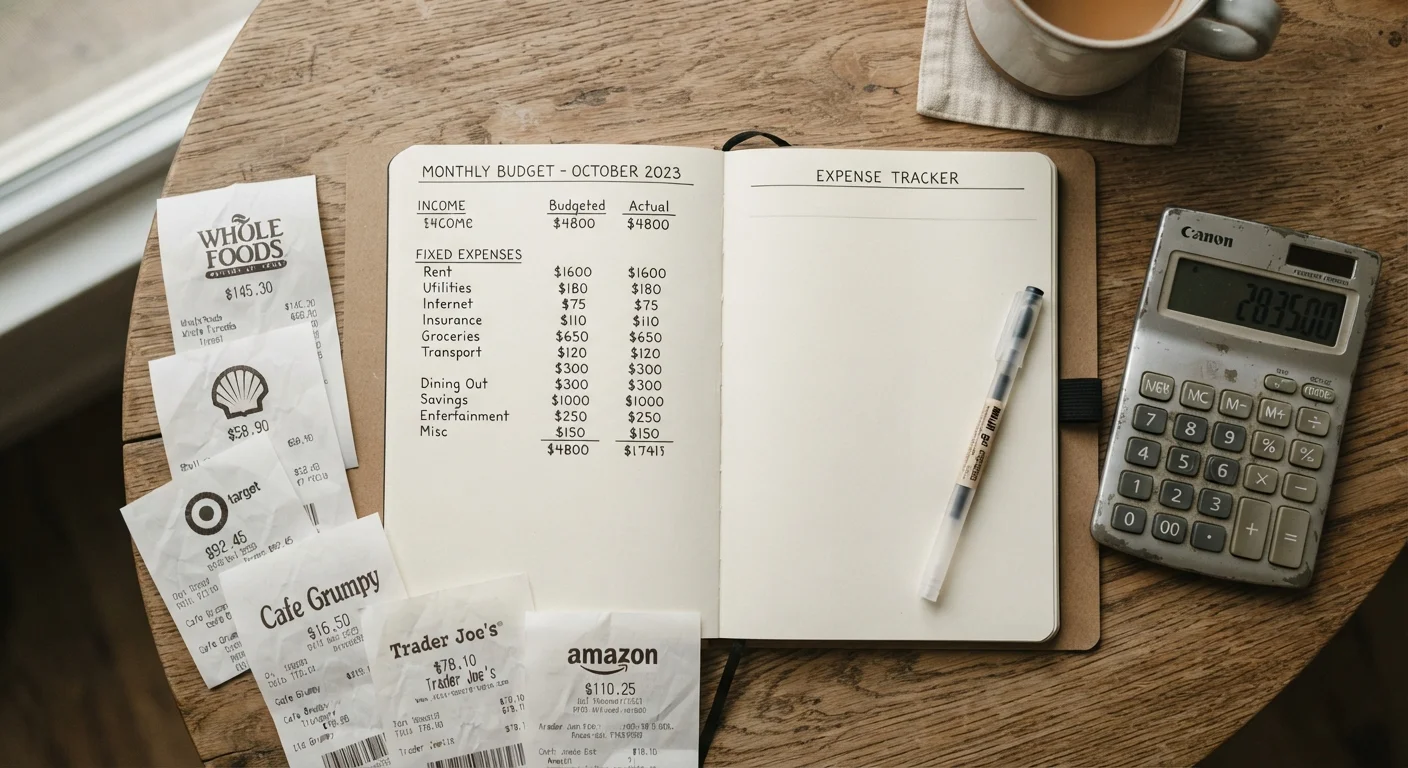
Spending categories are groupings that organize your expenses by type — such as housing, food, transportation, and entertainment. They give structure to your financial life by turning a scattered list of transactions into a meaningful picture of your habits. When you can see how much you spend in each area, budgeting becomes far less guesswork.
In personal finance, spending categories map closely to budget line items, which are the individual allocations within a formal budget framework such as zero-based budgeting or the 50/30/20 rule.
Why Categories Matter More Than Totals
Most people who feel out of control with money don't have an income problem — they have a visibility problem. Knowing that you spent $2,400 last month tells you almost nothing useful. Knowing that $900 of it went to restaurants and food delivery — and you thought you were spending $300 — tells you everything.
Spending categories create that visibility. They convert a raw list of transactions into a structured view of your financial behavior. Instead of scrolling through charges wondering where your paycheck went, you see a breakdown by area of life. That breakdown is what makes a budget functional rather than theoretical.
For first-time budgeters especially, categorization is the essential first step. Before you can set realistic limits, you need to know your baseline — and categories are how you measure it. Our guide on how to read your own spending patterns walks through how to audit past purchases before setting any targets.
33%
Average share of income spent on housing
According to the U.S. Bureau of Labor Statistics Consumer Expenditure Survey, housing consistently represents the largest single spending category for American households.
13%
Average share of income spent on food
The U.S. Bureau of Labor Statistics reports that food — including groceries and dining out — accounts for roughly 13% of average household expenditures annually.
~$227
Average monthly amount spent on dining out per household
Bureau of Labor Statistics Consumer Expenditure data indicates that food away from home represents a substantial and often underestimated portion of household food spending.
The Core Category Types Every Budget Needs
While your exact list will be personal, most budgets are built from three fundamental types of spending:
- Fixed expenses — costs that are the same amount every month, such as rent, a car loan, or a fixed-rate insurance premium. These are predictable and easy to plan for.
- Variable necessary expenses — costs that fluctuate but cover genuine needs, like groceries, utilities, and fuel. The amount changes, but the category itself is non-negotiable.
- Discretionary expenses — spending choices rather than obligations. Dining out, streaming services, hobbies, and clothing beyond basic needs fall here. This is the category most responsive to budgeting decisions.
Understanding how fixed and variable expenses differ helps you predict which parts of your budget will stay stable and which require active management each month.
Start With Broad Categories, Then Refine
If categorizing everything feels daunting, start with just five or six broad buckets for your first month. Once you're comfortable with the habit, break the biggest categories into sub-categories where you need more detail. Building the routine first is more important than getting the category structure perfect on day one.
Building Your Personal Category List
A workable starting framework for most US households includes these categories: Housing, Food (groceries separate from dining out), Transportation, Healthcare, Utilities, Savings, Debt Repayment, Subscriptions, Personal Care, and Discretionary/Miscellaneous.
To build your own list, pull up three months of bank and credit card statements and note every distinct type of expense you see. Group similar charges together. If you spent money on it regularly, it earns its own category. If it appeared once, fold it into Miscellaneous for now — you can promote it later if it recurs.
Avoid the trap of making categories too broad. A single "Food" bucket that combines groceries, coffee shops, work lunches, and meal delivery kits tells you very little. Splitting food into at least two sub-categories — groceries and dining/takeout — often reveals one of the most significant budget leaks people overlook. For a broader list of categories that first-time buyers frequently miss, see spending categories every shopping budget should include.
Your Categories Should Reflect Your Life
There is no universally correct list of spending categories. A freelancer may need a 'Business Expenses' category; a parent may need 'Childcare' as a top-level line item. Treat any template as a starting point, not a prescription. The goal is a system that accurately reflects how you actually spend — not one borrowed from a textbook.
Putting Categories to Work
Once you have a category structure, the next step is assigning every transaction to one — consistently, every month. Consistency matters more than perfection. A category system used imperfectly for six months will teach you far more than a flawless system abandoned after two weeks.
After your first full month of categorized tracking, total each category and compare it to your income. This single exercise — often called a spending audit — is what makes budgeting feel real rather than abstract. You'll likely find two or three categories that absorb far more than you expected.
From there, you can make intentional choices: reduce discretionary spending in overrun categories, or decide that a category is actually a priority and adjust others to compensate. Either way, the decision is informed rather than reactive. To compare the tools available for ongoing tracking, our article on tracking your spending with logs, spreadsheets, and apps lays out the honest tradeoffs of each method. And once you're ready to apply these habits across different types of purchases, spending smarter across every category offers practical guidance for first-time buyers.
This article is for general informational and educational purposes only and does not constitute personalized financial advice. For guidance specific to your financial situation, consider consulting a qualified financial professional.