

Key Takeaways
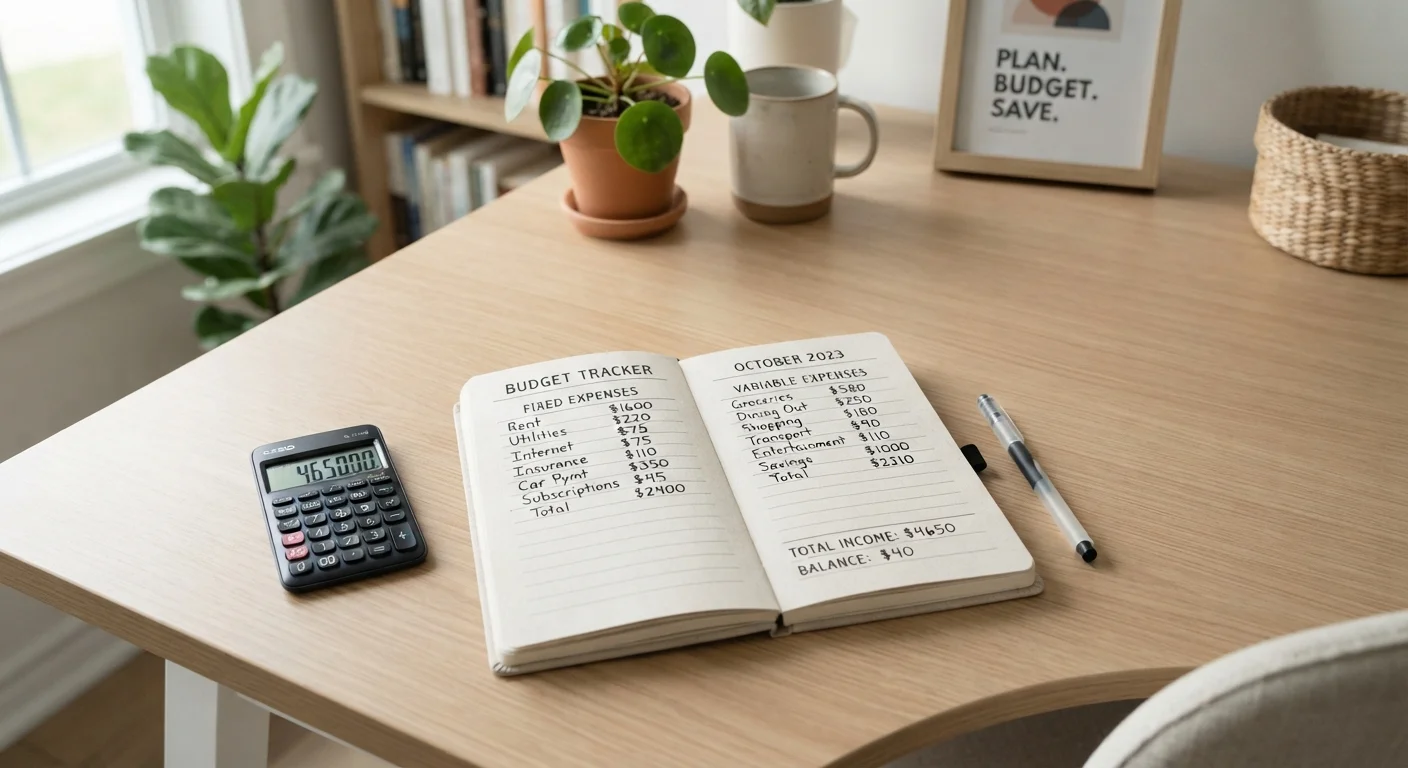
- Fixed expenses stay the same each month, making them easy to predict and plan for reliably.
- Variable expenses fluctuate and represent your primary opportunity to reduce spending when needed.
- Most budgets contain a mix of both types — understanding each is essential before optimizing either.
- Tracking variable expenses regularly reveals hidden spending patterns most people don't realize exist.
- Some expenses, like utilities, are semi-variable — they have a base cost but fluctuate with usage.
Option A
Fixed Expenses
The predictable, non-negotiable costs every budget is built around.
Best for: Providing a stable baseline so you always know your minimum monthly financial obligation.
Option B
Variable Expenses
The flexible costs you can actively manage and adjust month to month.
Best for: Identifying where spending habits live — and where meaningful savings opportunities exist.
If you're building your first budget from scratch
Fixed Expenses
Start by listing all your fixed expenses to establish a non-negotiable floor. Once you know your fixed total, you can determine how much income remains for variable spending and savings.
If you're looking for ways to cut your monthly spending
Variable Expenses
Variable expenses are where behavioral changes make the biggest difference. Reviewing and trimming these costs is the fastest path to freeing up cash in your budget.
If you want to stress-test your budget against income disruptions
Fixed Expenses
Knowing your exact fixed obligations tells you the minimum income you'd need to cover essentials — a critical number to know before any financial emergency strikes.
The Core Distinction: Predictability vs. Flexibility
Every dollar you spend falls into one of two broad categories: fixed or variable. The difference comes down to predictability.
Fixed expenses are costs that remain the same amount every month regardless of your behavior. Your rent or mortgage payment is a classic example — it doesn't change whether you stayed home all month or traveled. Other common fixed expenses include car loan payments, renter's or homeowner's insurance premiums, and subscription services with set monthly fees.
Variable expenses change from month to month based on your choices and circumstances. Groceries, gas, dining out, clothing, and entertainment are all variable — you control how much you spend on them, and that amount shifts regularly.
There's also a middle category worth knowing: semi-variable expenses (sometimes called semi-fixed). Your electricity bill, for example, has a base charge that's consistent, but the total fluctuates based on usage. These behave like variable expenses in practice, since your habits influence the final amount. For budgeting purposes, most people treat semi-variable costs as variable.
See how spending categories work to understand the broader framework these two types fit into.
| Criterion | Fixed Expenses | Variable Expenses |
|---|---|---|
| Amount each month | Stays the same | Changes based on behavior |
| Examples | Rent, loan payments, insurance | Groceries, gas, dining, clothing |
| Ease of predicting | Very easy — exact amount known | Requires estimation from past data |
| Control you have | Low — set by contract or lender | High — driven by daily choices |
| Where to focus cuts | Renegotiate or eliminate contracts | Adjust habits and discretionary spending |
| Budget planning role | Sets your monthly spending floor | Fills the remaining available income |
How to Budget for Each Type Effectively
Fixed and variable expenses require different planning approaches — and conflating them is a common first-timer mistake.
Budgeting for Fixed Expenses
Because fixed expenses don't change, they're the easiest to plan for. Add them all up to get your fixed monthly baseline — the minimum amount of money you must have available every single month before discretionary spending begins. This number anchors your entire budget. If your fixed expenses exceed your income, that's the most urgent problem to solve.
Budgeting for Variable Expenses
Variable expenses require estimation based on past behavior. Pull three to six months of bank or credit card statements and calculate your average monthly spend in each variable category. Use those averages as your monthly targets going forward. The goal isn't a perfect prediction — it's a realistic guardrail.
Because variable expenses flex, they're also where most budgeting methods focus their energy. Whether you use zero-based or percentage-based budgeting, the structure is built around controlling variable spending while honoring fixed commitments.
What Counts as Semi-Variable?
Utilities like electricity, water, and natural gas have a predictable base charge but vary with usage — making them semi-variable. Cell phone plans with overage fees and streaming services with usage-based tiers work similarly. For budgeting simplicity, treat these as variable expenses and use a slightly padded estimate based on your highest recent months.
Planning for Irregular Expenses
Some costs — like annual car registration, holiday gifts, or semi-annual insurance premiums — don't fit neatly into monthly variable spending. These are best handled with a sinking fund: a dedicated savings pool you contribute to monthly so the money is ready when the bill arrives. Setting up a sinking fund is a straightforward way to prevent large irregular costs from derailing an otherwise solid budget.
~30%
Average share of income spent on housing
The U.S. Bureau of Labor Statistics Consumer Expenditure Survey consistently finds housing represents the largest single fixed expense for American households.
1 in 3
Adults without a monthly budget
Surveys conducted by the National Foundation for Credit Counseling have found that a significant portion of U.S. adults do not follow a formal monthly budget, often due to difficulty categorizing expenses.
You might also consider whether a lump-sum or weekly allowance approach works better for managing your variable spending month to month.
This article is for general informational purposes only and does not constitute personalized financial advice. Consider consulting a qualified financial professional for guidance tailored to your individual situation.