

Key Takeaways
- Strict budgeting builds financial discipline and makes overspending much harder to ignore.
- Rigid spending limits can cause stress and fail when unexpected expenses arise.
- A strict budget works best as a short-term tool, not necessarily a permanent lifestyle.
- Understanding the trade-offs helps you choose a system you can actually stick with.
Creates clear visibility into every spending decision
When every dollar is assigned a category, you cannot accidentally ignore where money is going. This clarity is often the first step toward meaningful financial change.
Reduces impulse spending through hard category limits
Knowing a category has a firm ceiling makes it harder to justify unplanned purchases. The constraint acts as a built-in pause before spending.
Accelerates progress toward specific savings goals
By locking in a savings allocation before anything else is spent, a strict budget makes goal-directed saving automatic rather than aspirational.
Builds lasting financial discipline and habits
The repetition of tracking and staying within limits over weeks and months tends to create durable habits — many budgeters report that mindful spending becomes second nature.
Makes it easier to spot areas of persistent overspending
When a category regularly runs out before the month ends, the pattern becomes impossible to ignore — giving you precise data to act on.
Difficult to sustain when irregular expenses arise
Strict budgets are built around predictable costs. An unexpected car repair or medical bill can blow through fixed limits immediately, leaving the entire plan in disarray.
Can cause financial anxiety and psychological stress
Constant tracking and the fear of going over a limit can make everyday spending feel stressful rather than empowering — which ultimately undermines the system.
Rigid limits may not suit variable-income earners
People with irregular paychecks — freelancers, seasonal workers, tipped employees — often find fixed monthly categories impractical because income itself fluctuates.
All-or-nothing mentality can lead to total abandonment
One slip — a single overspent category — can lead some people to give up on the budget entirely, rather than simply adjusting and continuing.
Leaves little room for spontaneity or quality of life
Overly tight limits on discretionary categories can make social events, small pleasures, or reasonable lifestyle choices feel off-limits, eroding long-term motivation.
Our Verdict
Strict budgeting is one of the most effective tools for gaining control over your finances quickly — but its rigidity also makes it harder to sustain long-term. It tends to perform best as a focused sprint: a way to build savings momentum, pay down debt, or reset poor spending habits. Over time, many people find that a slightly more flexible framework preserves the discipline gains while reducing the psychological pressure.
Best suited to first-time budgeters who want clear structure, people working toward a specific financial goal, or anyone who needs an honest look at where their money is actually going.
What 'Strict Budgeting' Actually Means
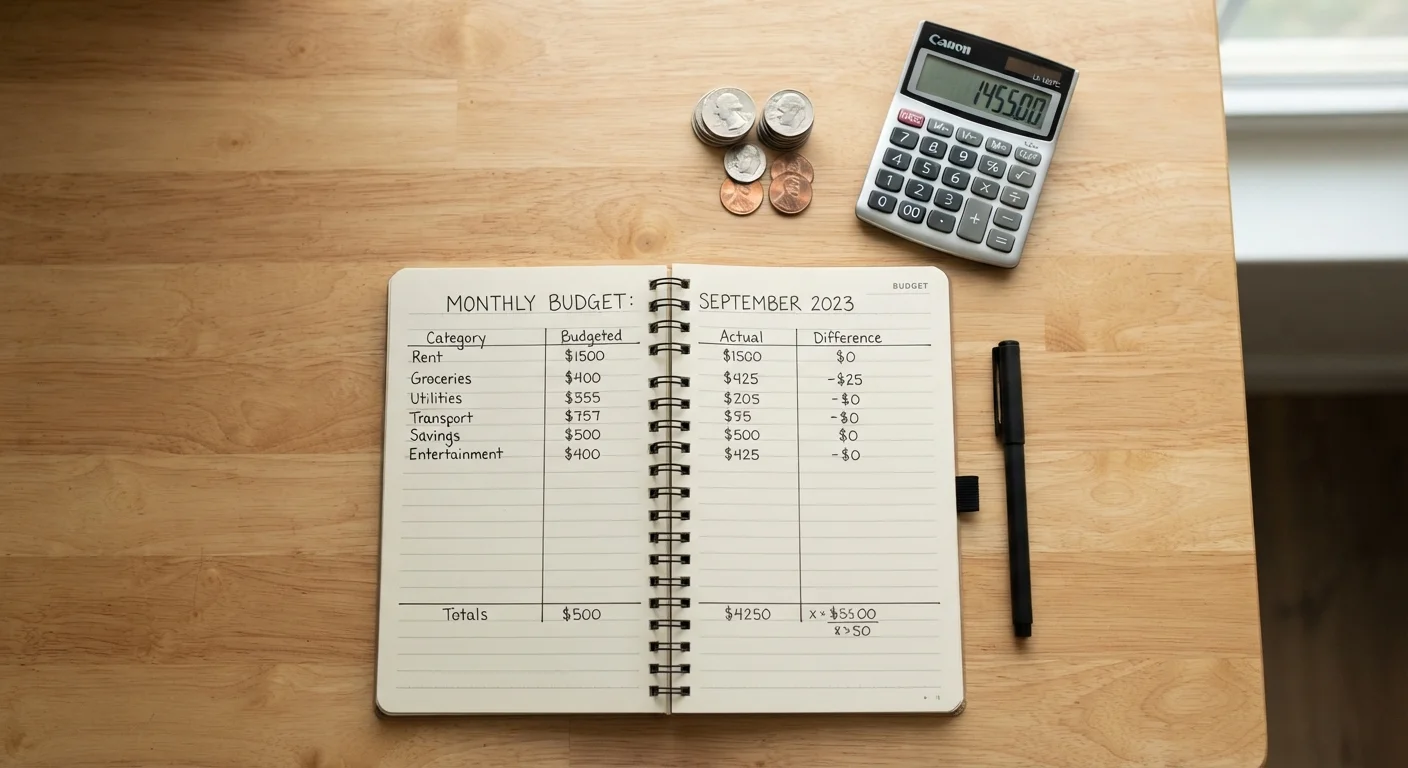
A strict budget — sometimes called a fixed budget — assigns a firm spending limit to every category in your finances: rent, groceries, transportation, entertainment, and so on. You track every dollar, and once a category is spent, you stop spending in that category until the next period resets.
This is different from a loose or flexible budget, which allows you to shift money between categories as circumstances change. Strict budgeting eliminates that flexibility by design. The goal is to prevent rationalised overspending — the moment you decide it's fine to move $80 from savings to cover an impulse purchase.
Popular methods like zero-based budgeting give every dollar a specific job, while the envelope method uses physical or digital envelopes for each category. Both are forms of strict budgeting. To compare approaches in depth, see how different budgeting methods compare.
The Real Advantages of a Tight Budget
Strict budgeting delivers concrete, measurable benefits — particularly for people who are new to managing money intentionally.
Creates clear visibility into every spending decision
When every dollar is assigned a category, you cannot accidentally ignore where money is going. This clarity is often the first step toward meaningful financial change.
Reduces impulse spending through hard category limits
Knowing a category has a firm ceiling makes it harder to justify unplanned purchases. The constraint acts as a built-in pause before spending.
Accelerates progress toward specific savings goals
By locking in a savings allocation before anything else is spent, a strict budget makes goal-directed saving automatic rather than aspirational.
Builds lasting financial discipline and habits
The repetition of tracking and staying within limits over weeks and months tends to create durable habits — many budgeters report that mindful spending becomes second nature.
Makes it easier to spot areas of persistent overspending
When a category regularly runs out before the month ends, the pattern becomes impossible to ignore — giving you precise data to act on.
~32%
US adults who follow a formal budget
According to Gallup polling, fewer than one in three American adults report following a detailed household budget — highlighting how rarely formal budgeting is practised despite widespread awareness of it.
60%+
Americans living paycheck to paycheck
Multiple annual surveys from financial research organisations consistently find that a majority of US adults have little or no financial buffer — underscoring why structured budgeting has practical value.
Perhaps the most underrated benefit is awareness. Many first-time budgeters are genuinely surprised to discover how much leaks out through small, unmemorable purchases. A strict budget forces you to confront every transaction rather than averaging it away mentally.
The Real Disadvantages You Should Not Overlook
Strict budgeting has a real failure rate — not because the math is wrong, but because it can be psychologically and practically unsustainable for many people.
Difficult to sustain when irregular expenses arise
Strict budgets are built around predictable costs. An unexpected car repair or medical bill can blow through fixed limits immediately, leaving the entire plan in disarray.
Can cause financial anxiety and psychological stress
Constant tracking and the fear of going over a limit can make everyday spending feel stressful rather than empowering — which ultimately undermines the system.
Rigid limits may not suit variable-income earners
People with irregular paychecks — freelancers, seasonal workers, tipped employees — often find fixed monthly categories impractical because income itself fluctuates.
All-or-nothing mentality can lead to total abandonment
One slip — a single overspent category — can lead some people to give up on the budget entirely, rather than simply adjusting and continuing.
Leaves little room for spontaneity or quality of life
Overly tight limits on discretionary categories can make social events, small pleasures, or reasonable lifestyle choices feel off-limits, eroding long-term motivation.
Life is irregular. A medical co-pay, a car repair, a friend's wedding — none of these show up neatly in a spreadsheet made at the start of the month. A rigid system with no buffer for irregular expenses can collapse the moment reality deviates from the plan.
There is also a documented risk of budget fatigue: the mental exhaustion that comes from tracking every dollar. When fatigue sets in, people often abandon the budget entirely rather than adjusting it — a pattern sometimes called "all-or-nothing" thinking. For a grounded look at the beliefs that stop people from budgeting in the first place, common budgeting myths worth examining is worth reading before you start.
A Buffer Category Can Help
One practical way to reduce the brittleness of a strict budget is to build in a small 'miscellaneous' or 'buffer' category — typically 3–5% of monthly take-home pay. This gives the rest of your categories room to breathe without opening the door to unchecked overspending. It is not a workaround; it is a design feature that many experienced budgeters consider essential.
How to Decide Whether Strict Budgeting Is Right for You
The honest answer is that no single budgeting style works for everyone. Whether a strict approach suits you depends on your income stability, your personality, and your specific goal.
Consider a strict budget if:
- You have a fixed, predictable monthly income.
- You are working toward a specific short-term goal (paying off a credit card, building a starter emergency fund).
- You consistently overspend and want a hard stop built into your system.
Consider a more flexible approach if:
- Your income varies month to month (freelance, gig work, commission-based pay).
- You have dependants or irregular essential expenses.
- You have tried strict budgeting before and found it caused more anxiety than progress.
If you are weighing the structure of your budget itself — fixed allocations versus adaptable ones — fixed vs. flexible budgeting breaks down both sides. And for a deeper dive into two of the most widely used strict-budget methods, zero-based versus percentage-based budgeting offers a practical comparison.
This article is for general informational and educational purposes only and does not constitute personalised financial advice. Consider consulting a qualified financial professional for guidance specific to your circumstances.