

Key Takeaways
- Budgeting works at any income level — it's about allocation, not the size of a paycheck.
- A budget can include spending on things you enjoy; it doesn't have to feel restrictive.
- You don't need special software or math skills to build a functional first budget.
- Small financial wins from budgeting compound over time, even when income is modest.
- Most people who stick with budgeting report feeling less stressed, not more constrained.
Why Myths About Budgeting Are So Persistent
Misconceptions about budgeting tend to stick because they feel plausible at first glance. If money is already tight, what's the point of shuffling it around? If you've tried before and failed, doesn't that prove something? These surface-level conclusions seem logical but rest on faulty assumptions about what budgeting actually is and does.
The consequence is real: false beliefs keep people from starting, and not starting has measurable costs. Money spent without a plan tends to drift toward low-priority purchases, leaving less for things that genuinely matter — savings goals, debt reduction, or financial security. For first-time budgeters especially, clearing away the myths is step one.
Myth
Budgeting is only worth it if you earn a decent amount of money. There's nothing to allocate when money is tight.
Fact
Budgeting is most valuable precisely when income is limited — it ensures every available dollar is directed intentionally rather than spent by default.
The idea that budgeting requires a surplus assumes its only purpose is to manage excess. In reality, a budget is a spending plan — a map for money regardless of how much you have. When income is tight, a budget prevents the slow drain of small, untracked expenses that collectively add up. Directing even modest income toward needs first, then small savings goals, builds financial stability over time. The amount matters far less than the habit.
Myth
Budgeting means giving up everything fun — no dining out, no entertainment, no spontaneous purchases.
Fact
A budget can and should include spending on things you value, including leisure. It sets intentional limits, not blanket prohibitions.
This myth conflates budgeting with deprivation. A well-built budget allocates money for enjoyment — you decide in advance how much you're comfortable spending on dining, hobbies, or entertainment. That deliberate choice is very different from cutting everything out. Budgets that allow zero flexibility tend to collapse quickly. See the real pros and cons of strict budgeting to understand where rigid systems help and where they backfire.
Myth
You need special apps, spreadsheets, or financial expertise to budget properly.
Fact
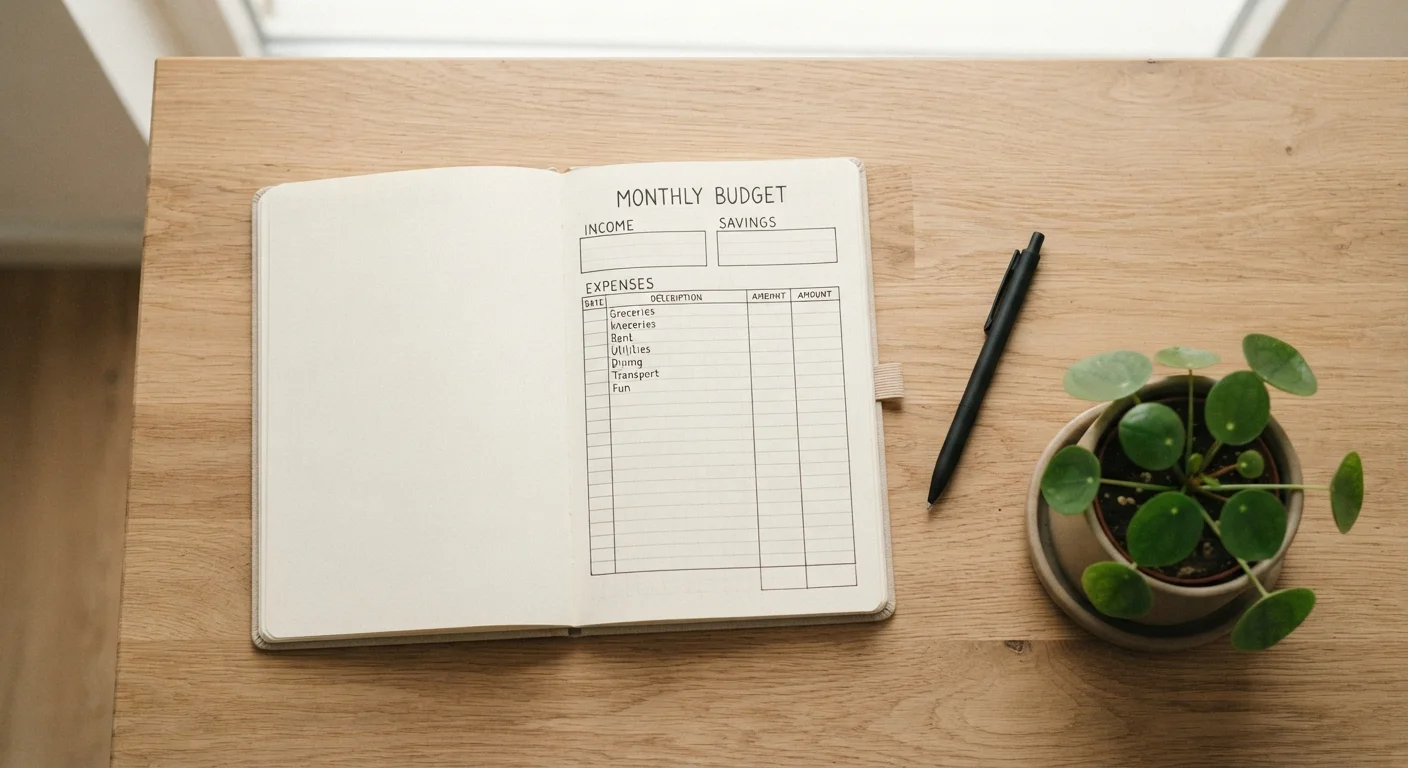
A pencil and a piece of paper are enough to build a functional budget. Tools help, but they are never the prerequisite.
Technology can make budgeting more convenient, but it introduces a hidden barrier: setup complexity. Many first-timers spend so much time choosing the right app that they never actually budget. The core process — listing income, listing expenses, and comparing the two — can be done in minutes with basic arithmetic. Once you understand the fundamentals, you can layer in tools if you want. Explore budgeting methods compared to find a format that matches your preference without overwhelming you.
Myth
I've tried budgeting before and it didn't work, so it probably just isn't for me.
Fact
Most early budgets fail due to structural design problems, not personal shortcomings. These problems are fixable.
Budget failure is rarely about willpower or discipline. Common structural issues — underestimating irregular expenses, setting unrealistically tight limits, or not building in any buffer — cause even motivated people to abandon their plan. Understanding why the previous attempt broke down is the most useful first step. Why your budget keeps falling apart after the first week walks through the most common design errors and how to correct them before you try again.
Myth
Budgeting takes too much time — tracking every purchase isn't sustainable for a busy person.
Fact
Most budgeting approaches require 15–30 minutes of setup and a brief weekly check-in, not daily transaction logging.
Full transaction tracking is one option, not a requirement. Methods like pay-yourself-first budgeting require almost no ongoing tracking — you move savings automatically at the start of each pay period and spend the remainder freely. Others use broad spending categories rather than individual purchases. The time commitment varies by method, but none of the widely used approaches demand hour-by-hour monitoring. If past attempts felt exhausting, the method was likely a poor fit — not budgeting itself.
What Starting a Budget Actually Looks Like
For most people, a first budget takes one sitting. You list what comes in (income), list what goes out (fixed expenses like rent, variable expenses like groceries), and see what remains. That remainder gets assigned — to savings, to discretionary spending, or to debt repayment — before it disappears on autopilot.
Perfectionism Is a Budget Killer
Waiting until you have the 'perfect' system, tool, or income level before starting a budget is one of the most common reasons people never start at all. An imperfect budget you actually use will always outperform a perfect one you never build. Start simple and adjust as you go.
The goal of a first budget is not perfection. It is awareness. Most first-time budgeters discover that their actual spending looks quite different from their assumed spending. That gap is where the value lives. Once you see it, you can make deliberate choices. If you're ready to build your first plan from scratch, personal budgeting from zero walks through each step in plain terms.
This Is General Information, Not Financial Advice
The content in this article is educational and intended for general audiences. It does not constitute personalised financial, tax, or investment advice. For guidance tailored to your specific situation, consult a qualified, licensed financial professional.
This article is for informational purposes only and does not constitute personalised financial advice. Consult a qualified financial professional for guidance tailored to your circumstances.