

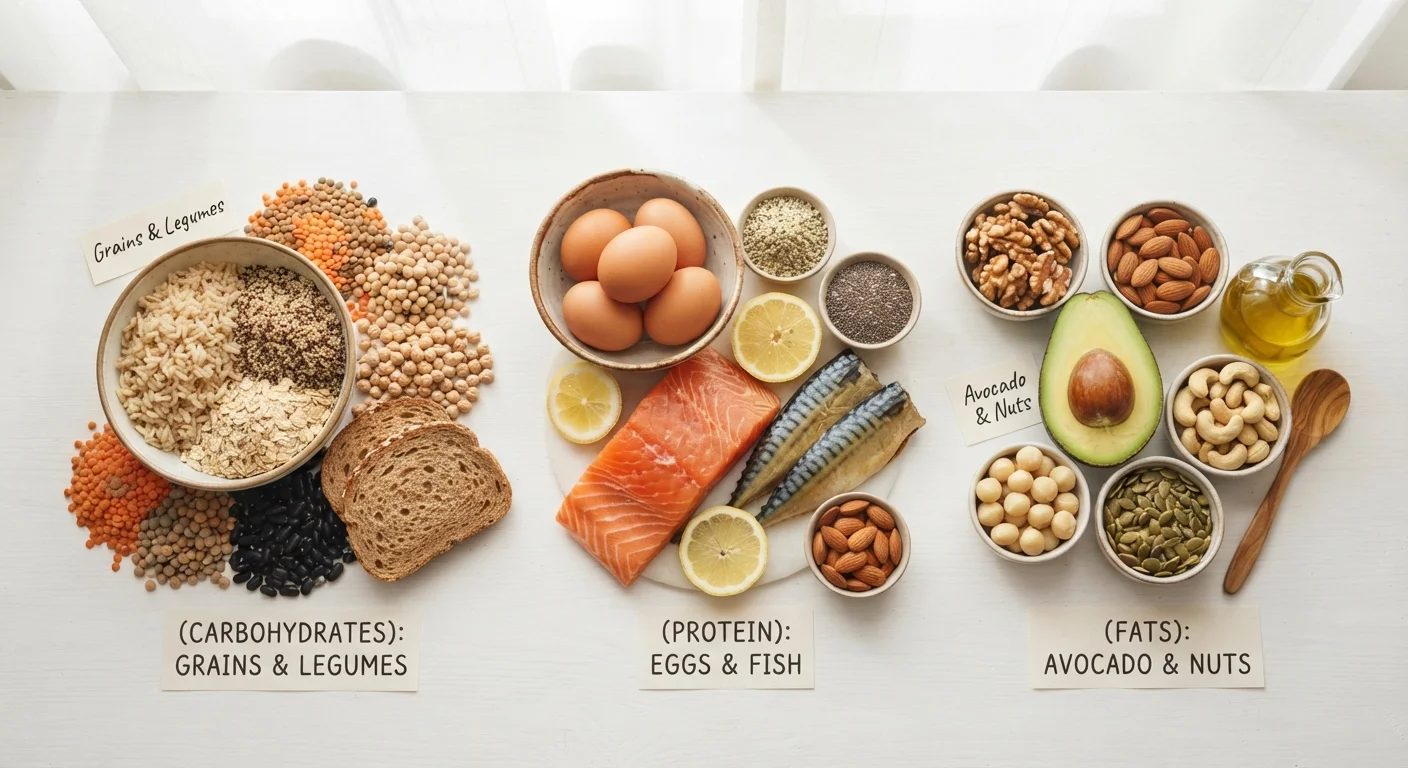
Key Takeaways
- Carbohydrates are your body's preferred and most efficient energy source.
- Proteins supply the building blocks needed to repair and grow tissue.
- Fats support brain function, hormone production, and vitamin absorption.
- No single macronutrient is inherently harmful — balance and food quality matter most.
- Most whole foods contain a mix of all three macronutrients in varying proportions.
Macronutrients
Macronutrients are the three main categories of nutrients your body needs in relatively large amounts every day: carbohydrates, proteins, and fats. Unlike vitamins and minerals, which are needed in smaller quantities, macronutrients supply the energy (calories) that power every bodily function — from thinking to moving to healing. Each macronutrient also has specific jobs beyond just fuel.
Carbohydrates and proteins each provide 4 calories per gram; fats provide 9 calories per gram. These figures are used by dietitians when calculating energy intake from food.
Why Macronutrients Matter
When you eat, your body breaks food down into its component parts. Macronutrients are the big three your body relies on in substantial daily amounts. Understanding what each one actually does removes a lot of the confusion that surrounds popular diet conversations — including the idea that any single macronutrient is your enemy.
This article focuses on the foundational roles of carbohydrates, proteins, and fats. For a broader picture of nutrition — including the vitamins and minerals your body also depends on — see our guide to essential vitamins and minerals.
45–65%
Recommended daily calories from carbohydrates
According to the Dietary Guidelines for Americans, carbohydrates should make up roughly 45–65% of total daily calorie intake for most adults.
10–35%
Recommended daily calories from protein
The Dietary Reference Intakes established by the National Academies recommend that protein account for 10–35% of daily calorie intake for adults.
20–35%
Recommended daily calories from fat
The same Dietary Reference Intakes suggest dietary fat should represent 20–35% of total daily calories for healthy adults.
Carbohydrates: Your Body's First Choice for Fuel
Carbohydrates are sugars and starches that your digestive system breaks down into glucose — a simple sugar that cells use for energy. Your brain, in particular, runs almost exclusively on glucose under normal conditions, which is why low-carb eating can initially cause fogginess or fatigue as the body adjusts.
Not all carbohydrates behave the same way. Complex carbohydrates — found in whole grains, legumes, and vegetables — are digested more slowly, providing steadier energy and valuable dietary fiber. Simple carbohydrates — found in table sugar and many processed snacks — digest quickly, causing faster rises in blood sugar.
Fiber, a form of carbohydrate the body cannot fully digest, supports digestive health and helps regulate blood sugar. It's one of the main reasons nutritionists consistently recommend whole food carbohydrate sources over refined alternatives.
Choose Whole Food Carbohydrate Sources
When selecting carbohydrate-rich foods, look for options that also contain fiber — like oats, beans, or whole-grain bread. Fiber slows digestion, helps you feel fuller for longer, and supports stable energy levels throughout the day. Processed foods with added sugars tend to deliver carbohydrates without the fiber benefit.
Proteins: The Body's Builder and Repairer
Proteins are made up of smaller units called amino acids. Your body uses amino acids to build and repair muscle, produce enzymes and hormones, support immune function, and transport molecules through the bloodstream.
Of the 20 amino acids the body works with, nine are considered essential — meaning the body cannot synthesize them and must obtain them from food. Animal proteins (meat, fish, eggs, dairy) generally contain all nine essential amino acids. Many plant proteins (beans, lentils, grains) are lower in one or more, but combining a variety of plant foods across the day can meet your full amino acid needs.
If you're new to nutrition terminology, the plain-language nutrition glossary explains terms like amino acids, complete proteins, and more in plain English.
Fats: Far More Than Stored Energy
Dietary fat has long carried an undeserved reputation. In reality, fat is essential for absorbing fat-soluble vitamins (A, D, E, and K), building cell membranes, producing steroid hormones, and supporting brain health — your brain is roughly 60% fat by dry weight.
The main types of dietary fat differ in their effects on the body. Unsaturated fats — found in olive oil, avocados, nuts, and fatty fish — are associated with heart health in most research. Saturated fats — found in butter and red meat — are fine in moderation for most people, though nutritional guidance generally recommends keeping intake moderate. Trans fats, largely from industrial partial hydrogenation, have been restricted or removed from most food supplies due to clear links to cardiovascular risk.
For a deeper look at how energy from fat compares to nutrients, see our article on calories versus nutrients.
Fat Content on Labels Can Be Misleading
A 'low-fat' label doesn't automatically make a food more nutritious. Manufacturers sometimes add sugar or refined starch when reducing fat to maintain flavor and texture. Reading the full nutrition label — including the ingredients list — gives you a more complete picture of what you're eating. Our nutrition label guide can help.
How the Three Work Together
Macronutrients rarely work in isolation. A meal that includes carbohydrates, protein, and fat digests more slowly and produces a more stable energy response than a meal consisting of a single macronutrient alone. Fat and protein slow the absorption of carbohydrates, which helps moderate blood sugar changes after eating.
Rather than optimizing for one macronutrient at the expense of others, most established dietary guidelines emphasize variety and food quality. Whole, minimally processed foods tend to deliver a natural mix of all three macronutrients alongside fiber, vitamins, and minerals.
Once you understand macronutrients, the next practical step is learning to spot them on packaging. Our guide to reading a nutrition label walks you through every section of the label in plain language. And if you've encountered strong claims about carbs or fat being dangerous, common nutrition myths debunked puts those claims in evidence-based context.
This article is for general informational and educational purposes only and does not constitute medical or dietary advice. Speak with a registered dietitian or qualified healthcare professional for guidance tailored to your individual health needs.