

Key Takeaways
- Group fitness classes provide accountability and social motivation that solo workouts often lack.
- Instructor-led formats can't fully adapt to every individual's fitness level or injury history.
- Class schedules and costs may limit access for people with irregular routines or tight budgets.
- The right class format depends on your goals, experience level, and personal learning style.
- Group classes work well alongside — not necessarily instead of — individualized training.
Built-in accountability keeps attendance consistent
Signing up for a scheduled class creates a commitment that open-gym time doesn't. Research consistently shows that external structure — a set time, a reserved spot, an instructor expecting you — improves exercise adherence among beginners.
Social energy raises perceived effort tolerance
Exercising alongside others tends to increase the intensity participants sustain without feeling it as strongly. This 'Köhler effect' — working harder in a group than alone — is well-documented in exercise psychology literature.
No programming decisions required
Instructors handle warm-up, sequencing, timing, and cool-down. For newcomers overwhelmed by how to structure a workout, removing that cognitive load is a genuine advantage.
Exposure to varied movement formats
Trying different class types — yoga, HIIT, strength circuits — helps beginners discover what they actually enjoy, which matters more than any specific format for long-term adherence.
Lower barrier to entry than solo programming
Many formats require no prior knowledge of equipment or technique. An instructor demonstrates each move, making it more accessible than navigating a weight floor independently for the first time.
Instruction can't fully individualize to each participant
A class of 20 people receives broadly the same cues. Participants with asymmetries, past injuries, or unique mobility needs may not get the correction or modification they require to move safely.
Fixed schedules don't fit irregular routines
Classes run at specific times. People with shift work, caregiving responsibilities, or unpredictable hours often find that schedule dependency undermines consistency more than it supports it.
Group pace can push beginners too hard
Social pressure and fast-moving formats can discourage participants from slowing down when they need to. This is a meaningful injury risk for people new to exercise or returning after a long break.
Instructor quality varies significantly
Certification standards and teaching experience differ widely between facilities and formats. A poorly cued class can reinforce poor movement patterns just as easily as a good one corrects them.
Cost adds up, especially for boutique formats
Specialty studios — cycling, barre, reformer Pilates — can carry per-class or monthly fees well above a standard gym membership, making consistent participation expensive over time.
Our Verdict
Group fitness classes genuinely deliver on motivation, structure, and community — qualities that help many beginners build a consistent habit. However, the one-size-fits-many format, fixed scheduling, and variable instruction quality mean they aren't a universal solution. Weigh what you actually need from a workout environment before signing up.
People who thrive on social energy, benefit from external accountability, and are starting from a generally healthy baseline with no complex injury or mobility considerations.
What Group Fitness Classes Actually Are
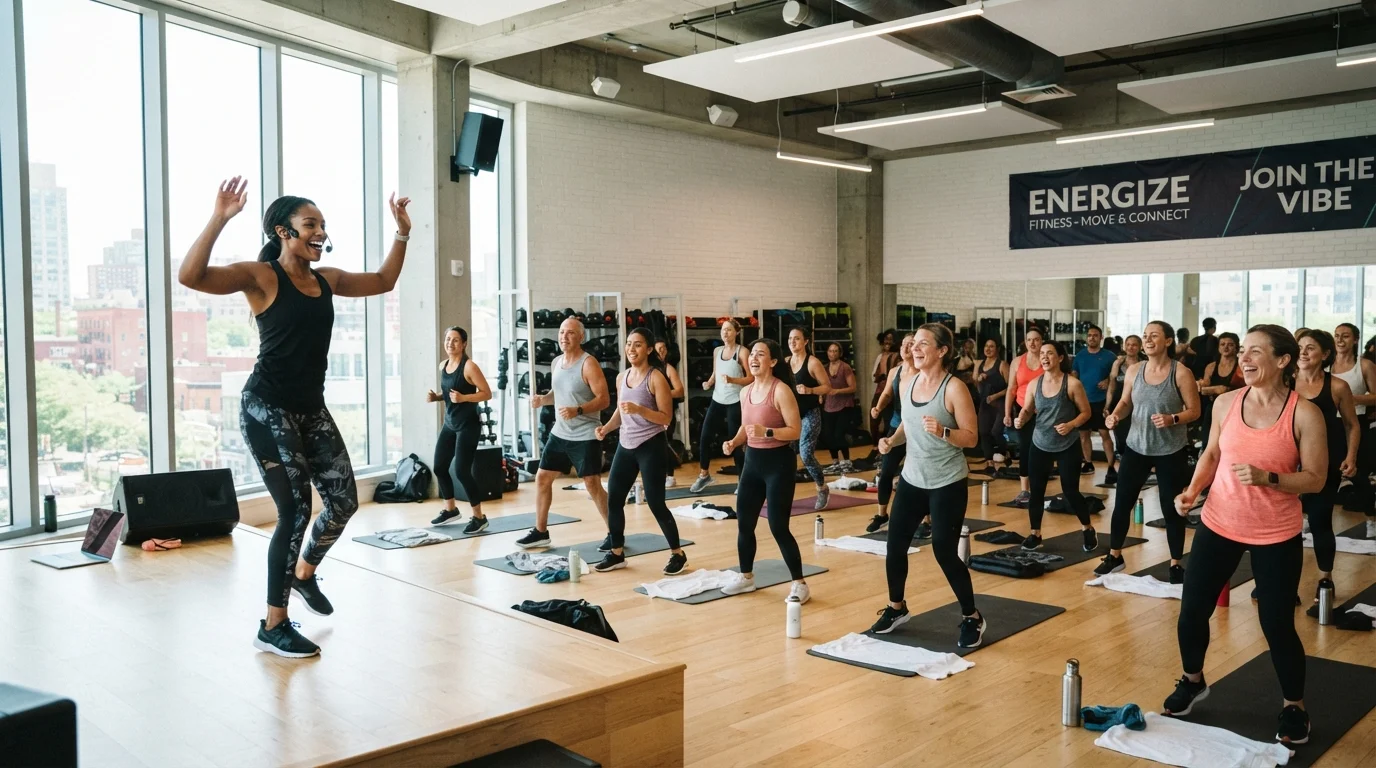
Group fitness classes are instructor-led sessions where multiple participants follow the same workout simultaneously. Formats vary widely — from high-intensity interval training (HIIT) and cycling to yoga, dance cardio, and strength-focused bootcamps. Most classes run 30 to 60 minutes and require little to no equipment knowledge upfront, which is part of what makes them appealing to newcomers.
If you're still sorting out broader questions about where and how to exercise, our guide on gym memberships vs. home workouts covers the foundational environment decision. And for a fuller picture of what fitness actually involves, see our complete starting point for newcomers.
Built-in accountability keeps attendance consistent
Signing up for a scheduled class creates a commitment that open-gym time doesn't. Research consistently shows that external structure — a set time, a reserved spot, an instructor expecting you — improves exercise adherence among beginners.
Social energy raises perceived effort tolerance
Exercising alongside others tends to increase the intensity participants sustain without feeling it as strongly. This 'Köhler effect' — working harder in a group than alone — is well-documented in exercise psychology literature.
No programming decisions required
Instructors handle warm-up, sequencing, timing, and cool-down. For newcomers overwhelmed by how to structure a workout, removing that cognitive load is a genuine advantage.
Exposure to varied movement formats
Trying different class types — yoga, HIIT, strength circuits — helps beginners discover what they actually enjoy, which matters more than any specific format for long-term adherence.
Lower barrier to entry than solo programming
Many formats require no prior knowledge of equipment or technique. An instructor demonstrates each move, making it more accessible than navigating a weight floor independently for the first time.
Where Group Classes Fall Short
The same features that make group classes accessible also create limitations — especially for people with specific goals, physical considerations, or learning styles that don't fit the group mold.
Instruction can't fully individualize to each participant
A class of 20 people receives broadly the same cues. Participants with asymmetries, past injuries, or unique mobility needs may not get the correction or modification they require to move safely.
Fixed schedules don't fit irregular routines
Classes run at specific times. People with shift work, caregiving responsibilities, or unpredictable hours often find that schedule dependency undermines consistency more than it supports it.
Group pace can push beginners too hard
Social pressure and fast-moving formats can discourage participants from slowing down when they need to. This is a meaningful injury risk for people new to exercise or returning after a long break.
Instructor quality varies significantly
Certification standards and teaching experience differ widely between facilities and formats. A poorly cued class can reinforce poor movement patterns just as easily as a good one corrects them.
Cost adds up, especially for boutique formats
Specialty studios — cycling, barre, reformer Pilates — can carry per-class or monthly fees well above a standard gym membership, making consistent participation expensive over time.
A Note on Special Populations
If you're managing a chronic condition, recovering from injury, or have significant mobility limitations, speak with a healthcare professional before starting any new exercise program. A qualified instructor can flag modifications, but a group class is not a substitute for individualized medical or physical therapy guidance.
If you're managing a chronic condition, recovering from injury, or have significant mobility limitations, speak with a healthcare professional before starting any new exercise program. A qualified instructor can flag modifications, but a group class is not a substitute for individualized medical or physical therapy guidance.
How to Decide If a Class Is Right for You
The honest answer is that group classes work well for some goals and poorly for others. If you're building a baseline habit, want social accountability, or simply enjoy the energy of exercising alongside others, a class environment can accelerate your consistency significantly.
But if your priority is precise strength development, you'll also want to understand individual training modalities. Our breakdown of free weights vs. resistance machines is useful context for what group strength classes may or may not cover.
~95%
Retention rate for group exercisers vs. solo
A study published in the Journal of the American Osteopathic Association found that group exercisers reported significantly better adherence and quality-of-life improvements compared to those who exercised alone.
200+
Recognized group fitness formats globally
The variety of class formats available — from aqua aerobics to functional HIIT — means most fitness goals and physical preferences have at least one group option worth exploring.
It's also worth examining what you believe about exercise before you start. Many beginners arrive with misconceptions that affect how they interpret group class feedback — common fitness myths debunked is worth a read. Finally, remember that a well-rounded routine addresses cardio, strength, and flexibility — group classes often emphasize one pillar. See the three pillars of physical fitness for guidance on balance.
This article is for general informational purposes only and does not constitute medical or fitness advice. Consult a qualified healthcare professional before beginning a new exercise program, particularly if you have existing health conditions.