

| Priority: Red warning lights | Stop driving as soon as safely possible |
| Priority: Amber/yellow warning lights | Schedule service within a few days |
| Flashing check engine light | Reduce speed; seek immediate service |
| Tire pressure spec location | Driver's door jamb sticker (not the tire sidewall) |
| Free diagnostic code reads | Available at many auto parts retailers |
| Primary reference source | Your vehicle's owner's manual |
What Dashboard Warning Lights Actually Are
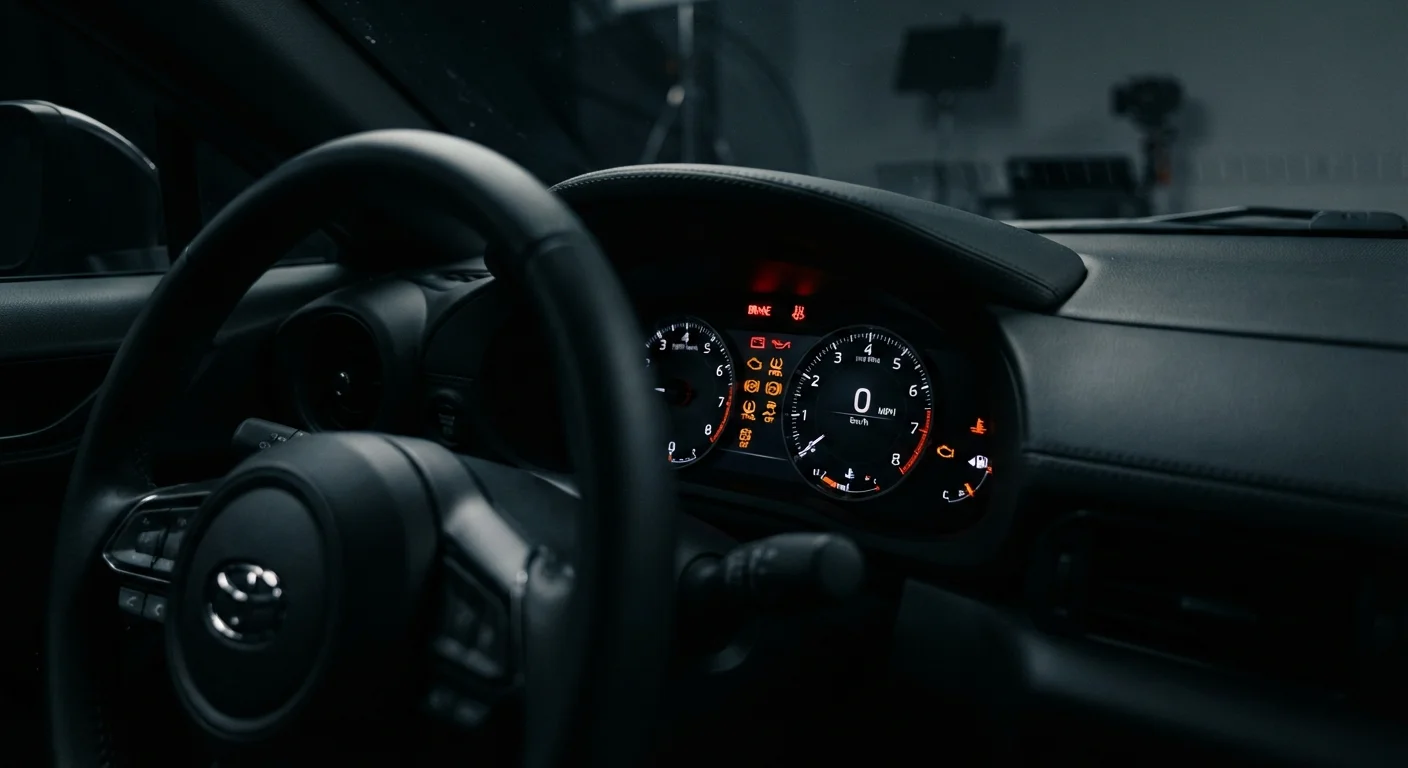
Your car's onboard diagnostic system monitors dozens of sensors simultaneously — from oil pressure to exhaust emissions. When something falls outside normal operating parameters, the system triggers a dashboard warning light. Think of these lights as your vehicle's messaging system: they're not designed to alarm you, but to inform you.
Warning lights generally fall into three priority levels:
- Red lights — require immediate attention; continuing to drive could cause serious damage or create a safety hazard.
- Yellow/amber lights — indicate a developing issue that needs service soon, but typically won't strand you immediately.
- Green or blue lights — informational only, confirming that a feature (like high beams or cruise control) is active.
Your owner's manual is the single most authoritative reference for your specific vehicle. Keep it in the glove compartment and consult it whenever an unfamiliar symbol appears.
OBD-II
On-Board Diagnostics, second generation — a standardized system in vehicles sold in the US after 1996 that monitors engine and emissions performance and stores diagnostic fault codes readable by a scanner.
TPMS
Tire Pressure Monitoring System — sensors inside the wheels that alert the driver when one or more tires drops significantly below the recommended inflation pressure.
Catalytic Converter
An emissions control device in the exhaust system that converts harmful combustion byproducts into less harmful gases. Engine misfires can overheat and damage it quickly.
Alternator
A generator driven by the engine that recharges the battery and powers electrical systems while the car is running. A failing alternator causes the battery warning light to appear.
Oil Pressure
The force at which engine oil is circulated through the engine. Insufficient pressure starves moving parts of lubrication, which can cause rapid engine damage.
The Most Common Warning Lights Explained
Below are the warning lights first-time owners encounter most often, along with what typically triggers them and how urgently each warrants a response.
| Priority: Red warning lights | Stop driving as soon as safely possible |
| Priority: Amber/yellow warning lights | Schedule service within a few days |
| Flashing check engine light | Reduce speed; seek immediate service |
| Tire pressure spec location | Driver's door jamb sticker (not the tire sidewall) |
| Free diagnostic code reads | Available at many auto parts retailers |
| Primary reference source | Your vehicle's owner's manual |
Check Engine Light
This amber light covers a wide range of issues — from a loose gas cap to a failing catalytic converter. If the light is steady, schedule a diagnostic scan within a day or two. If it's flashing, reduce speed and seek service immediately, as a flashing light often signals engine misfires that can damage the catalytic converter.
Oil Pressure Warning
A red oil can symbol means your engine isn't receiving adequate oil pressure. Pull over safely as soon as possible and turn off the engine. Running an engine with low oil pressure can cause rapid, costly damage. Check the oil level using the dipstick; if it's normal, the sensor or pump may be at fault — either way, a mechanic should inspect it before you continue driving.
Temperature Warning
A red thermometer symbol indicates the engine is overheating. Pull over, turn off the engine, and let it cool — do not open the radiator cap while the engine is hot. Check coolant levels only when the engine is fully cool. Our guide on checking engine fluids walks you through this safely.
Battery / Charging Warning
This amber or red battery icon suggests the charging system isn't maintaining voltage — commonly a failing alternator or a battery near the end of its life. Turn off non-essential electronics (air conditioning, seat heaters) and drive directly to a service center or auto parts store for a battery test.
Tire Pressure (TPMS) Warning
A yellow icon showing a cross-section of a tire with an exclamation mark means one or more tires is significantly under-inflated. Check pressure at a gas station and inflate to the specification shown on the sticker inside your driver's door — not the number printed on the tire itself.
Brake System Warning
If this light appears while driving (not just during startup), it may indicate low brake fluid, worn brake pads, or a more serious hydraulic issue. Have brakes inspected promptly — this is a safety-critical system.
How to Respond Without Overreacting
A warning light appearing doesn't automatically mean catastrophe. Here's a practical response framework:
- Stay calm and note the color. Red = act now. Amber = act soon. Green/blue = informational.
- Check for any accompanying symptoms — unusual smells, sounds, or changes in handling tell you more than the light alone.
- Consult your owner's manual to confirm what the specific symbol means for your vehicle.
- For amber lights, schedule a diagnostic within a few days. Many auto parts retailers offer free OBD-II code reads that identify the fault.
- For red lights, pull over safely, shut off the engine if warranted, and contact a mechanic or roadside assistance.
Don't Ignore a Light, Even if the Car Seems Fine
Some warning lights — particularly the check engine light — can appear while the vehicle still drives and feels normal. Ignoring them can allow a minor, inexpensive fault to develop into a major repair. An OBD-II scan is the fastest way to understand what the fault code means. Many auto parts retailers perform this scan at no charge.
Keeping a record of which lights appeared and when can help your mechanic diagnose the problem faster — even a quick phone photo of the dashboard is useful.
Understanding your car's signals is part of responsible ownership. For a broader look at what to check before you even buy a used vehicle, see reading a vehicle history report.