

| What MSRP stands for | Manufacturer's Suggested Retail Price |
| Who sets the invoice price | The vehicle manufacturer |
| Typical dealer holdback range | 2–3% of MSRP |
| Components of out-the-door cost | Vehicle price + taxes + title + registration + fees |
| Is MSRP the final price? | No — it is a starting point, not a fixed requirement |
| Most important number to request | Out-the-door (OTD) total |
Three Numbers, Three Different Things
Walk onto a car lot and you'll encounter a wall of pricing language: sticker price, invoice, dealer cost, out-the-door. These aren't interchangeable — each describes a distinct figure, and confusing them is one of the most common mistakes first-time buyers make.
| What MSRP stands for | Manufacturer's Suggested Retail Price |
| Who sets the invoice price | The vehicle manufacturer |
| Typical dealer holdback range | 2–3% of MSRP |
| Components of out-the-door cost | Vehicle price + taxes + title + registration + fees |
| Is MSRP the final price? | No — it is a starting point, not a fixed requirement |
| Most important number to request | Out-the-door (OTD) total |
Understanding what each term actually measures is the foundation of any smart car-buying conversation. The financial terms every new shopper should know go beyond autos, but MSRP is one of the most misunderstood across all retail categories.
MSRP: The Manufacturer's Starting Point
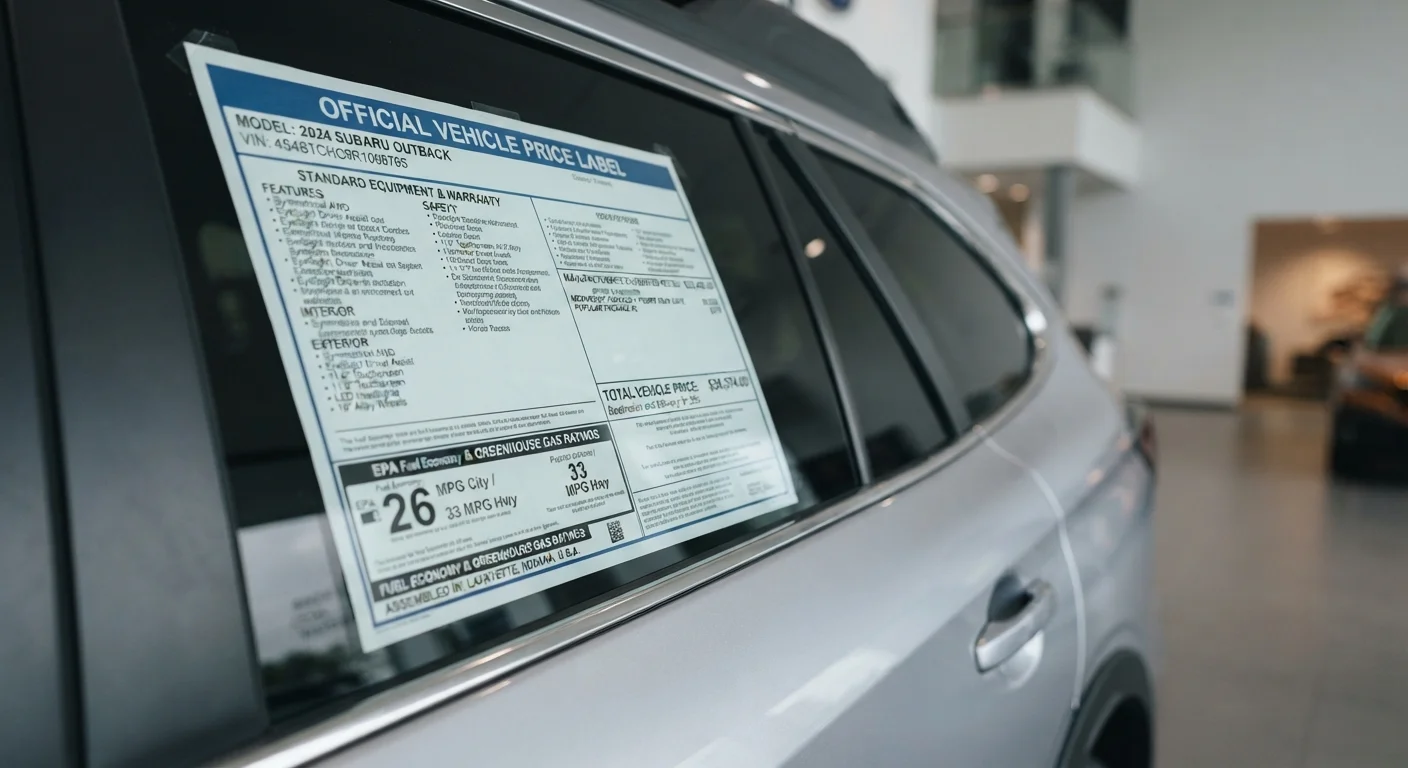
MSRP (Manufacturer's Suggested Retail Price) is the price the automaker recommends dealers charge. It appears on the window sticker — sometimes called the Monroney label — and covers the base vehicle, any factory-installed options, and the destination charge.
The word suggested is critical. Dealers are independent businesses and can price above or below MSRP based on supply, demand, and their own strategy. In high-demand markets, vehicles routinely sell above MSRP. In slower markets, buyers may negotiate meaningfully below it. Treat MSRP as an anchor, not a ceiling.
For a deeper look at how anchor pricing shapes the deals you see, why sale prices are rarely what they seem explains the psychology involved.
Invoice Price: What the Dealer Paid — Sort Of
The invoice price is the amount the dealer paid the manufacturer for the vehicle. Many buyers treat it as the dealer's true cost and aim to negotiate just above it. That logic is reasonable, but incomplete.
Invoice Price
The amount a dealer pays the manufacturer for a vehicle. It is not the dealer's true cost — holdbacks and incentives often reduce what the dealer actually spends — but it serves as a useful negotiating reference point.
MSRP
Manufacturer's Suggested Retail Price — the sticker price set by the automaker. Dealers are not required to sell at MSRP; the final negotiated price can be above or below it.
Out-the-Door (OTD) Cost
The total amount you pay to drive a vehicle off the lot, including taxes, title fees, registration, and any dealer fees. This is the only figure that tells you what you'll actually spend.
Dealer Holdback
A percentage of MSRP (typically 2–3%) that the manufacturer reimburses to the dealer after a sale, effectively lowering the dealer's true acquisition cost below the invoice price.
Destination Charge
A fixed fee, set by the manufacturer, covering the cost of shipping a vehicle from the factory to the dealership. It appears on the window sticker and is generally non-negotiable.
Doc Fee
A dealer-charged administrative fee for processing paperwork. Amounts vary widely and are sometimes negotiable; some states cap how high dealers can set this fee.
Dealer holdbacks — typically 2–3% of MSRP — are quarterly payments from manufacturers back to dealers. These effectively reduce what the dealer actually spent. Factory-to-dealer incentives, floor-plan assistance, and regional programs can further lower real cost. Invoice price is a useful reference, but it isn't a hard floor. The difference between price and value is relevant here: a vehicle negotiated to invoice on paper may still leave margin for the dealer.
Out-the-Door Cost: What You Actually Pay
The out-the-door (OTD) cost is the only number that tells you what you'll actually write a check for. It includes the negotiated vehicle price, sales tax, state and local registration fees, title fees, and dealer documentary (doc) fees.
OTD Is the Only Number That Matters at Signing
Dealers may quote a low vehicle price while adding significant fees and add-ons later. Always ask for a complete out-the-door breakdown in writing before agreeing to any deal. This gives you a clear, comparable figure whether you're visiting one dealership or several.
Two vehicles quoted at the same selling price can have meaningfully different OTD totals depending on the state's tax rate and the dealer's fee structure. Always request a full itemized OTD quote — and get it in writing — before comparing offers. This is the number to bring to every dealership conversation.
Once you're clear on what you'll pay at signing, the next step is understanding what ownership costs in the months and years ahead. Car ownership costs beyond the sticker price — including insurance, fuel, and maintenance — complete the financial picture.