

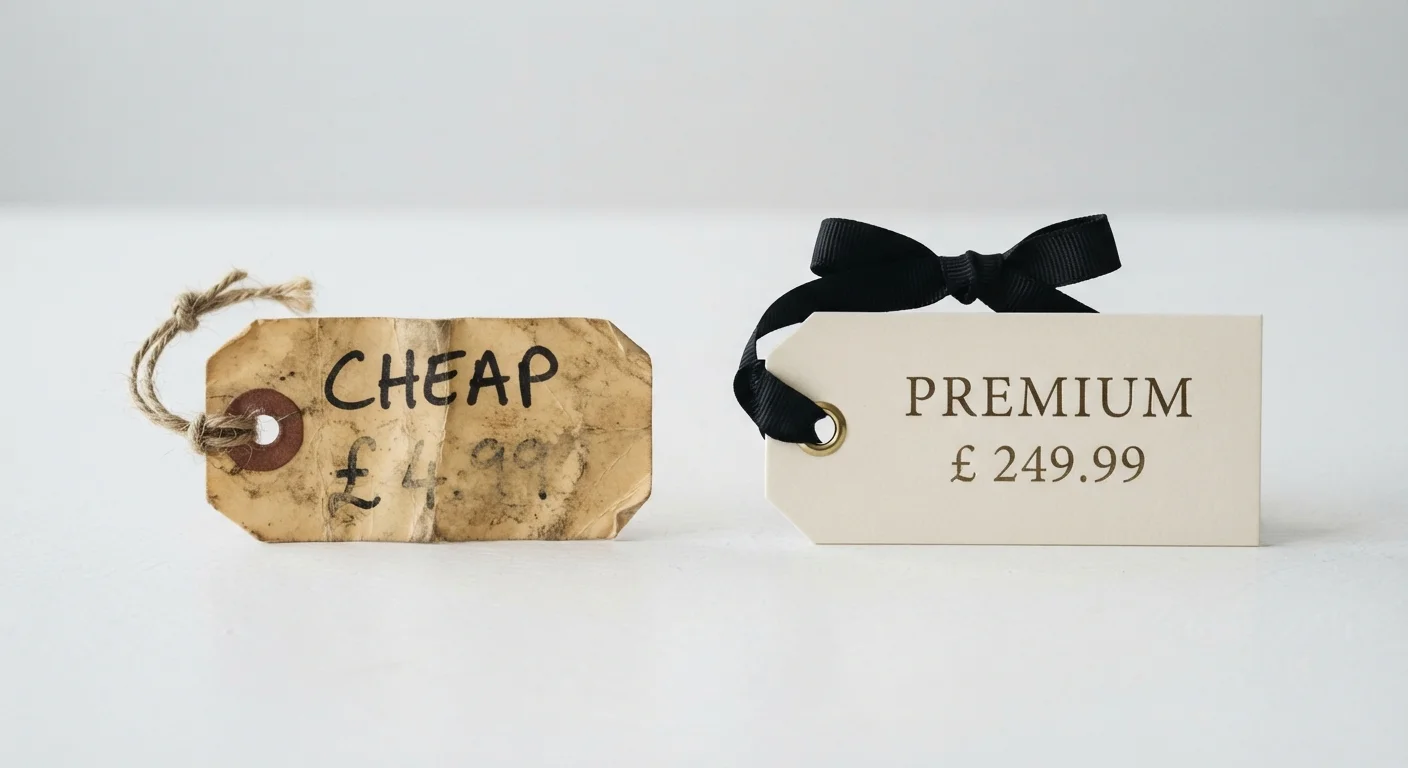
Key Takeaways
- Price is a single upfront number; value accounts for quality, longevity, and total cost over time.
- A cheaper item can cost more in the long run if it wears out faster or performs poorly.
- Value is personal — it depends on your specific needs, usage frequency, and priorities.
- Calculating cost-per-use is a practical tool for comparing options across very different price points.
- Recognizing the difference between price and value helps you avoid common impulse-buy traps.
Option A
Price
The visible number on the tag — concrete, immediate, and easy to compare.
Best for: Quick comparisons when products are nearly identical in quality and lifespan.
Option B
Value
The total benefit received relative to total cost — a fuller, more accurate measure.
Best for: Any purchase where durability, outcomes, or long-term costs differ meaningfully between options.
If you need a one-time-use or rarely used item
Price
When an item will see minimal use, paying more for durability rarely pays off. Prioritizing the lower price point makes financial sense.
If you rely on an item daily or for critical tasks
Value
Frequent use amplifies every performance difference. A higher-value option will typically deliver better outcomes and lower cost-per-use over time.
If you are working with a fixed or tight budget
Value
Even on a tight budget, mapping out total cost of ownership often reveals that a mid-range option saves money versus repeated replacement of a cheaper one.
If you are comparing nearly identical products from different sources
Price
When quality, warranty, and specifications are genuinely equivalent, the lower price is the rational choice — value differences are negligible.
Why Mixing Up Price and Value Costs You More
Most shoppers treat the price tag as the headline number and make their decision there. That instinct is understandable — price is concrete, immediate, and easy to compare across options. But price only tells you what you hand over at the register. It says nothing about what you actually receive in return.
Value, by contrast, is the ratio of benefit to cost across the full life of a purchase. It factors in how long something lasts, how well it performs, what it costs to maintain, and whether it genuinely meets your needs — or just the lowest bar of them. Two products priced $40 apart can deliver wildly different value depending on those variables.
This confusion is one of the most common buyer traps shoppers fall into: choosing the cheaper option, watching it fail early, and spending more in total than the pricier alternative would have cost upfront.
| Criterion | Price | Value |
|---|---|---|
| What it measures | Upfront monetary cost only | Total benefit relative to total cost |
| Timeframe | Point of purchase | Full product lifespan |
| Ease of comparison | Immediate — one number | Requires research and estimation |
| Risk of misjudging | Higher — ignores quality and longevity | Lower — accounts for real-world outcomes |
| Best applied to | Identical or commodity products | Differentiated or high-frequency purchases |
| Hidden costs revealed | No | Yes — maintenance, replacement, performance |
A Practical Framework for Measuring Value
The most accessible value metric for everyday purchases is cost-per-use: divide the total price by the number of times you realistically expect to use the item. A $90 item used 300 times costs $0.30 per use. A $40 item that lasts 60 uses costs $0.67 per use — nearly twice as much per interaction.
Before you calculate that, though, you need an honest answer to one prior question: is this a need or a want? That distinction shapes how much value you actually require from a purchase. Our guide on distinguishing needs from wants walks through that step in detail.
Once you've confirmed the purchase is justified, apply this three-part value check:
- Total cost of ownership: Add the sticker price to expected maintenance, accessories, or replacement costs. See how to calculate total cost of ownership for a step-by-step method.
- Performance fit: Does it actually meet your use case, or are you paying for features you'll never use — or skimping on ones you need?
- Replacement likelihood: How soon will you need to buy again? Factor that cycle into the real cost.
3×
Replacement cycles for low-cost vs. durable goods
Consumer research consistently shows budget-tier products in categories like footwear and appliances are replaced two to three times more often than mid-range alternatives.
60%
Shoppers who regret impulse purchases
Surveys on consumer behavior regularly find that a majority of impulse buyers report post-purchase regret, most commonly citing poor quality relative to price paid.
When Price Is the Right Lens — and When It Isn't
Price-first thinking is genuinely appropriate in some scenarios. When two options are functionally identical — same specifications, same warranty, same source materials — paying more delivers no additional value. Comparison shopping for commodity items is a legitimate strategy, and understanding spending categories can help you identify which purchases fall into that bucket. Our overview of where your money actually goes can help you map this out.
Value-first thinking earns its place when differences in quality, durability, or fit-for-purpose are real and meaningful. High-frequency purchases, safety-adjacent products, and items with variable long-term costs all benefit from a value lens over a pure price lens.
A useful mental checkpoint before any significant purchase: Am I choosing this because it genuinely delivers more for my situation, or because the number is smaller and that feels safer? Honest answers to that question are where confident, informed spending starts.
For purchases involving vehicles — where price labels carry their own jargon — it also helps to understand what terms like MSRP and out-the-door cost actually mean. Our explainer on invoice price, MSRP, and out-the-door cost unpacks those distinctions clearly.
Value Is Relative to Your Situation
There is no universal definition of good value — it depends entirely on your use case, budget constraints, and priorities. A professional using a tool daily has a very different value calculation than a casual user. Always anchor your value assessment to your actual circumstances, not a general ranking or someone else's recommendation. This article provides general educational guidance and is not a substitute for personalized financial advice.