

Key Takeaways
- The principal is the amount you borrow; interest is the cost of borrowing it.
- A longer loan term lowers monthly payments but increases the total interest you pay.
- Your credit score is one of the biggest factors lenders use to set your interest rate.
- Making a larger down payment reduces the principal and can lower your monthly payment.
- Always compare the total loan cost — not just the monthly payment — before agreeing to terms.
Car Loan
A car loan is a type of installment loan where a lender — such as a bank, credit union, or dealership's financing arm — pays for a vehicle on your behalf. You then repay that amount, plus interest, in fixed monthly payments over a set period of time. The vehicle itself typically serves as collateral, meaning the lender can reclaim it if you stop making payments.
Car loans are secured debt instruments. The interest rate applied is often expressed as an Annual Percentage Rate (APR), which includes the base rate and any applicable lender fees, giving you a more complete picture of the loan's true cost.
The Four Building Blocks of a Car Loan
Every car loan — regardless of lender or vehicle price — is built on four core elements. Understanding each one makes the rest of the process far less intimidating.
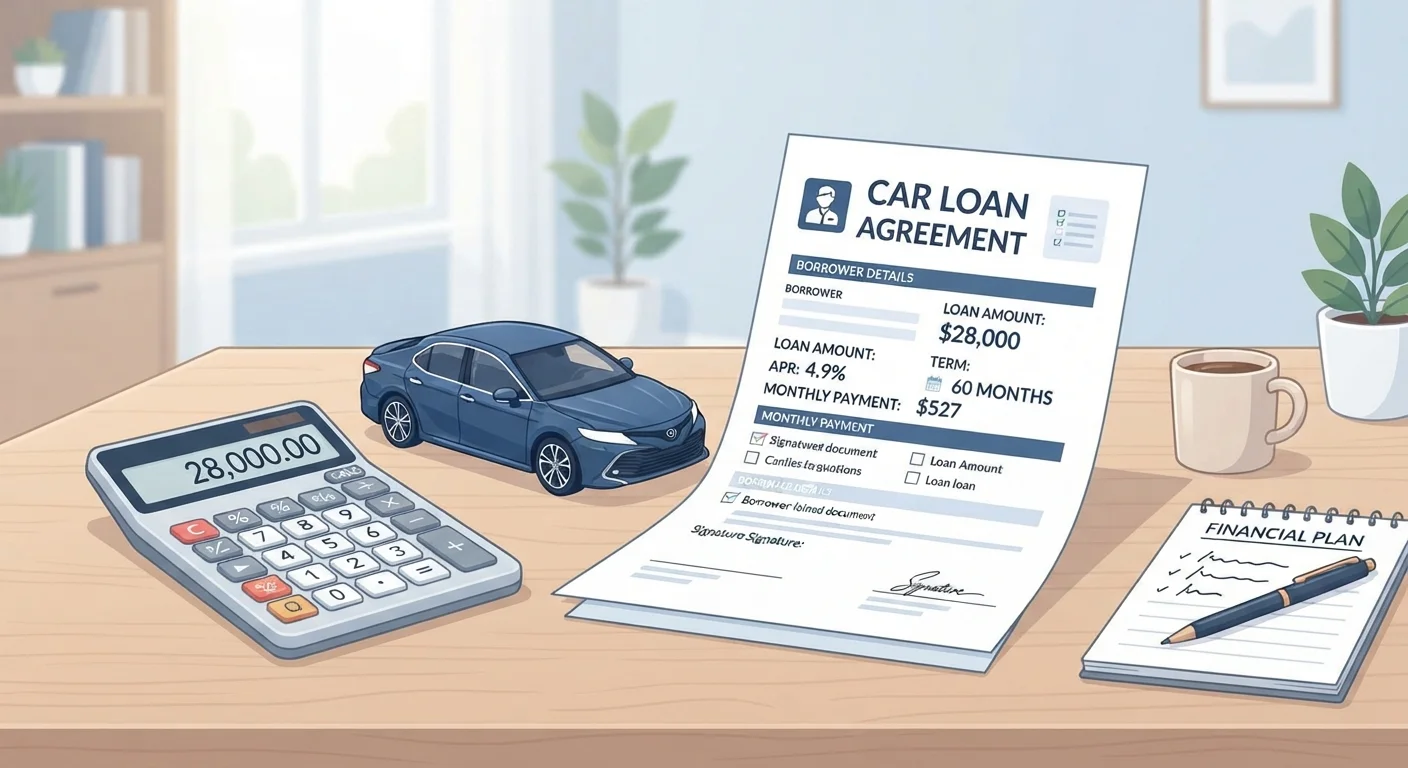
- Principal: The amount you actually borrow. If the car costs $28,000 and you put $4,000 down, you're financing $24,000. That's your principal.
- Interest rate: The percentage the lender charges annually for lending you the money. It's expressed as an APR (Annual Percentage Rate). A lower APR means less paid over time.
- Loan term: The length of time you have to repay the loan, typically expressed in months — 36, 48, 60, or 72 months are common. Longer terms lower monthly payments but increase total interest.
- Monthly payment: The fixed amount you pay each month, which covers both a portion of the principal and the accruing interest.
These four elements interact. Borrowing more, choosing a longer term, or accepting a higher rate all increase what you ultimately pay. See the full picture in our comparison of financing vs. paying in full.
72 months
Most common longest car loan term offered
Experian's State of the Automotive Finance Market report has consistently shown 72-month loans as among the most frequently originated in the U.S.
~$700+
Average monthly new car payment (recent years)
Experian's automotive finance data has reported average new vehicle monthly payments above $700, highlighting the importance of understanding total loan cost.
1–5%
Typical APR range for well-qualified borrowers
Rates vary significantly by lender, credit tier, and market conditions; borrowers with excellent credit generally access the lowest available APRs.
How Interest Accumulates Over Time
Car loans use a method called simple interest, meaning interest accrues daily on your remaining balance. Early in the loan, a larger portion of each payment goes toward interest. As your principal shrinks, more of each payment goes toward the balance itself. This is called amortization.
Here's why this matters practically: if you make only minimum payments for 60 months on a higher-rate loan, a meaningful portion of your total payments was interest — not equity in the car. This is one reason financial educators often recommend keeping loan terms shorter when your budget allows.
Run the Numbers Before You Shop
Use a free online auto loan calculator to test how different interest rates, terms, and down payment amounts affect your monthly payment and total cost. Doing this before you visit a lender or dealership puts you in a much stronger position to evaluate any offer. Aim to understand your comfortable monthly maximum and work backwards from there.
Your credit score plays a central role in the rate you're offered. Borrowers with strong credit histories typically qualify for lower APRs. If your credit score is on the lower end, it may be worth taking a few months to strengthen it before applying — even a small rate improvement compounds over a multi-year loan.
What Lenders Actually Look At
When you apply for a car loan, lenders evaluate several factors to decide whether to approve you and at what rate:
- Credit score and history: Your track record of repaying past debts. Payment history and total debt are significant factors.
- Income and employment: Lenders want confidence that you can make consistent monthly payments.
- Debt-to-income ratio (DTI): The percentage of your monthly income that goes toward existing debt payments. A lower DTI signals more financial breathing room.
- Down payment: A larger down payment reduces the loan amount, lowering the lender's risk — which can improve your rate offer.
- Loan-to-value ratio (LTV): The loan amount compared to the vehicle's value. Lenders prefer not to finance more than a car is worth.
Understanding what lenders weigh helps you walk into the process prepared. For a broader view of the full car-buying journey, including budgeting before you ever apply for financing, that context is worth having early.
Choosing Where to Borrow
You have options when it comes to who provides your loan: banks, credit unions, and dealership financing are the most common. Each has different processes, rate structures, and levels of flexibility. It's generally wise to get pre-approved by at least one external lender before visiting a dealership — it gives you a benchmark rate to compare against any financing offer made on the lot.
For a detailed look at how these options differ, our guide on financing through a dealership vs. a bank or credit union walks through the key considerations.
This article provides general educational information about auto financing and is not personalized financial or legal advice. Loan terms, rates, and eligibility vary by lender and individual circumstances. Consult a licensed financial professional for guidance specific to your situation.