

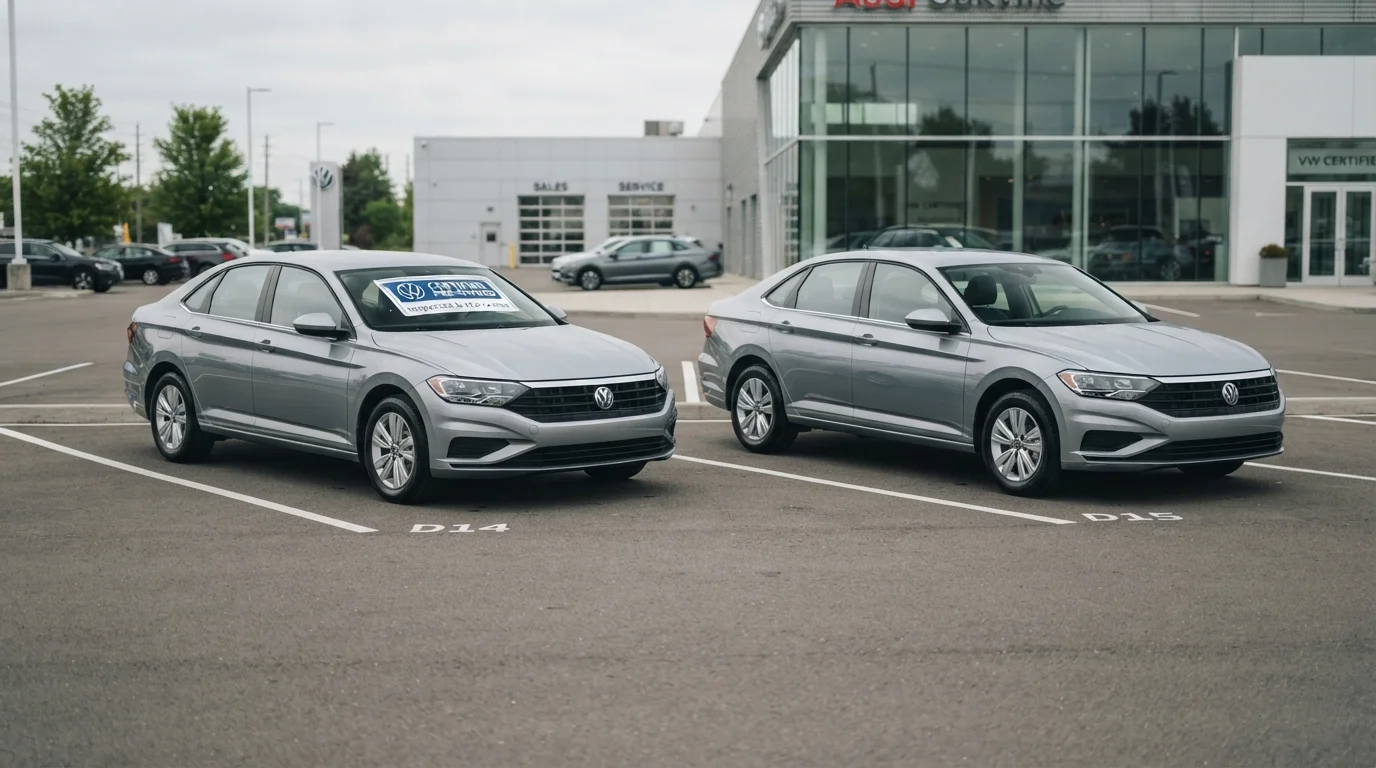
Key Takeaways
- CPO vehicles must pass a manufacturer-defined multi-point inspection before being listed under that label.
- CPO programs include a limited warranty, but the terms vary significantly by manufacturer.
- Standard used cars typically cost less upfront but come with no guaranteed inspection or warranty.
- An independent pre-purchase inspection can help close the information gap on standard used vehicles.
- CPO vehicles are generally sold only through franchise dealerships, limiting where you can shop.
Option A
Certified Pre-Owned (CPO)
The structured, manufacturer-backed used car option.
Best for: Buyers who want defined inspection standards, a warranty, and added peace of mind when purchasing a used vehicle.
Option B
Standard Used
The flexible, lower-cost pre-owned vehicle path.
Best for: Buyers comfortable doing their own due diligence who prioritize price flexibility and a wider vehicle selection.
If you want a warranty and a documented inspection included in the purchase
Certified Pre-Owned (CPO)
CPO programs provide a defined checklist and manufacturer-backed coverage, reducing guesswork about the vehicle's condition.
If your priority is the lowest possible purchase price
Standard Used
Standard used vehicles typically carry lower asking prices and are available from a wider range of sellers, including private parties.
If you want to buy from a private seller or independent lot
Standard Used
CPO vehicles are only available through authorized franchise dealerships, so private-party purchases are always standard used.
If you're buying used but want something close to a new-car experience
Certified Pre-Owned (CPO)
Many CPO programs cover vehicles under a certain age and mileage, offering near-new reliability with a used-car price.
What the CPO Label Actually Means
Certified Pre-Owned is a formal designation — not a marketing phrase that any dealer can freely apply. Manufacturer CPO programs set specific eligibility criteria: typically a maximum age (often five to seven years) and mileage cap (commonly under 80,000 miles). Vehicles that qualify are put through a multi-point inspection, often ranging from 100 to 200+ checklist items covering the engine, transmission, brakes, tires, and electrical systems.
If the vehicle passes, it earns the CPO badge and a limited warranty. That warranty is the most important part of the label — it gives you defined coverage for a set period after purchase. However, warranty length, what it covers, and whether it runs alongside any remaining factory coverage all vary by manufacturer. Reading the specific program terms before assuming what's included is essential.
For a broader look at warranty structures, see our guide on what different warranty types actually cover.
| Criterion | Certified Pre-Owned | Standard Used |
|---|---|---|
| Inspection requirement | Mandatory multi-point inspection | No standardized requirement |
| Warranty | Manufacturer-backed limited warranty | None (unless dealer adds one) |
| Typical price | Higher than comparable standard used | Generally lower |
| Where you can buy | Franchise dealerships only | Dealerships, private sellers, auctions |
| Vehicle age/mileage limits | Set by each manufacturer's program | No restrictions |
| Buyer due diligence needed | Less — protections are built in | More — buyer must verify condition |
What Standard Used Means — and What It Doesn't Guarantee
A standard used vehicle is simply any pre-owned car sold without a manufacturer CPO designation. This includes cars sold at independent dealerships, franchise lots outside their CPO inventory, and private-party sales. The category is broad by definition.
Without a CPO label, there is no standardized inspection requirement and no manufacturer-backed warranty attached to the vehicle at sale. Some dealerships may offer their own limited guarantees, but these are not the same as a manufacturer program — the terms are set by the dealer, not a larger organization with consistent standards.
This doesn't mean standard used cars are poor choices. Many are well-maintained and priced fairly. The difference is that you take on more responsibility for verifying the vehicle's condition yourself. An independent pre-purchase inspection by a qualified mechanic is one of the most effective ways to fill that information gap before committing.
100–200+
Inspection points in typical CPO programs
The number of checklist items varies by manufacturer, so reviewing the specific program document matters before assuming full coverage.
~80,000 mi
Common CPO mileage ceiling
Many manufacturer programs cap CPO eligibility around 80,000 miles, though thresholds differ across brands and model years.
Comparing the Two Paths Side by Side
The choice between CPO and standard used comes down to what trade-offs you're comfortable making. CPO programs add cost — the added protections are priced into the vehicle — but they reduce uncertainty. Standard used vehicles can offer more flexibility in price and seller type, but require more legwork from the buyer.
CPO vehicles are also only available through franchised dealerships authorized by the manufacturer, which narrows your shopping options. Standard used cars can be found across a much wider range of sources. If you're still weighing whether used is the right direction at all, our article on new vs. used trade-offs can help frame the bigger decision.
Once you've settled on a vehicle, remember that the purchase price is only one part of the financial picture. Ongoing ownership costs — insurance, maintenance, fuel, and registration — apply regardless of whether your car is CPO or standard used.
CPO Programs Are Not All the Same
Each automaker designs its own CPO program independently. Coverage length, deductible amounts, what components are included, and whether roadside assistance is bundled all differ. Two vehicles wearing a CPO label from different manufacturers may carry meaningfully different levels of protection. Always request the written program terms and compare them directly, rather than treating the label as a uniform guarantee.